Dream About Swans – Meaning
Category: Animals
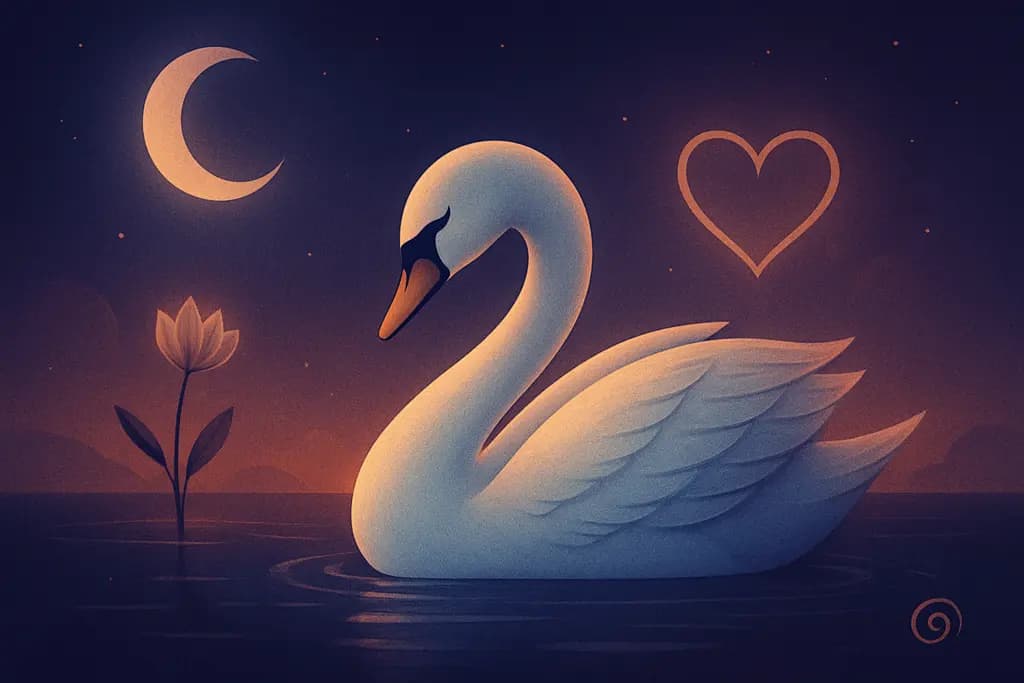
Dreaming about swans often points to themes of grace, transformation and relationship dynamics. These elegant birds can represent inner beauty, emerging potential or social bonds — but the precise meaning depends on how you felt in the dream and the scene around the swan.
General meaning of dreaming about Swans
Swans are widely associated with beauty, balance and a calm surface hiding strong, purposeful movement beneath. In dreams they frequently symbolize a blending of the conscious and unconscious: what appears serene may conceal powerful emotions or creative energy pushing you toward change.
Context and emotion shape the core interpretation. A peaceful swan gliding on a lake typically suggests harmony, while an agitated or wounded swan can point to vulnerability, conflict or unmet needs.
- Grace and elegance: personal style, dignity, or refined aspects of self
- Transformation and potential: an invitation to grow or embrace change
- Relationships and fidelity: partnership, loyalty, or emotional bonds
- Hidden strength: calm exterior with strong inner drive
- Vulnerability: when the swan is hurt, it may reflect feelings of fragility
Spiritual meaning of Swans in dreams
Spiritually, swans are often seen as messengers between worlds — representing soul development, purity and the integration of opposite energies (like light and shadow). Across traditions, the swan can symbolize the emergence of higher awareness or an awakening of creative faculties.
In some Eastern traditions the swan stands for discernment and spiritual refinement; in Western folklore it’s linked to romantic devotion and poetic inspiration. Universally, dreaming of swans can indicate a stage of soul growth or an inner invitation to move toward greater authenticity.
Psychological interpretation
Fear, stress or anxiety
If the swan in your dream appears threatened, trapped, injured or aggressive, it may mirror anxieties about losing grace or control in waking life. The contrast between a normally calm swan and a stressful dream scene can highlight tension between how you want to present yourself and what you actually feel inside.
Relationships and emotional bonds
A pair of swans or swans interacting often points to relationship themes: deep attachment, commitment, or the need for mutual respect. A lone swan may indicate loneliness, independence or a period of self-focus. Pay attention to how the swan relates to you in the dream — partner-like behavior suggests intimacy, while avoidance can reveal emotional distance.
Control, power or vulnerability
Swans look elegant but are powerful in the water and can be territorial on land. Dreams about swans can reflect struggles over control — either your desire for autonomy or fear of being dominated. An injured or fading swan may express feelings of vulnerability or a loss of personal power, whereas a strong, gliding swan suggests regained confidence.
Positive meaning
- Personal growth and transformation: change that leads to greater authenticity
- New or deepening relationships: stronger emotional bonds or commitments
- Restoration of balance and calm: a return to inner peace after stress
- Creative awakening: inspiration, artistic expression or new projects
- Healing and renewal: emotional recovery following hardship
Negative meaning and warnings
- May suggest suppressed emotions that need attention rather than being ignored
- Can indicate fragile relationships or the risk of deception in partnerships
- Might point to pride or vanity causing disconnection from others
- May signal avoidance: keeping a calm façade while real problems grow
- Can indicate vulnerability to emotional hurt if boundaries are unclear
Each of these is a possible reading rather than a fixed prediction; use them as prompts for reflection.
Common variations of dreams about Swans
- Pair of swans: Often read as a symbol of partnership, devotion or romantic harmony; can also highlight codependency if the pair seems stuck.
- Swan on a calm lake: Suggests inner peace, emotional balance and a period of steady progress.
- Swan taking flight: Points to freedom, a transition or a breakthrough — an urge to leave a situation or rise above difficulties.
- Injured or sick swan: May indicate vulnerability, emotional pain or a situation that needs care; consider where you feel fragile in waking life.
- Finding a swan feather: A sign of guidance, intuition or a small but meaningful message; it can encourage you to trust your instincts.
- Baby swans (cygnets): Suggests new responsibilities, fresh projects or the beginnings of emotional growth that need nurturing.
- Swan attacking or being aggressive: Can reflect boundary issues, feeling threatened, or a part of you defending itself under stress.
- Many swans together: Points to community dynamics, social roles or the pressure of conforming within a group.
What to do after such a dream
- Reflect on your emotions: write down how you felt during and after the dream to uncover personal cues.
- Look at current life areas: consider relationships, work, creativity and whether any of these feel balanced or strained.
- Notice recurring symbols: if swans appear often, track the changes in the dream’s mood and setting over time.
- Talk it over: discuss the dream with a trusted friend, partner or a dream journal to gain perspective.
- Take small, practical steps: if the dream points to vulnerability, strengthen boundaries; if it points to growth, create space for the next step.
These steps are intended to help you integrate the dream’s message into daily life and decision-making rather than serve as definitive answers.