Dream About Sudden sense of déjà vu – Meaning
Category: Feelings
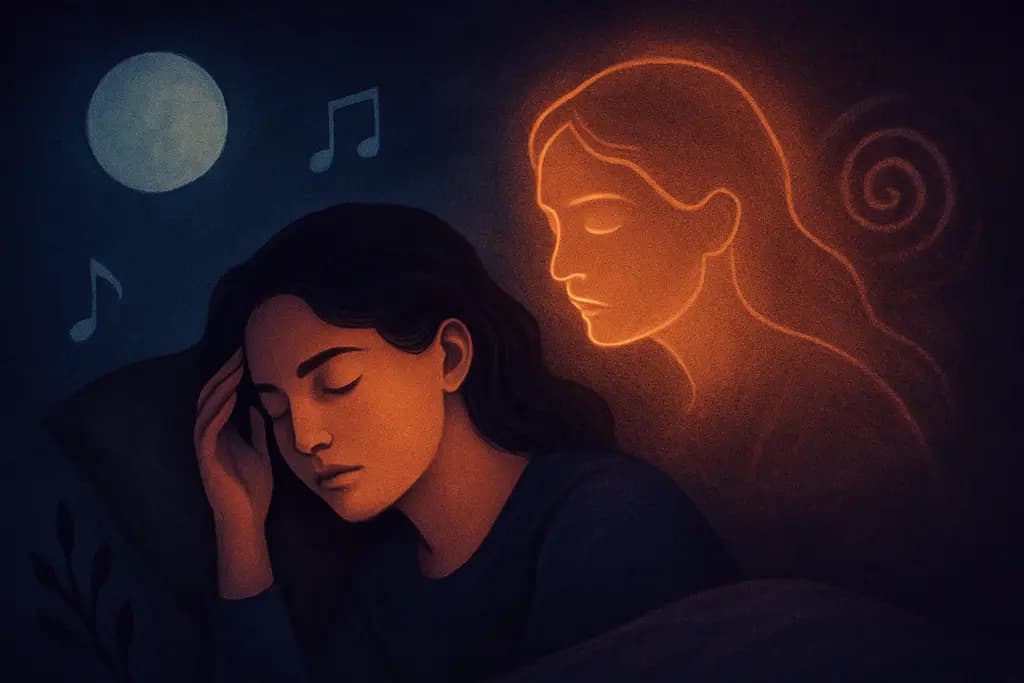
A sudden sense of déjà vu in a dream feels like stepping into a scene you somehow already know. It often points to a moment of emotional recognition — a memory, a recurring pattern, or a decision that your subconscious is highlighting. As with most dream symbols, the meaning shifts depending on how the déjà vu made you feel and what was happening around you.
General meaning of dreaming about Sudden sense of déjà vu
At its core, a sudden sense of déjà vu in a dream speaks to repetition and recognition. Your mind flags something familiar: an unresolved memory, a repeating life pattern, or an inner echo of past feelings. Because déjà vu blends memory and present experience, it commonly signals that your unconscious wants you to notice a link between what you’re living now and what you’ve already lived or felt.
Often this symbol appears when you are at a crossroads or when an old habit, relationship dynamic, or fear resurfaces. The feeling can be neutral, comforting, or unsettling — each tone shapes the interpretation. Key meanings include:
- Recognition of repeated patterns: you may be reliving a behavior or relationship dynamic.
- Memory resurfacing: a past event or unresolved emotion may be demanding attention.
- Intuition about choices: déjà vu can mark moments when your deeper knowing tries to steer you.
- Emotional resonance: strong feelings tied to the scene often reveal the area of life needing reflection.
Spiritual meaning of Sudden sense of déjà vu in dreams
Spiritually, sudden déjà vu can be read as an alignment moment — a nudge from your inner guidance or a signal that you’re on a path that resonates with past lifetimes or deep soul lessons. Many traditions regard déjà vu as a whisper from the soul, connecting present circumstances to karmic patterns, ancestral influences, or recurring lessons.
In some contemplative traditions déjà vu is a prompt to pause and attend to inner wisdom; in others it’s seen as evidence of synchronicity, where outer events mirror inner states. Regardless of the framework, the spiritual angle emphasizes awareness: the feeling invites you to notice what repeats and why it matters for your growth.
Psychological interpretation
Fear, stress or anxiety
Déjà vu in a dream can emerge when anxiety causes your brain to misplace or reprocess memories. If the experience felt alarming, it may indicate heightened vigilance: your mind is scanning for threats or rehearsing outcomes. Recurrent déjà vu tied to fear can point to unresolved anxiety loops you replay subconsciously.
Relationships and emotional bonds
When déjà vu centers on a person or relational scene, it often reflects familiar dynamics — attachment patterns, communication habits, or unhealed wounds. The dream may be showing how past relationship templates are influencing present interactions, urging you to recognize and, if needed, change those patterns.
Control, power or vulnerability
A sudden sense that you’ve “been here before” can mirror issues around control or helplessness. If the memory felt like a trap or a repeat of a powerless moment, the dream might be highlighting feelings of vulnerability or a tendency to surrender control. Conversely, if the déjà vu felt empowering, it can signal regained agency or mastery over a recurring challenge.
Positive meaning
- Rediscovery of strengths: déjà vu may highlight abilities or lessons you’ve already mastered and can now apply.
- Guidance toward right choices: the feeling can point you toward decisions that align with your deeper self.
- Emotional integration: recognizing repeated patterns can be the first step toward healing and closure.
- Creative inspiration: familiar scenes resurfacing can spark insight, ideas, or renewed clarity about life direction.
- Confirmation of growth: experiencing déjà vu in a calmer way can suggest that you’re reconciling past wounds.
Negative meaning and warnings
- May suggest unresolved trauma: repeated déjà vu tied to painful memories can indicate emotional material that needs attention.
- Can indicate avoidance: frequent déjà vu might signal you are repeating habits rather than addressing underlying causes.
- May suggest indecision: if the feeling occurs around choices, it can point to hesitation that keeps you stuck.
- Can indicate emotional stagnation: recurring scenes without change may mean growth is being blocked by fear or habit.
Common variations of dreams about Sudden sense of déjà vu
- Déjà vu about a person — Dreaming that you’ve met or known someone before can indicate unresolved feelings or a repeating attachment style connected to that person or type.
- Déjà vu in a familiar place — Re-experiencing a specific location suggests there’s something about that situation or environment you need to re-evaluate or integrate.
- Repeating moments or conversations — When dialogues replay with the same outcome, your mind may be urging you to change your responses or recognize a pattern.
- Déjà vu during big decisions — Feeling you’ve seen the moment before while choosing can mean intuition is nudging you toward a path aligned with past learning.
- Strong emotional déjà vu — If the feeling is tied to intense emotion (joy, sadness, fear), the dream highlights those unresolved emotions as the primary material to work with.
- Recurring déjà vu episodes across nights — Multiple dreams with déjà vu may suggest a persistent issue in waking life that needs sustained attention.
- Déjà vu linked to childhood scenes — When the familiarity traces back to childhood, it often points to formative patterns or early beliefs resurfacing.
What to do after such a dream
- Reflect on the emotion: note how the déjà vu felt — calm, eerie, comforting, or unsettling — and journal the details.
- Map the context: write down who was there, where it happened, and what was said or felt to spot repeating themes.
- Look at current life: compare the dream scene to present relationships, routines, and decisions to find practical links.
- Consider patterns, not blame: ask whether the dream points to a habit you repeat rather than assigning fault to yourself or others.
- Take small actions: experiment with one small change (a conversation, boundary, or new routine) to break an unhealthy loop.
- Share and reflect: talk with a trusted friend, mentor, or dream-focused therapist if you want deeper perspective and support.
- Ground and integrate: use mindful breathing, nature walks, or creative expression to help the insight move from the dream into daily life.