Dream About Standing at empty altar – Meaning
Category: Celebrations & Rituals
A common version of this dream
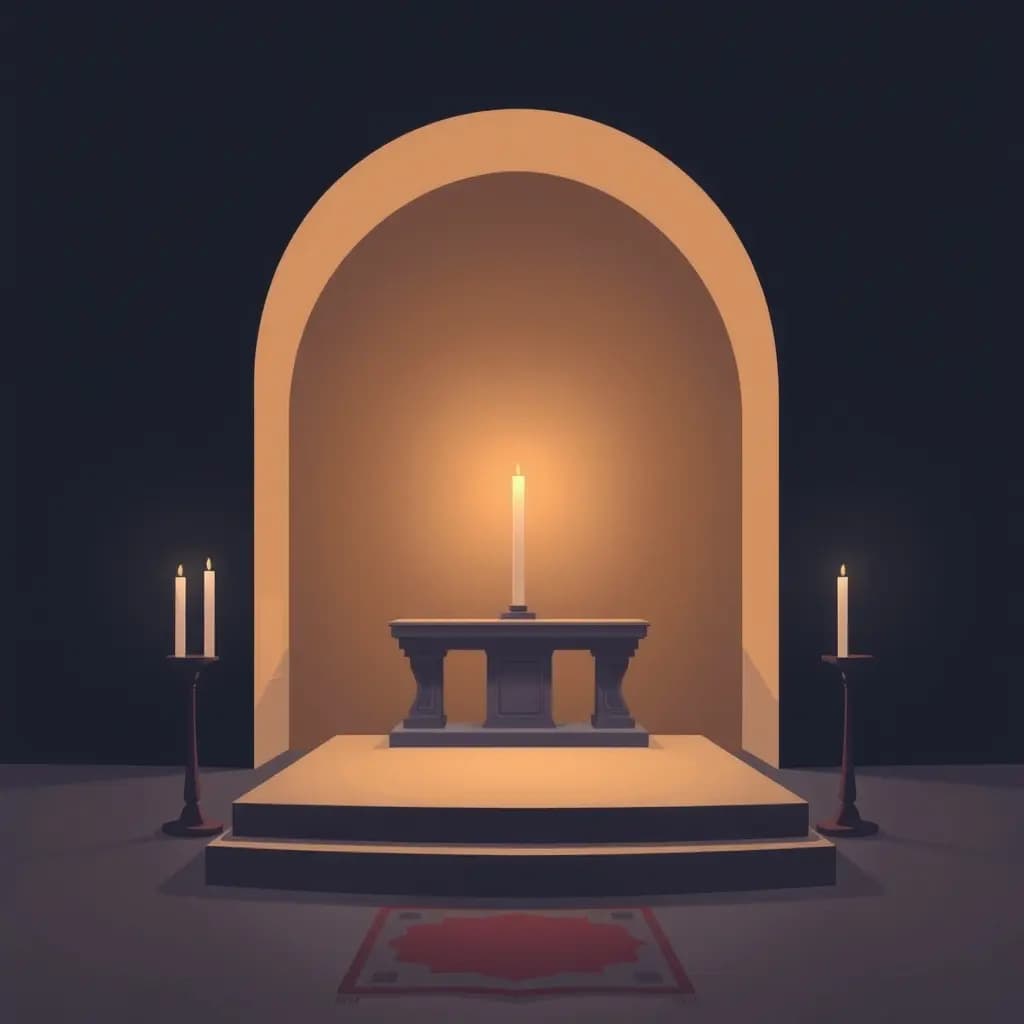
There’s a tightness in your chest before the ceremony even begins — you’re there in a heavy gown or suit, a small crowd waiting, and the altar is bare: no flowers, no offerings, candles unlit. The room smells faintly of incense and dust, a wooden lectern sits empty, and you feel exposed, tongue-tied, as the ritual you expected hasn’t been prepared. That specific panic of being publicly unready or abandoned is the scene.
Quick interpretation
Standing at an empty altar most often signals a sense of unmet commitment or a transition that feels unmarked in your life. It can reflect postponed plans (a delayed wedding, a postponed funeral, a stalled promotion) or an internal gap where you expected ceremony and closure. Practically, the image may be urging you to identify what promise, role, or closure is missing and whether you need to create a small ritual, repair support, or change course.
What this dream can point to in real life
- Abandoned commitment. The empty altar can point to a promise you feel you or someone else failed to keep. This might be a romantic commitment, a parental duty, or even a pledge to yourself like abandoning a health plan or creative project. The dream highlights the emotional fallout — shame, guilt, or anger — and often pushes you to name who or what feels abandoned so you can either repair the bond or consciously release it.
- Transition without closure. You may be in the middle of a life transition (end of a job, move, breakup, bereavement) that hasn’t been acknowledged with a ritual or clear ending. The vacant altar represents missing closure: no farewell party, no final conversation, no ceremony to mark the change. This angle suggests creating a personal rite—writing a letter, visiting a symbolic place, or holding a small gathering—to mark the shift and reduce lingering ambiguity.
- Loss of communal support. Rituals often rely on community. An empty altar can reflect feeling unsupported by friends, family, or colleagues at a moment you expected help. Perhaps you’re facing a public expectation (parenting, promotion, cultural duty) and sense the crowd is absent. The dream encourages checking practical supports and asking for help rather than enduring the burden alone.
- Personal agency and choice. Sometimes the altar is empty because it’s meant to be filled by you. The image can suggest a moment of empowerment: you’re invited to decide what matters and how to consecrate it. Rather than seeing emptiness only as loss, this meaning frames the scene as a call to intentionally design values, vows, and rituals that align with your current self.
What this dream is not literally saying
This dream is rarely a literal prediction that a real ceremony will be canceled or that a specific person will abandon you. It does not usually work as a direct prophecy. Instead, the image tends to symbolize emotional or practical gaps — disappointment, unreadiness, or a need for symbolic closure — rather than forecasting concrete future events. There may be sadness beneath the scene, and that emotional sting matters more than literal alarm.
Unusual details people report
Interestingly, dreamers often notice a single flickering candle, an open back door leading outside, a distant choir that fades, or heavy robes that feel too large. People report the sound of footsteps in a hallway, an empty offering bowl, cold sweat on their palms, and a sudden gust of wind that snuffs the wick.
Questions to reflect on
- When in the last year did I postpone or lose an important ceremony, deadline, or farewell, and how does that memory feel in my body?
- Who did I expect to be present at my ‘altar’ — name one or two people — and what would I want to say to them now?
- What simple symbolic act (lighting a candle, writing a letter, making a promise aloud) could I perform this week to acknowledge the transition I’m facing?
Symbolic and spiritual meaning
Symbolically, altars represent offerings, vows and the boundary between ordinary life and the sacred. An empty altar can indicate spiritual dryness, a call to re-examine what you hold sacred, or an invitation to recommit to values. Different traditions might read it as a prompt to pray, fast, meditate, or perform a cleansing ritual. The framing here is non-dogmatic: consider which sacred practices or personal ceremonies would restore meaning for you, or whether the absence is itself a spiritual signal of change.
FAQ
Is this about relationships?
It can be about relationships, often pointing to broken promises or absent support, but it also commonly reflects a commitment to yourself or a role you feel unable to fulfill. Look for who, exactly, feels missing in the scene.
Can this dream be positive?
Yes. The dream can be positive if viewed as an invitation to reclaim agency: filling the altar yourself, starting a new ritual, or choosing a different path. Emptiness can become a creative opening.
What should I do after this dream?
Start by writing down specifics: who was there, what was missing, and what emotion stood out. Then choose one concrete step—contact someone, schedule a small rite, or set a deadline—to translate the insight into action.
Related dream meanings
Dreams about standing at empty altar are often connected to Anniversary date forgotten, Dance rehearsal without music, and Wedding gift unopened forever. Looking at those nearby themes can help you compare control, fear, pressure, or change across similar dream scenes. You may also want to compare it with Ring slips off hand if the same mood or conflict keeps showing up.