Dream About Standing at a cliff edge – Meaning
Category: Fears & Nightmares
A typical dream scenario
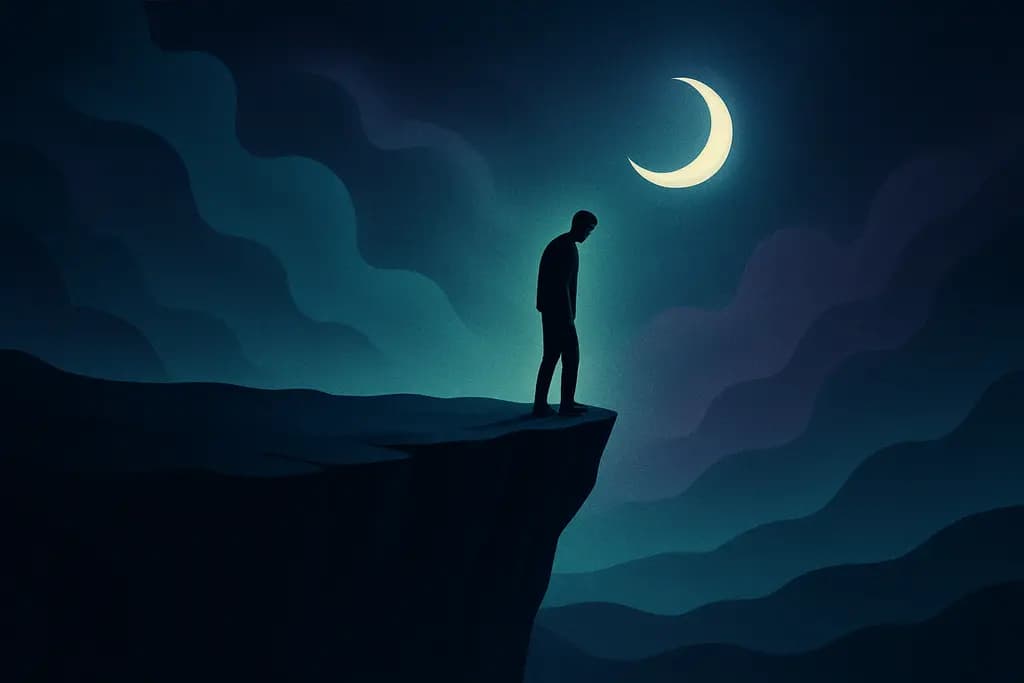
Heart pounding from weeks of unspoken pressure, you find yourself barefoot on damp rock, toes curled over a sharp drop. Wind tugs at your clothes while a narrow path stretches back toward a small town you recognize — a job, a partner, or a routine life — and ahead only fog and the sound of distant surf. You pause, aware of choice: step forward, step back, or stand frozen. The immediate feeling is physical: vertigo, cold air, a lump in your throat when you look down.
Three common meanings
- Decision point. If you felt focused and steady, the cliff often marks a real choice: stay in a familiar situation or step into a new role. The dream may highlight logistics — deadlines, offers, or conversations you’ve been postponing — and push you to inventory options rather than make a snap leap.
- Fear of failure or loss. When the dominant emotion is dread or nausea, the cliff can reflect anxiety about potential loss: reputation, income, or a relationship. The height represents stakes; the imagined fall embodies worries about what might be irrecoverable if you take a risk or make the wrong move.
- Boundary awareness. Standing at an edge may signal newly perceived limits: emotional exhaustion, career burnout, or a relationship boundary finally becoming visible. The dream often asks you to recognize where you need to say no, step back, or establish clearer lines to protect energy.
- Yearning for change or liberation. If the scene felt oddly spacious or thrilling, the cliff may invite transformation. The view, the wind, or a willing step forward can symbolize readiness to leave a constraining life pattern and test your capacity to grow — a risky but potentially freeing transition.
What this dream is not literally saying
This dream rarely functions as a literal prophecy. It does not usually predict an actual fall or immediate physical danger. Instead, it is seldom a concrete warning about external events; rather, it maps an internal boundary or decision point. Treat the cliff as metaphorical terrain, not a future news item.
Concrete details that tend to stand out
People often notice specific flashes: a child’s toy caught on the rocks below, a closed metal gate behind them, the sound of a car horn from the road down the cliff, or a sudden rain that makes the path slick. Some remember their shoes sliding or the taste of salt on the air.
Symbolic and spiritual meaning
Symbolically, cliffs frequently appear in spiritual language as thresholds or rites of passage. Some people experience the edge as an invitation to trust a larger process, to surrender control, or to confront ego limits before growth. This framing is non-dogmatic: it treats the image as an archetype that may resonate with a personal practice, meditation, or sense of calling, without prescribing a specific religious interpretation.
What it can reflect emotionally
From a modern, non-medical viewpoint, this dream often reflects decision-making under stress and an internal appraisal of risk versus reward. The body sensations — dizziness, cold, muscle tension — mirror how your nervous system reacts to high-pressure choices. Rather than diagnosing, this perspective suggests noticing thought patterns: Are you catastrophizing potential outcomes? Are you avoiding commitment because of fear or because you genuinely need more information? Observing these tendencies can clarify the next practical action.
Personal reflection prompts
- What specific choice or situation have I been postponing that the cliff might represent?
- When did I last feel pushed or trapped in a relationship, job, or routine, and what boundary would help?
- What one small, concrete action could I take this week to move away from feeling frozen at the edge?
Common questions
Is this about money?
Is this about money? Not usually directly. While financial anxiety can create cliff imagery, the dream more often reflects choices or limits; if debt, a job change, or an investment is stressing you, financial details will appear in the dream’s setting or your waking concerns.
Why do I feel fear in this dream?
Why do I feel fear in this dream? Fear often comes from perceived risk: loss, shame, or uncertainty. The brain simulates worst-case outcomes to prepare you. The physical sensations—dizziness, cold—are your body’s stress response, signaling that a consequential decision feels unresolved.
Is this dream a warning?
Is this dream a warning? It can feel warning-like, but it is rarely a literal forecast. Treat it as a cue to examine choices and pressures in your life, not as a sign that an external disaster is imminent.
Dream meanings connected to this one
Dreams about standing at a cliff edge are often connected to Abandonment, Aging, and Being Chased. Looking at those nearby themes can help you compare control, fear, pressure, or change across similar dream scenes. You may also want to compare it with Being Followed if the same mood or conflict keeps showing up.