Dream About Sleep Paralysis Experience – Meaning
Category: Fears & Nightmares
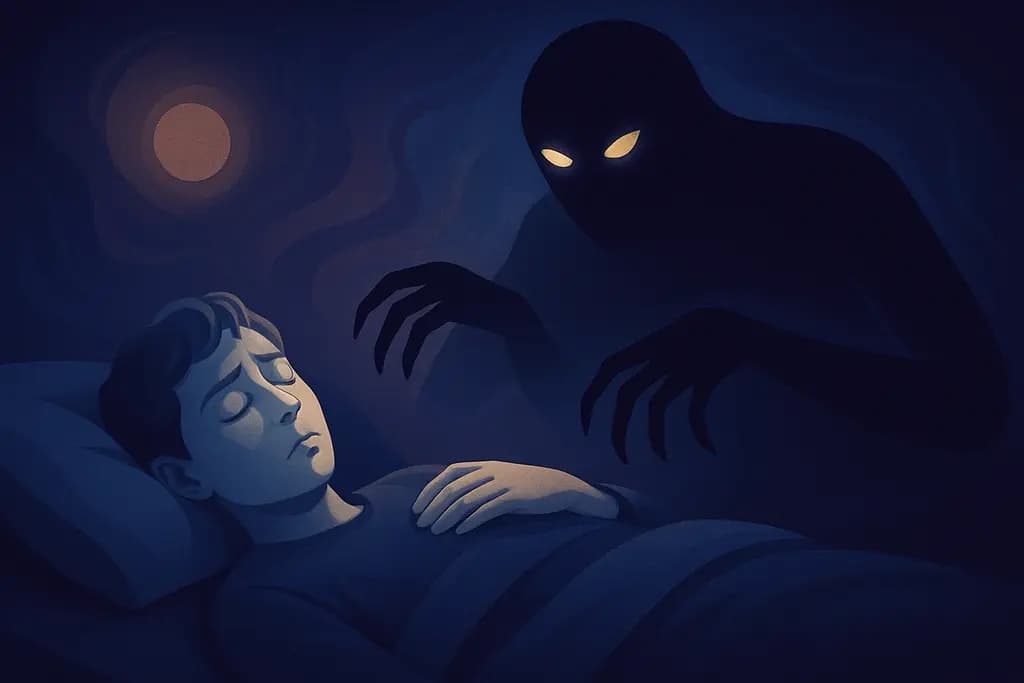
Dreaming about a Sleep Paralysis Experience often feels like being awake inside a nightmare: you can see and hear, but your body won't respond. These dreams are intensely physical in sensation and emotionally charged, and their meaning depends heavily on the dreamer's feelings and the surrounding dream context.
General meaning of dreaming about Sleep Paralysis Experience
At its core, a Sleep Paralysis Experience in a dream symbolizes a moment of stuckness — a conflict between awareness and action. The dreamer is conscious enough to recognize danger or discomfort but unable to respond, which mirrors waking-life situations where you feel immobilized by stress, indecision, or fear.
These dreams frequently point to inner tension between desire and limitation. They can highlight unresolved issues that demand attention: emotions you cannot express, choices you delay, or boundaries you struggle to enforce.
- Feeling trapped or unable to act: a sense of paralysis in life choices or relationships.
- Overwhelming fear or vulnerability: anxiety manifesting as bodily restriction.
- Powerlessness or blocked expression: difficulty asserting needs or speaking up.
- Heightened awareness: a call to notice something important you’ve been ignoring.
Spiritual meaning of Sleep Paralysis Experience in dreams
Spiritually, a Sleep Paralysis Experience may be read as an energetic interruption — a moment when your conscious mind meets intense symbolic material from the unconscious. In many traditions, similar experiences are linked to transitions, soul-checkpoints, or brief encounters with otherworldly presence.
Some cultures interpret the sensation of pressure or presence as a visitation or a message that requires inner listening rather than immediate action. Universally, these dreams can signal spiritual growth: an invitation to clear blocked energy, practice protection rituals that resonate with you, or deepen your boundary work between inner and outer worlds.
Psychological interpretation
Fear, stress or anxiety
Sleep paralysis dreams often arise from chronic stress, acute fear, or anxiety. Psychologically, the inability to move reflects freeze responses — when the nervous system is overwhelmed and the body temporarily shuts down to cope. These dreams can be the psyche’s way of highlighting unresolved worries that need compassionate attention.
Relationships and emotional bonds
In relationship terms, a Sleep Paralysis Experience can indicate feeling silenced, controlled, or emotionally held down by a partner, family member, or situation. It may point to codependency, unexpressed needs, or guilt that prevents you from asserting yourself.
Control, power or vulnerability
This dream symbol frequently maps onto issues of control and vulnerability. Being unable to act in a dream can mirror power imbalances in waking life, fear of confrontation, or an internal struggle over who or what controls your choices. It can reveal where you feel powerless and where small steps toward agency are possible.
Positive meaning
- Wake-up call: a prompt to examine patterns and make needed changes.
- Increased self-awareness: recognizing stressors and emotional blocks.
- Opportunity for boundary-setting: realizing where to assert limits and protect energy.
- Courage and resilience: surviving the dream can strengthen confidence in handling fear.
- Spiritual maturation: an opening to explore inner work, meditation, or energy clearing practices.
Negative meaning and warnings
- May suggest unresolved trauma or high anxiety that needs attention.
- Can indicate ongoing situations where you feel powerless or controlled.
- May point to emotional suppression that risks worsening stress if ignored.
- Can indicate a growing disconnect between what you want and what you allow yourself to do.
These readings are suggestive rather than definitive: context, frequency, and your emotional tone in the dream shape which warnings matter most.
Common variations of dreams about Sleep Paralysis Experience
- Being awake but unable to cry out: Often reflects a feeling that your voice or needs are ignored in waking life; you want to speak but fear consequences.
- Pressure on the chest or weight on the body: This can represent an overwhelming emotional load, grief, or guilt pressing down on you.
- A shadowy presence or "old hag" sensation: In many folk traditions this represents an intrusive fear or an externalized anxiety; it can symbolize a fearsome but non-specific threat to personal safety.
- Hearing whispers or voices while frozen: Suggests internal conflict — competing thoughts or critical self-talk that paralyze action.
- Recurrent sleep paralysis episodes in dreams: May point to persistent life patterns that need deliberate intervention, such as chronic stress or an ongoing relationship issue.
- Paralysis that ends with sudden movement or relief: Can indicate an eventual breakthrough — a small victory over fear that frees you to act.
- Lucid awareness during paralysis: If you feel calm and observant, the dream may be a stepping stone toward conscious change and mastering anxious responses.
What to do after such a dream
- Reflect on the emotions you felt: note whether fear, shame, anger, or resignation dominated the dream.
- Journal specifics: record who was present, what you wanted to do, and what stopped you — details reveal patterns.
- Look at current life stressors: consider recent decisions, deadlines, or conflicts that could be mirrored in the dream.
- Notice relationship dynamics: ask if you feel silenced, controlled, or unsupported by others.
- Practice grounding rituals before sleep: calming routines, gentle breathing, or relaxation practices that help you feel safer at night.
- Take small action steps: set one clear boundary, have a difficult conversation, or simplify an overwhelming task to reduce the sense of being stuck.
- Share the experience: discuss it with a trusted friend, counselor, or a community that understands dreams to gain perspective and support.
These practical steps aim to translate insight from the Sleep Paralysis Experience into manageable, compassionate action without prescribing clinical treatments.