Dream About Sleep paralysis – Meaning
Category: Fears & Nightmares
What this dream usually means
A sleep-paralysis dream most commonly points to feeling stuck or silenced in waking life: unable to move forward, speak up, or make a needed change. It often reflects emotional pressure (arguments left unresolved, deadlines you can’t meet, or social roles that restrict you) and can reveal where you feel trapped between wanting action and feeling immobilized. This dream frequently calls attention to agency—what you can control and what you need to release.
What this dream often looks like
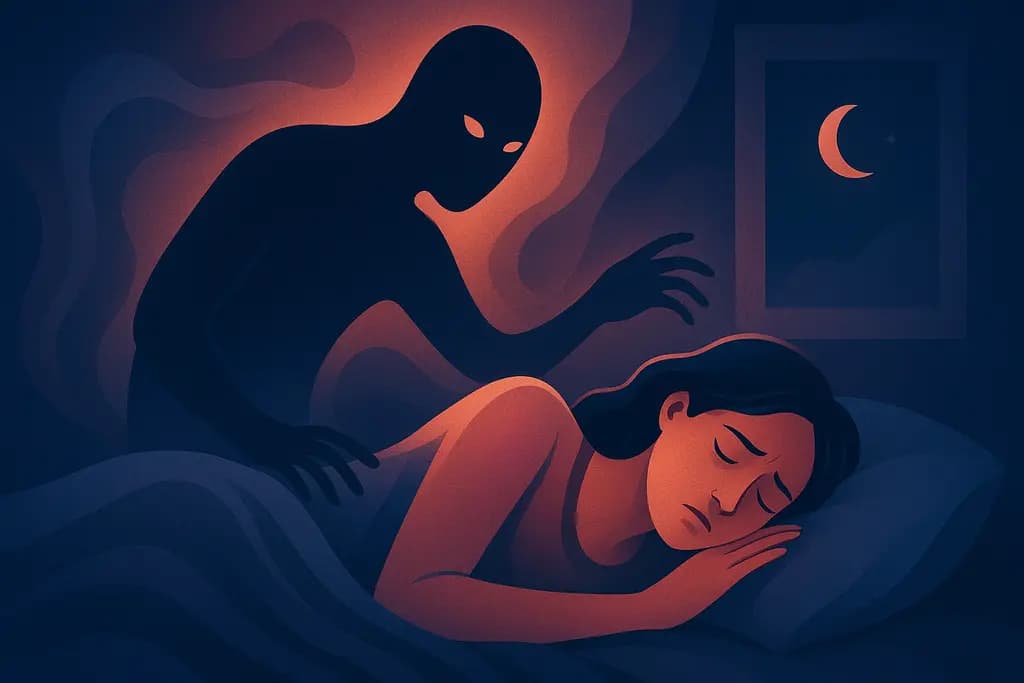
You wake already aware of the room around you: a single lamp, a closet door slightly ajar, a damp windowpane. Your chest feels heavy, fingers numb, and you can see another person at the foot of the bed — a partner, a parent, or a shadowy stranger — while your voice stays trapped. Panic rises as you try to push, to shout, but the body will not follow the urgent intention. That tight, breathless frustration often leaves you exhausted long after the dream ends.
Concrete details that tend to stand out
People frequently report small, vivid details: a closed bedroom door that won’t open, the scraping of shoes in a hallway, a rain-slick street outside, damp clothing clinging to skin, a radio playing static, or a pulse thudding in the ear while limbs refuse to move.
The emotional and symbolic message
Emotional Freeze — unresolved feelings. If the paralysis occurs after an argument or during a memory of someone’s face, the dream often highlights suppressed emotions. You may be avoiding a difficult conversation, holding back anger, or unable to grieve. The immobility reflects what you haven’t said or done; the remedy in waking life is small, concrete steps toward expression—a letter, a short talk, or setting a boundary.
Relationship powerlessness — losing voice at home. When the person at the bedside is familiar, the dream can point to power imbalances: feeling ignored, controlled, or smothered. The paralysis mirrors being cut off from influence in an intimate setting. Practical responses include naming one small change you can ask for, observing who makes decisions, and checking whether fear of conflict is preventing you from asserting needs.
Decision paralysis — stuck at work or life choices. If the scene includes clocks, appointments, or a workplace doorway, the dream often signals indecision about a next step—job change, deadline, or a move. The immobilized body acts out a mind overwhelmed by options or consequences. Breaking choices into two-minute experiments, listing minimum acceptable outcomes, or consulting a mentor can restore momentum.
Existential or creative pause — a forced stillness. Sometimes the paralysis is less about threat and more about a pause: creative blocks, burnout, or spiritual liminality. You may be in a period that requires reflection rather than action. Recognizing the pause as part of a process—sabbatical, simplified routine, or creative incubation—helps shift shame into productive rest and planning.
What this dream is not literally saying
This dream is rarely a literal premonition. It does not usually predict a physical attack or a specific future event. Instead, it signals an internal state—tension, hesitation, or conflict—rather than a literal external threat. An emotional nuance: the terror can feel immediate even when the underlying issue is subtle or slow-developing.
Cultural and symbolic views
Meanings vary across traditions: some East Asian descriptions link it to ancestral pressure or spirit visitation, Caribbean and African folktales sometimes name a pressing spirit, and certain Islamic interpretations mention jinn or supernatural interference. Western perspectives tend to emphasize psychological stress and sleep physiology. Each cultural interpretation offers useful metaphors and coping tools, but none is universally definitive.
Personal reflection prompts
- When did you last feel literally unable to speak or act in a waking situation? Who was present and what was at stake?
- What small, concrete action could you try this week to test whether you really can change the situation that feels frozen?
- Where in your schedule, relationships, or body do you notice chronic tension or avoidance that this dream might be pointing to?
Common questions
Is it related to stress?
Is it related to stress? Yes. Sleep-paralysis dreams are commonly linked to acute or chronic stress, anxiety, and disrupted sleep schedules. Stress amplifies the feeling of being trapped and makes the dream more vivid.
What should I do after this dream?
What should I do after this dream? Ground yourself with slow breathing, drink water, and note what felt most frightening. If themes repeat, try a short plan: a calm conversation, one practical choice, and improved sleep hygiene.
Why does this dream repeat?
Why does this dream repeat? Repetition usually means an unresolved pattern—ongoing stress, a decision you’re avoiding, or an unmet need. The dream repeats until the underlying tension is addressed or altered by your actions.
Is this dream a warning?
Is this dream a warning? Not usually as a literal warning. It can be a prompt to pay attention: change a habit, speak up, or reduce stress. Treat it as a signal, not a prophecy.
Dream meanings connected to this one
People who dream about sleep paralysis often end up exploring Abandonment, Aging, and Being Chased next, because the same pressure can show up through different symbols. Comparing them usually makes the emotional pattern clearer. You may also want to compare it with Being Followed if the same mood or conflict keeps showing up.