Dream About Singing at a community ritual – Meaning
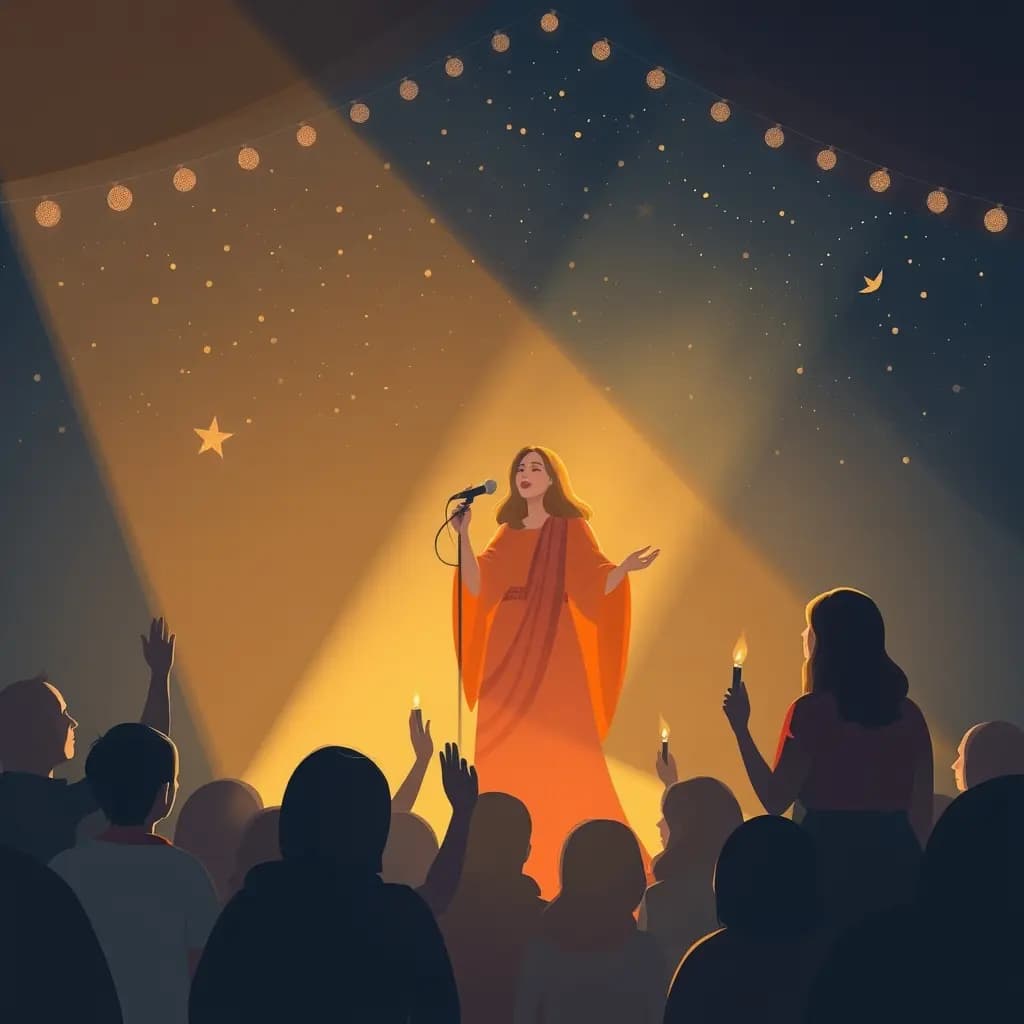
Category: Celebrations & Rituals
Main interpretation
Singing at a community ritual most directly reflects your social identity and perceived role in a group: it points to belonging, the expectation to perform, and the tension between leadership and conformity. If you’re planning a public task—leading a meeting, running an event, or mediating a family issue—the dream often mirrors those responsibilities and how visible you feel. There can be a private nervousness under the public joy: the song is the dream’s shorthand for voice, reputation, and whether you feel heard or judged.
Psychological perspective
From a modern psychological point of view, the dream frames social identity and performance anxiety without implying pathology. Singing together is a common human ritual for bonding; when it appears in dreams it can reflect rehearsing social roles in your mind—practicing how you’ll speak at a meeting, or testing whether you can lead at a family gathering. Interestingly, this same image often surfaces during transitions when you’re recalibrating your public self, and the dream may amplify sensations like trembling or rapid heartbeat to draw attention to where you feel emotionally vulnerable.
Key interpretations
- Belonging and social standing. The communal song can point to how accepted you feel in a group—family, workplace, or neighborhood. If you stand center-stage singing, it may signal rising status or a test of belonging; if you’re at the edge or muted, it can reflect worry about exclusion or being underestimated during a social change like a new job or moving.
- Voice, responsibility, and performance. The act of singing highlights communication and responsibility: perhaps you’re expected to represent others, deliver difficult news, or keep morale up. A clear, leading voice suggests readiness to take charge; a cracked or absent voice often maps to anxiety about public speaking or feeling unprepared for an assigned role.
What this dream usually does not mean
This dream is rarely a literal prediction that you will attend or lead an actual ceremony. It does not usually warn of a single future event. Instead, it reflects current social pressures and inner questions about role and voice; reading it as a straightforward forecast often misses the symbolic focus on identity and responsibility.
Specific details people often mention
People often report specific imagery: a narrow wooden stage, a heavy carved door you had to push through, a wet crowd under drizzle, embroidered robes, the metallic clang of a bell, or the sudden rasp in their throat when a microphone fails. Physical reactions—shaking knees, ringing in the ears, or tears mixing with candle wax—show up in these dreams.
When to take this dream seriously
Take this dream seriously when it recurs, appears during high stress, or follows a life transition—taking a new role, a public obligation, or the death of a community member. Repetition can indicate unresolved fear about performance or acceptance. If the dream intensifies before an interview, wedding, or public talk, it’s a practical cue: prepare the material, rehearse your message, and address any interpersonal tensions beforehand.
Cultural and symbolic views
Meanings vary widely across traditions. In some Indigenous communities, shared song is relational work and a duty to ancestors; in Christian services a hymn may connote praise and moral responsibility; in secular civic rituals it often signals social cohesion. Different traditions emphasize either duty, devotion, or belonging, so the same dream image can be blessing in one culture and obligation in another. Recognize that cultural background shapes whether the dream feels comforting or burdensome.
Common questions
Is this about relationships?
Is this about relationships? It can be about relationships broadly—family, neighbors, coworkers. The dream often maps onto how you connect and communicate in a group, not just romantic ties.
Why does this dream repeat?
Why does this dream repeat? Repetition usually signals an unresolved social role or anxiety about an upcoming public responsibility; your mind is rehearsing responses until you feel prepared or make a decision.
Is this dream a warning?
Is this dream a warning? Usually not a literal warning. It’s more often a prompt to notice where you feel pressured or unheard and to take practical steps—practice, delegate, or set boundaries—before stress escalates.
Dream meanings connected to this one
People who dream about singing at a community ritual often end up exploring Solo Dance in a Crowded Hall, Standing at a Podium Without Words, and Parade Where No One Claps next, because the same pressure can show up through different symbols. Comparing them usually makes the emotional pattern clearer. You may also want to compare it with Carrying a Candle That Won't Light if the same mood or conflict keeps showing up.