Dream About shadow acting on its own chasing me dream meaning – Meaning
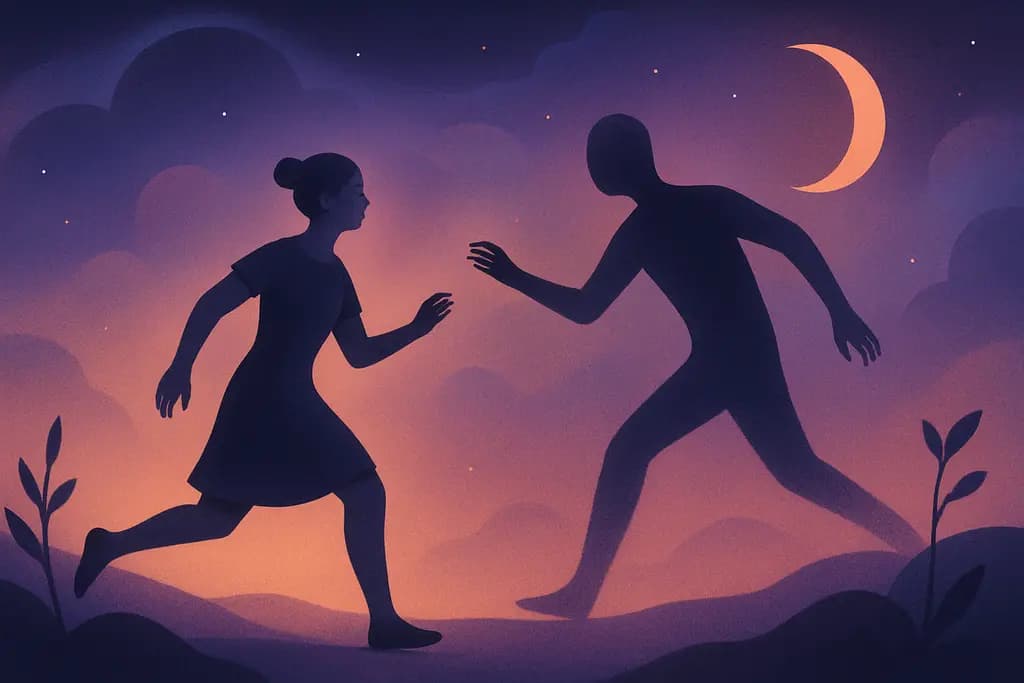
Category: Spiritual & Symbolic
What this dream usually means
A shadow acting on its own and chasing you commonly means a disowned aspect of yourself — fear, shame, a secret worry, or anger — is pressing for acknowledgement. The shadow’s pursuit mirrors real-life avoidance: you might be making decisions to ignore uncomfortable feelings (skipping a conversation, postponing a diagnosis, staying in a job you resent). It can feel terrifying yet oddly familiar, because the dream dramatizes an emotional pattern that’s already operating in waking life and demanding change or integration.
Psychological perspective
In many cases, therapists describe chasing shadows as a representation of dissociated material: feelings or memories kept out of awareness because they’re painful or inconvenient. If you’ve recently avoided a difficult conversation, taken on extra work to distract yourself, or moved cities without processing loss, that avoidance shows up as a pursuing shape. The dream compresses time and emotion — rapid heart rate, trapped rooms, sudden darkness — into a symbolic scene that invites reflection without offering clinical diagnosis.
What this dream is not literally saying
This dream is rarely a literal prediction of an outside threat or a supernatural event. It does not usually forecast someone stalking you in waking life or a physical danger tied to a person you know. Instead, the chase functions as an internal metaphor: the pursuer is most often an emotional or psychological state rather than an external prophecy.
Key interpretations
- 1. Repressed part of the self. The shadow represents an emotion or trait you’ve sidelined—anger you won’t show at work, grief you postpone, or ambition you hide. The chase means that avoidance hasn’t worked: the feeling is energetically active. Confronting it could mean naming the feeling aloud, journaling the incident that sparked it, or having a controlled conversation with the person tied to that emotion.
- 2. Fear of losing control or identity. The autonomous shadow can reflect anxiety about change—losing status after a life transition, slipping away from values, or being caught in a failing role. The dream dramatizes a perceived threat to your sense of self. Practical responses include mapping where you feel unsettled (finances, role, relationship), setting one manageable boundary, and testing small changes to reclaim agency.
Concrete details that tend to stand out
People often report tight, specific imagery: a flickering streetlight in a parking garage, a narrow hallway with a locked door, a crowd parting as the shadow passes, rain drumming on a taxi roof, or their own shoes slipping. Common body reactions include a pounding heartbeat, a taste of metal, or hands that won’t move.
When this dream deserves attention
Take this dream seriously if it repeats, follows a major stressor, or leaves lingering fear the next day. Recurring chasing dreams tend to mark unresolved fear or a decision you’re postponing (ending a relationship, quitting a job, confronting a family secret). In transitions—moving house, becoming a parent, changing careers—these dreams often spike. When the dream alters your appetite, sleep, or functioning, it’s a sign to act: make one concrete plan (a conversation, a doctor appointment, a pause from social media) and monitor whether the dream intensity falls.
Symbolic meaning across traditions
Meanings vary across cultures and belief systems. In Jungian-informed Western traditions the shadow is a psychological archetype; in some Eastern practices a chasing figure might symbolize karmic momentum or a lesson to undergo; in folk traditions it could be an omen or a restless spirit. Be cautious about one-size-fits-all claims: different communities give different weights to symbol, and personal context matters more than any single cultural label.
FAQ
What should I do after this dream?
What should I do after this dream? Write down the scene and the strongest emotion, then choose one concrete step (call someone, block a recurring stressor, or set a 15‑minute reflection) to address the feeling within 48 hours.
Is this about money?
Is this about money? Not usually. While financial anxiety can manifest as a pursuing shadow if you’re worried about bills or job loss, the dream more often points to an avoided emotion or identity concern than money itself.
Is this dream a warning?
Is this dream a warning? It can serve as a symbolic warning—an invitation to face something you’re ignoring—rather than a literal prediction of danger. Treat it as a prompt to examine what you’ve been avoiding.
Can this dream be positive?
Can this dream be positive? Yes. Facing or integrating what the shadow represents often reduces the dream’s intensity and can free energy for creativity, clearer decisions, or healthier relationships.
Related dream meanings
Dreams about shadow acting on its own chasing me dream meaning are often connected to black shadow acting on its own in my dream, seeing a black void or abyss in a dream spiritual meaning, and staring into a black abyss dream meaning. Looking at those nearby themes can help you compare control, fear, pressure, or change across similar dream scenes. You may also want to compare it with dream about staring into a black void if the same mood or conflict keeps showing up.