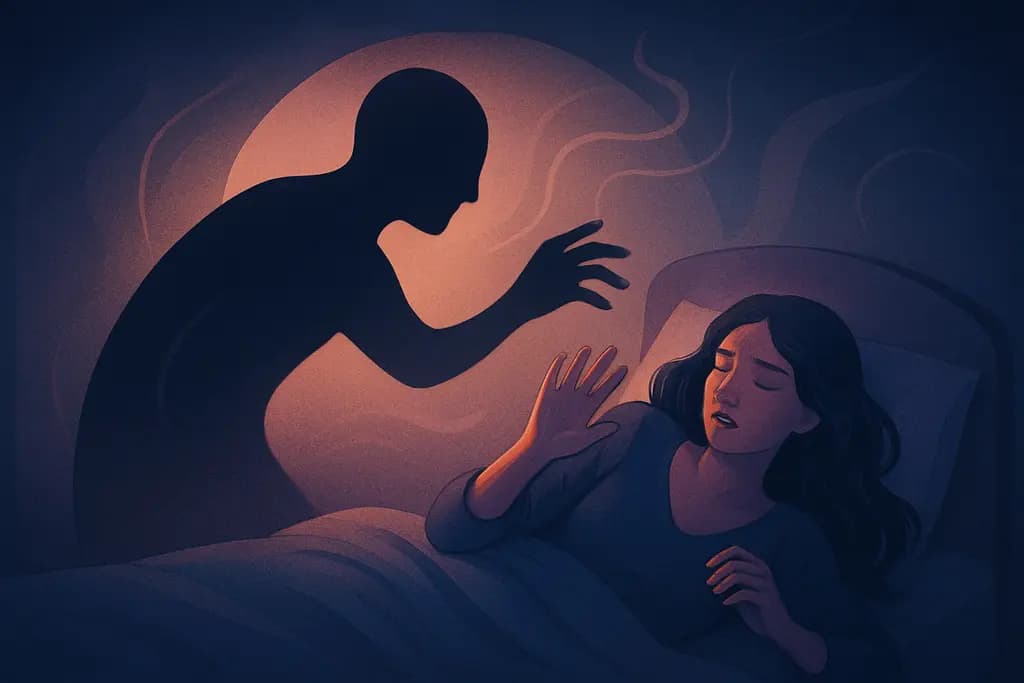
Dream About shadow acting on its own attacking me in bed – Meaning
Category: Spiritual & Symbolic
Dreaming that a shadow acts on its own and attacks you in bed often feels intimate and invasive: it combines vulnerability (being in bed) with a part of the self or unknown force that moves independently. The exact meaning depends on the emotions you felt during the dream and the waking context around it — fear, anger or calmness will shift interpretation. Keep details in mind: who the shadow resembles, whether it speaks, and how the attack unfolds.
General meaning of dreaming about shadow acting on its own attacking me in bed
This dream commonly symbolizes an aspect of yourself or your life that feels out of control or separate from your conscious intentions. Shadows in dreams represent hidden material — suppressed feelings, unwanted habits, or parts of your identity you haven’t integrated. When the shadow moves and attacks while you are in bed, the imagery ties those hidden elements to rest, intimacy, boundaries, or personal safety.
Typical interpretations include a sense of violation, confrontation with the unconscious, or an inner impulse that you’re trying to ignore. The attack dynamic emphasizes urgency: something unresolved is pressing for attention and may be destabilizing your private life.
- Repressed emotions or memories surfacing
- Boundary violations or feeling unsafe in intimate space
- Parts of the self acting independently (impulses, shadow aspects)
- A wake-up call to address neglected issues
Spiritual meaning of shadow acting on its own attacking me in bed in dreams
Spiritually, a self-moving shadow attacking you in bed can point to energetic imbalances or soul-level calls to integrate darker material. Many traditions view shadows as the unconscious or parts of the ego that need compassion and transformation rather than punishment. In shamanic frameworks the shadow may be a disowned fragment seeking retrieval; in Jungian-influenced spiritual practice it signals a need for shadow work.
Across traditions the emphasis is on reconciliation: the attack is less about a malevolent external being and more about a push to reclaim wholeness. Prayer, energetic clearing, or gentle inner dialogue can be framed as responses without implying literal supernatural danger.
Psychological interpretation
Fear, stress or anxiety
This dream often mirrors heightened anxiety: the bed is a place of rest, so an attack there reveals that worries are intruding where you should feel safe. Ongoing stressors—work pressure, health scares, financial uncertainty—can manifest as a shadow that seems to move with intent and aggression.
Relationships and emotional bonds
When the shadow appears in the sleeping space, it can reflect tensions in intimate relationships or fears of betrayal. It may represent a partner’s behavior, unspoken resentment, or anxieties about emotional closeness. The attack dynamic suggests that these relational issues feel sudden or uncontrollable.
Control, power or vulnerability
A shadow acting independently highlights struggles over control: parts of you acting impulsively, or external forces undermining your autonomy. Feeling attacked in bed points to vulnerability and a need to re-establish boundaries and personal power.
Positive meaning
- Sign of impending integration: the shadow's presence can mark the beginning of healthy inner work and fuller self-awareness.
- Catalyst for change: the dream may push you to address neglected emotions or mend strained relationships.
- Opportunity to strengthen boundaries: recognizing where you feel violated can lead to clearer limits and safer spaces.
- Increased resilience: confronting a frightening dream image and processing it can build emotional strength.
Negative meaning and warnings
- May suggest unresolved trauma or suppressed anger that needs attention rather than avoidance.
- Can indicate boundary violations in waking life, such as inappropriate behavior from others or lack of privacy.
- May point to rising anxiety, burnout, or worsening sleep disturbance if the theme recurs.
- Could reflect unhealthy coping strategies that act 'on their own'—substance use, impulsive behavior, or dissociation.
Common variations of dreams about shadow acting on its own attacking me in bed
- black shadow acting on its own: Often read as powerful, opaque emotions—fear, grief, or unresolved rage—surfacing forcefully. The darkness emphasizes intensity and things you find hard to name.
- white shadow acting on its own dream meaning: A lighter or pale shadow can suggest denial, numbness, or sanitized parts of the self showing up; it may feel eerie because it contradicts the usual darkness associated with shadows.
- shadow acting on its own chasing me: Chasing scenes highlight avoidance—something you’re running from in waking life. The pursuit implies urgency: the matter won’t resolve unless faced.
What to do after such a dream
- Reflect on emotions: write down how you felt during the dream and immediately after waking. Note images, people, sounds, and the exact setting.
- Look at current life situation: check for recent stressors, boundary breaches, or relationship strains that relate to the dream imagery.
- Consider relationships, fears, decisions: ask whether someone or some choice is making you feel unsafe or out of control; identify small steps to address it.
- Practice grounding and boundary rituals: simple actions—setting a bedtime routine, turning on a low light, or visualizing protective boundaries—can reduce anxiety and reclaim your sleeping space.
- Use creative or therapeutic outlets: journaling, talking with a trusted person, or working with a counselor or spiritual guide can help integrate the material behind the dream.
If dreams of this type repeat and severely disturb your sleep or daytime functioning, consider seeking supportive mental health or spiritual guidance to process the underlying issues (this is general guidance, not medical advice).