Dream About Shadow acting on its own – Meaning
Category: Spiritual & Symbolic
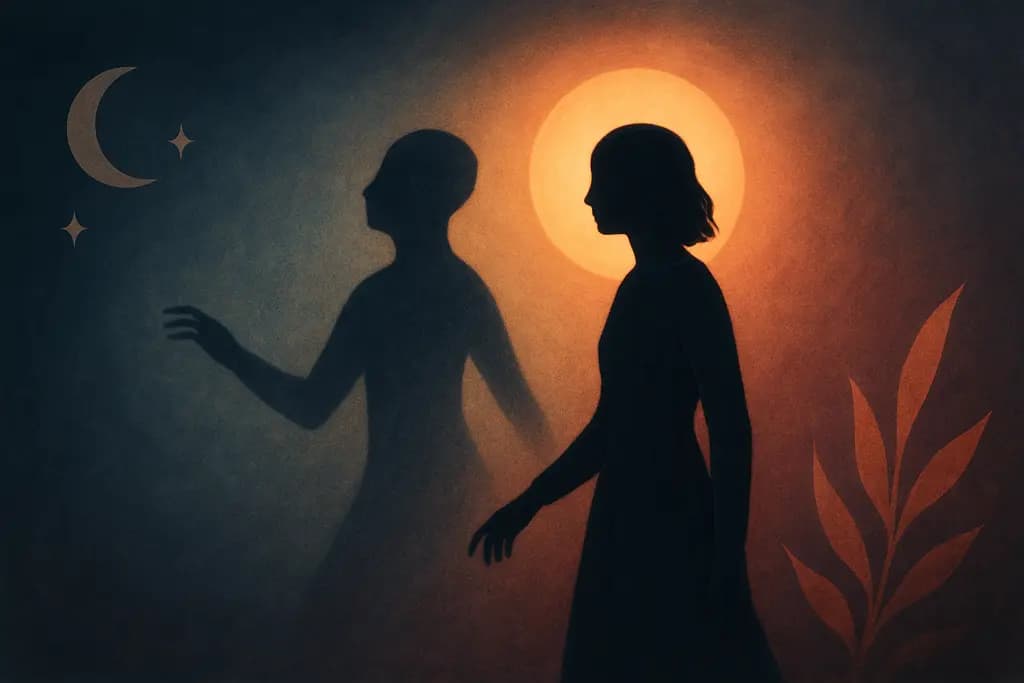
Dreaming of a shadow acting on its own often feels uncanny — the part of you that should mirror your movements instead moves independently. Such dreams point to aspects of your inner life that are asserting themselves without your conscious permission. The full meaning depends heavily on how the dream made you feel and what was happening around you in the dream.
General meaning of dreaming about Shadow acting on its own
At its core, a shadow that moves on its own symbolizes elements of the unconscious or 'shadow self' asserting autonomy. Rather than being a neutral reflection, the shadow behaving independently suggests that repressed feelings, habits, or impulses are surfacing and acting without your direct control.
Common interpretations include a sense of lost alignment between conscious intention and deeper drives, or a warning that unattended emotional material is influencing your life. The precise tone—threatening, curious, playful—shapes whether the message feels alarming or liberating.
- Repressed emotions or impulses making themselves known
- Inner parts seeking attention or change
- A mismatch between your public self and private urges
- Emerging creativity or intuition that bypasses rational control
Spiritual meaning of Shadow acting on its own in dreams
Spiritually, an autonomous shadow often points to inner work: the unseen energies, ancestral imprints, or soul-level patterns asking for recognition. Many spiritual traditions use 'shadow' language to describe the aspects of the self that must be integrated for wholeness.
In a universal sense, this dream can be read as an invitation to soul integration — acknowledging neglected feelings, returning balance to your energetic field, or receiving guidance from parts of you that speak in nonverbal ways. In some practices, it may also suggest ancestral echoes or karmic patterns briefly stepping forward to be noticed.
Psychological interpretation
Fear, stress or anxiety
When fear is present in the dream, a shadow acting on its own may reflect anxiety about losing control. Stress can make automatic, survival-oriented parts of the psyche take over; the dream stages that process so you can observe it safely.
Relationships and emotional bonds
If the dream involves other people, the autonomous shadow can symbolize unspoken tensions or hidden resentments in relationships. It may represent a part of you that reacts emotionally before you communicate, or it might be projecting someone else's hidden side onto you.
Control, power or vulnerability
This dream often raises questions of agency: who is in charge of your actions and choices? A shadow with independent movement can indicate feelings of powerlessness or, conversely, a growing capacity to release rigid control and allow more spontaneous, authentic expression.
Positive meaning
- Sign of personal growth: unconscious material surfacing for integration
- Creative breakthrough: intuitive or imaginative energy bypassing rational blocks
- Increased self-awareness: prompts honest reflection and emotional clarity
- Healing opportunity: gives you the chance to address long-standing wounds
- Greater authenticity: moving toward alignment between inner truth and outer life
Negative meaning and warnings
- May suggest unresolved trauma or suppressed anger that needs attention
- Can indicate poor impulse control or acting on feelings without considering consequences
- Might point to manipulative influences or internalized patterns that direct your behavior
- Could warn of emotional overwhelm if ignored or dismissed
Common variations of dreams about Shadow acting on its own
- Shadow moving independently from you: Often signals parts of your personality that feel disconnected from conscious goals; a prompt to reunite those parts.
- Shadow leaving your side or detaching: May indicate a sense of emptiness, loss of identity, or a desire to separate from a role you’ve played.
- Your shadow influencing other people: Suggests projection—qualities you disown in yourself that you see in others or that affect your relationships.
- Shadow acting maliciously or sabotaging: Can point to self-sabotage or internal criticism undermining your efforts.
- Shadow dancing or playful independent movement: Often a more positive sign of liberated creativity or parts of you wanting expression.
- Multiple shadows acting on their own: Reflects complex inner conflicts, competing drives, or many unresolved issues vying for attention.
- Shadow refusing to obey or resisting: Symbolizes inner rebellion against rules, expectations, or an identity you no longer accept.
- Shadow guiding you or leading the way: May represent intuition or deeper wisdom stepping forward to direct choices you’ve neglected to make consciously.
What to do after such a dream
- Reflect on emotions: write down how you felt during and after the dream, and which moments triggered the strongest reactions.
- Journal specifics: note where the shadow went, what it did, and any people or places present to identify patterns.
- Look at current life situations: check relationships, work stress, or decisions that might be stirring unconscious material.
- Practice gentle integration work: try mindful self-observation, creative expression, or talk therapy to welcome and understand the shadow material.
- Set small practical steps: if the dream highlights a habit or fear, pick one manageable action to restore alignment between intention and behavior.
These steps help you treat the dream as a signal — not a verdict — guiding compassionate attention to parts of you that need care and integration.