Dream About Seeing someone else drown – Meaning
Category: Fears & Nightmares
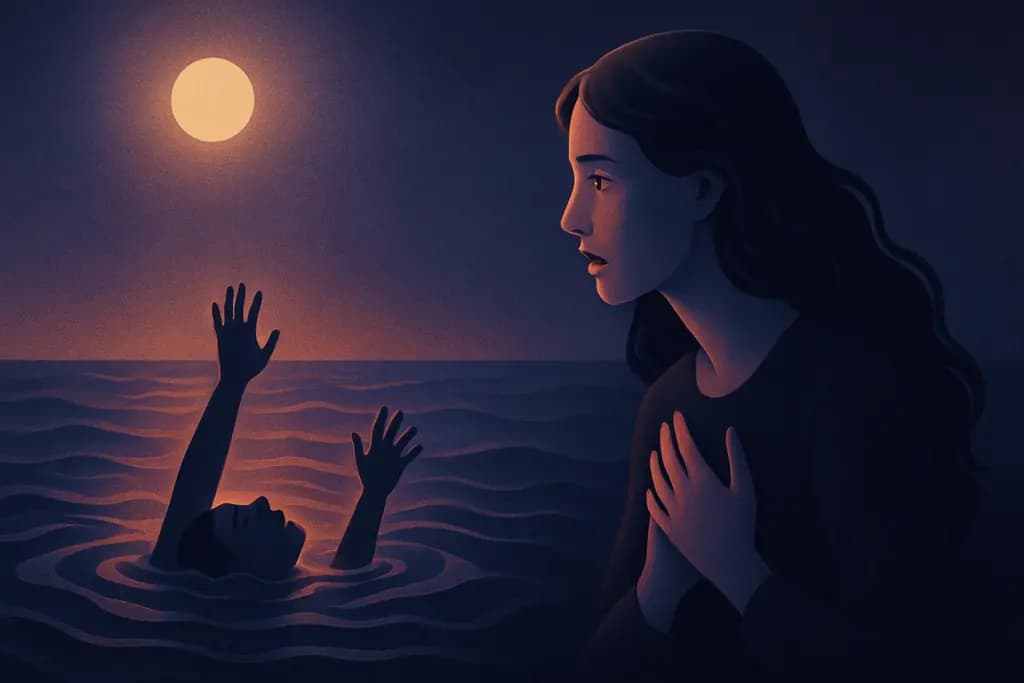
Seeing someone else drown is a vivid, unsettling dream that often leaves you shaken on waking. It usually points to feelings of helplessness, fear for another person's wellbeing, or an emotional situation that feels overwhelming. The exact meaning depends heavily on who is drowning, your role in the dream, and the emotions you felt while watching.
General meaning of dreaming about Seeing someone else drown
At its core, dreaming about seeing someone else drown symbolizes emotional overwhelm, perceived loss of control, and anxiety about another person's fate or the health of a relationship. Water in dreams represents emotion and the unconscious; a drowning figure amplifies the sense that these feelings are cascading beyond what you or the other person can manage.
This dream can also reflect projection — attributing your own feelings to someone else — or it can highlight real-life worries about a loved one who is struggling. The context and your feelings in the dream (panic, calm observation, guilt, relief) shape the interpretation.
- Fear and helplessness: feeling unable to intervene in a crisis
- Concern for others: anxiety about someone’s choices or wellbeing
- Emotional overload: feelings or situations that are drowning you figuratively
- Guilt or responsibility: sensing you failed to help or protect
Spiritual meaning of Seeing someone else drown in dreams
Spiritually, seeing someone else drown can indicate energetic draining or empathic overload. In many intuitive traditions, water is the terrain of the soul; witnessing drowning points to an imbalance in emotional boundaries or a need to cleanse and restore energetic limits.
Some spiritual frameworks read this dream as a call to pray for, send compassion to, or energetically support the person seen drowning. In other traditions it may signal that an attached relationship or belief is dissolving and needs conscious release. Universally, the emphasis is on restoring balance — either through inner work or by changing how you engage with emotional currents around you.
Psychological interpretation
Fear, stress or anxiety
Psychologically, the image of someone drowning often mirrors acute stress or anxiety. You may be anxious about a specific situation — a health scare, financial trouble, or a pending change — and the dream transforms that anxiety into a dramatic scene where one person is overwhelmed by emotion or circumstance.
Relationships and emotional bonds
When the dream features a loved one, it can reflect worry about that person’s emotional state or about the stability of your bond. If you feel unable to help in the dream, it may mirror feelings of impotence in the relationship: you want to fix things but feel blocked or ineffective.
Control, power or vulnerability
Watching someone else drown can highlight issues of control and vulnerability. You might be struggling with boundaries — feeling either smothered by another person’s needs or burdened by responsibilities you didn’t choose. Alternatively, it can reveal power dynamics where someone else’s instability forces you into caretaker or bystander roles.
Positive meaning
- An opportunity to recognize and release old attachments that no longer serve you
- A prompt to strengthen emotional boundaries and practice self-care
- Awareness that allows you to offer meaningful support instead of reactive rescue
- A motivator for personal growth: facing hard emotions so they no longer overwhelm you
- A sign that surfacing fears can lead to new empathy and deeper relationships
Negative meaning and warnings
- May suggest unchecked anxiety that can impact sleep, mood, or relationships
- Can indicate emotional burnout or empathic overload if you habitually caretake
- May suggest avoidance of difficult conversations that will worsen if left unaddressed
- Can indicate feelings of guilt or unresolved responsibility toward someone
- May point to a relationship that is emotionally draining and needs firm boundaries
Common variations of dreams about Seeing someone else drown
- Watching a loved one drown: Often reflects acute worry about that person’s wellbeing or the health of your relationship; you may feel powerless to help.
- Seeing a child drown: Heightened fear and protective instincts; may indicate worry about vulnerability or responsibility for someone dependent on you.
- Watching a stranger drown: Could represent a projection of your own submerged emotions onto an unknown figure, or general anxiety about the world.
- Trying but failing to save someone from drowning: Suggests guilt, self-blame, or a real-life sense that your efforts are ineffective.
- Successfully rescuing someone: Indicates emerging confidence, healing, or the ability to step in and restore balance.
- Repeated dream of someone drowning: Signals a persistent, unresolved issue that needs conscious attention rather than avoidance.
- Someone drowning in a stormy sea: Amplifies chaos and emotional overwhelm; may relate to external stressors piling up.
- Someone drowning in shallow water: Suggests that the situation may be more manageable than it appears and could be resolved with clearer perspective.
What to do after such a dream
- Reflect on your emotions: note who was in the dream, how you felt, and what part of your life mirrors that feeling.
- Check current stressors: identify recent or ongoing situations that make you feel overwhelmed or responsible for others.
- Reach out: if the dream centers on a real person, consider a caring, non-accusatory conversation to check how they are doing.
- Strengthen boundaries: practice saying no, delegating, or taking breaks if caretaking is draining you.
- Use the dream as data: journal about recurring themes, and consider small practical steps to reduce emotional overload, like rest, support, or therapy if helpful.
If the dream is especially troubling or persistent, treat it as a sign to pay attention to your emotional health and relationships, and take compassionate steps to restore balance.