Dream About Seeing Blood – Meaning
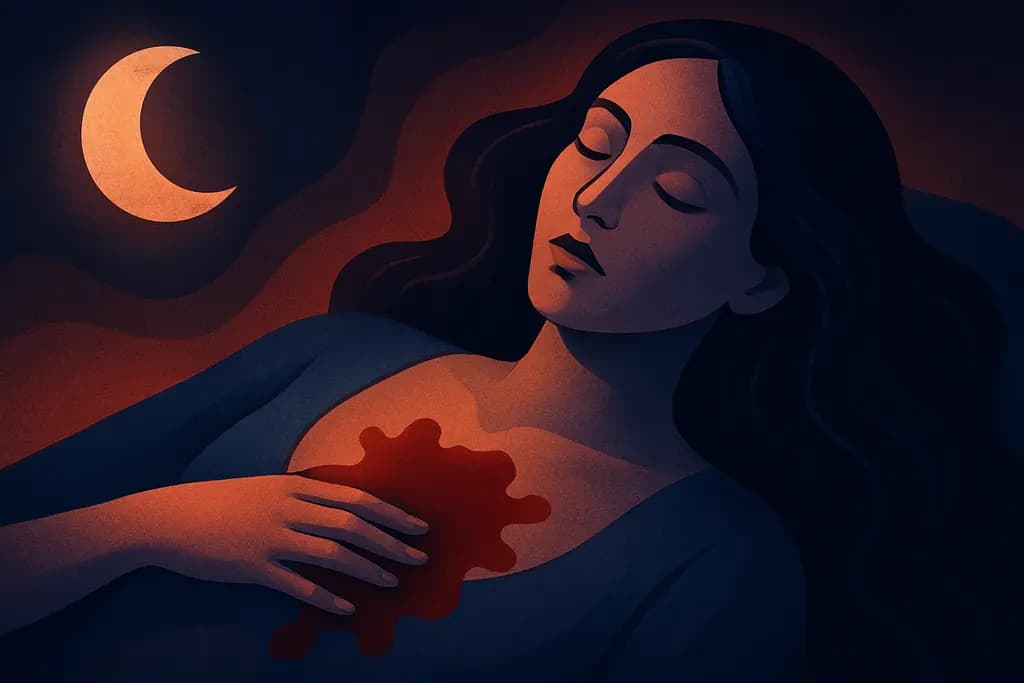
Category: Body & Health
Main interpretation
Direct answer: this dream most often points to issues around vitality, loss, or repair rather than a literal injury. If you saw your own blood, the dream commonly signals feeling drained — physically, emotionally, or from responsibilities. If someone else was bleeding, it often reflects worry or responsibility toward that person. The location (hands, mouth, clothing) and your reaction (panic, detachment, tending the wound) quickly shift meaning from threat to opportunity for repair.
What it can reflect emotionally
From a modern psychological view, seeing blood in sleep commonly mirrors inner states: exhaustion, grief, anger, or the sensation of having given too much. In many cases, the dream surfaces what you’ve been tolerating without notice — an overdue boundary, buried guilt, or a long-standing loss. Concrete life events like a recent breakup, repeated workplace stress, or caring for someone ill often trigger this imagery; mixed emotions (fear mingled with relief) are a meaningful contrast to note.
What this dream is not literally saying
This dream is rarely or does not usually function as a literal health prediction or a prophecy of violence. It does not usually mean an immediate physical calamity will occur. Instead, the image acts symbolically — representing energy loss, emotional wounding, or the need to set or repair boundaries — not a direct external event.
Three common meanings
- Energy drain or burnout. If the blood appears to be flowing from you and you feel exhausted in the scene, the dream commonly reflects depletion: long work hours, caregiving without support, or emotional labor. The blood symbolizes life-force being given away; the dream prompts you to notice where your energy is leaking and where you might reclaim it.
- Emotional wound or grief. Blood showing after an argument, breakup, or loss often points to open emotion — shame, grief, guilt, or unresolved anger. Seeing blood on clothing or someone you love bleeding can represent empathy or fear of losing that relationship. The dream highlights a need to acknowledge and process that hurt.
- Healing, release, and transformation. In some dreams blood appears during a cleaning, bandaging, or ritual and can signal release or renewal. Fresh blood can mean a raw stage of change; clotted or fading stains may suggest healing under way. This angle frames the scene as a transition: something must be acknowledged and let go for new energy to arrive.
Concrete details that tend to stand out
Dreamers frequently recall small, vivid details: a tiled bathroom with a slow drip into the sink, a white blouse spreading a dark bloom, a metallic taste, a distant ambulance siren, or barefoot steps leaving stains on pavement. Hands that tremble while trying to wash away the blood and the specific sound of clothing tearing tend to lodge in memory.
Why recurring versions matter
Recurring nights with blood imagery deserve attention: repetition often signals unresolved fear, chronic stress, or an ongoing life transition (separation, a health scare, career change). If the scene intensifies or you wake with lingering panic, that pattern indicates a persistent inner conflict asking for action: boundary-setting, focused grief work, or concrete rest. If concerned about actual physical symptoms, seek medical guidance; otherwise, persistent dreams point to psychological or practical issues to address.
Symbolic meaning across traditions
Meanings vary across cultural and religious traditions: some see blood as ancestral connection, others as impurity or sacrificial power. In folklore, blood links living kin and rites of passage; in modern spiritualities it may stand for renewed vitality. Avoid assuming one culture’s interpretation applies universally — instead, note which cultural frame resonates with your own upbringing or beliefs.
Common questions
Is this about money?
Is this about money? Usually not directly. Blood can metaphorically represent being 'bled dry' by expenses or obligations, so if you’re facing financial drain the dream may express that anxiety, but it rarely signals a literal monetary event.
Is this dream a warning?
Is this dream a warning? Not typically a literal warning. It can serve as an emotional alert — a prompt to notice risky patterns, neglect, or relationship harm — rather than predicting an immediate external danger.
Why do I feel fear in this dream?
Why do I feel fear in this dream? Fear comes from the sense of vulnerability and loss of control that blood evokes. The body-based imagery triggers protective responses tied to identity, safety, and bodily boundaries.
Can this dream be positive?
Can this dream be positive? Yes. While vivid, the image often opens the way to healing: admitting pain, setting boundaries, or releasing burdens can follow. Blood in a ritualized or cleansing context especially leans toward transformation and renewal.
Dream meanings connected to this one
People who dream about seeing blood often end up exploring Seeing Blood or Bleeding, Seeing unexplained blood, and Aging or Seeing Yourself Old next, because the same pressure can show up through different symbols. Comparing them usually makes the emotional pattern clearer. You may also want to compare it with Blood on your hands if the same mood or conflict keeps showing up.