Dream About Seeing a Wolf Alone – Meaning
Category: Animals
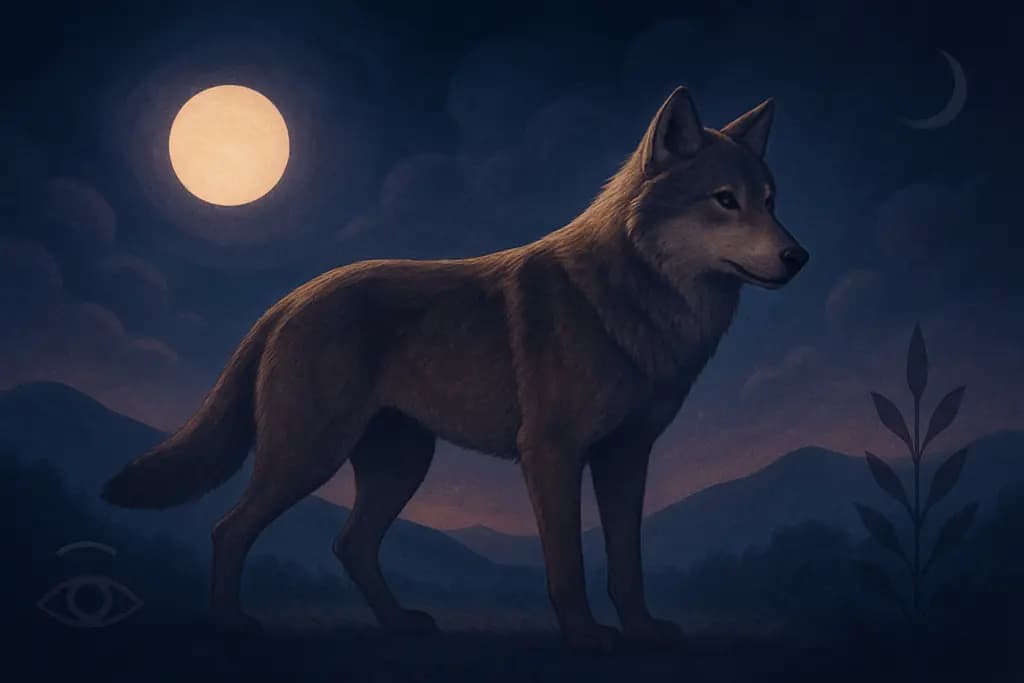
Seeing a wolf alone in a dream often points to themes of solitude, self-reliance and inner guidance. A solitary wolf can feel empowering or unsettling depending on the dreamer’s mood and life situation. The exact meaning depends heavily on how you felt in the dream and the surrounding context.
General meaning of dreaming about Seeing a Wolf Alone
A lone wolf is a potent symbol of independence and instinct. In dreams it commonly represents a part of you that prefers solitude, trusts its own judgment, or is navigating a transition without obvious support. At the same time, a solitary wolf can evoke warning signs — hidden dangers, unattended grief, or a need to re-evaluate social ties.
- Independence and self-reliance
- A call to trust intuition and inner guidance
- Isolation, loneliness, or deliberate withdrawal
- Leadership, courage, or stepping into a new role
- A warning about vulnerability or unseen threats
Typical interpretations balance empowerment and caution: for some dreamers a lone wolf is an invitation to embrace autonomy and personal strength; for others it highlights unresolved fears, social distance, or the need to attend to emotional wounds.
Spiritual meaning of Seeing a Wolf Alone in dreams
Spiritually, the lone wolf often appears as a guide or guardian of personal transformation. Many traditions portray the wolf as a teacher of boundaries, loyalty to self, and the ability to move between worlds (the conscious and the unconscious). In shamanic contexts the wolf can be a spirit animal that encourages you to listen more closely to dreams and instinct.
Across cultures the lone wolf can symbolize initiation, a call to deeper inner work, or an energetic clearing that prepares you for a change. Whether viewed through indigenous, pagan, or Jungian lenses, the emphasis is on learning from solitude rather than fearing it.
Psychological interpretation
Fear, stress or anxiety
A lone wolf may surface when you feel exposed, threatened, or under pressure. If the dream evokes fear, it can be an expression of fight-or-flight activation: your mind is naming anxiety as a solitary, watchful presence. The wolf can represent hypervigilance or the sense that you must fend for yourself.
Relationships and emotional bonds
Dreaming of a solitary wolf can reflect changes in social life — a desire for distance, a breakup, or feeling misunderstood by peers. It can also indicate healthy boundary-setting: choosing solitude to heal or gain clarity rather than staying in draining relationships.
Control, power or vulnerability
The lone wolf may relate to power dynamics. If you feel confident in the dream, it can symbolize reclaimed personal power and leadership. If you feel small or threatened, it can highlight vulnerability or fears about losing control. The image often points to an internal negotiation between asserting yourself and protecting your soft edges.
Positive meaning
- Embracing independence and self-trust, especially during a life transition.
- Strengthening intuition and inner guidance; learning to rely on your instincts.
- Personal growth through intentional solitude: reflection, creativity, or spiritual practice.
- Rising to leadership or a role that requires resilience and clear boundaries.
- Healing through acknowledgment of previously suppressed strengths.
Negative meaning and warnings
- May suggest growing isolation or withdrawal that could harm relationships.
- Can indicate unresolved fear, hypervigilance, or chronic stress that needs attention.
- May point to hidden threats — people or situations you haven’t fully assessed.
- Can indicate avoidance: choosing solitude to escape problems instead of addressing them.
Common variations of dreams about Seeing a Wolf Alone
- Lone wolf howling: Often signals a call for recognition or a release of pent-up emotion; it can ask you to express what you’ve been holding in.
- Approaching lone wolf: If it comes closer, the dream may indicate an urgent inner message or a challenge you must face rather than avoid.
- Injured lone wolf: This can reflect your own wounded parts — resilience mixed with vulnerability and the need for self-care.
- Young or lone wolf pup: Suggests new, undeveloped aspects of independence or an emerging strength that needs nurturing.
- Watching lone wolf at a distance: Often means you’re observing a drive or impulse without engaging it—useful for reflection on whether to act.
- Being followed by a lone wolf: Can indicate persistent anxiety or a responsibility you feel unable to shake off.
- Lone wolf on a path or road: May represent a clear life direction that feels solitary but necessary for personal growth.
What to do after such a dream
- Reflect on your emotions from the dream: did you feel fear, calm, curiosity or something else? Journal those impressions.
- Look at your current life situation: are you making choices that require solitude, or are you withdrawing to avoid conflict?
- Consider relationships and boundaries: is there someone you need to set limits with, or someone you should reconnect with?
- Pay attention to decisions that call for independence: small steps toward autonomy can be constructive (learning a skill, setting aside time for reflection).
- Use grounding practices after vivid dreams: breathe, walk outside, or speak with a trusted friend to integrate the imagery.
If the image continues to trouble you, note patterns in repeat dreams and consider exploring them with a therapist, counselor, or dream-worker to gain deeper insight.