Dream About Ruined or abandoned city – Meaning
Category: Places
What this dream usually means
This dream most commonly signals endings and neglected parts of life that need attention. In many cases, a ruined or abandoned city represents structural change—collapsed routines, relationships that have drifted, or projects left to decay—and the emotional work required to clear space. The scene often points to both grief over what’s gone and the potential to rebuild: the state of the streets, whether you feel fear or calm, helps show whether you’re mourning, exhausted, curious, or ready to start again.
What this dream often looks like
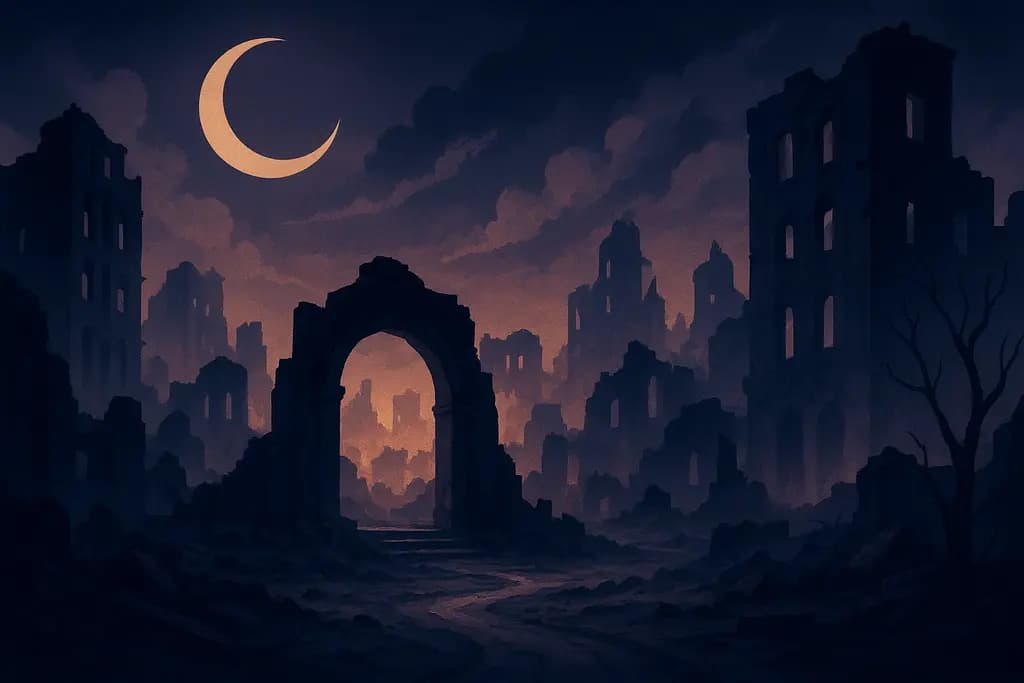
You find yourself on a cracked avenue beneath a gray sky, boots crunching on broken tiles. A half-collapsed library stands to your left, its doors hanging open; a playground in the distance is choked with weeds. You feel a mixture of hollow quiet and a strange curiosity, smelling dust and damp paper as the wind moves through empty apartments. Sometimes you pause at a doorway that looks like your childhood home, and your chest tightens as if remembering both loss and something that could be reclaimed.
Specific details people often mention
People often notice toppled statues, children’s toys half-buried in dust, flickering streetlights, or a single running radio. Common body reactions include a sudden chill, rapid heartbeat at a narrow alley, or tears when you touch a familiar door. Details like rain pooling in an empty subway or vines through a bank vault can feel especially vivid.
Emotional and symbolic meanings
- Endings and grieving. If the city feels sorrowful or you move through silent streets, the dream often reflects mourning for a relationship, role, or era of your life. Collapsed buildings can map to collapsed expectations or the end of a career phase; the emotional tone—weighty sadness versus quiet relief—helps show whether you’re stuck in loss or allowing yourself to let go and make space for what comes next.
- Neglect, decay and the chance to rebuild. If curiosity or a sense of possibility accompanies exploration, the abandoned city points to neglected responsibilities, stalled projects or parts of yourself asking for repair. Finding tools, seedlings growing through pavement, or clear routes between ruins suggests practical steps: small repairs, new routines, or creative rebuilding. Fear in the scene can signal avoidance; calm suggests readiness to act.
What this dream is not literally saying
This dream is rarely a literal forecast of disaster or an immediate threat to your home or city; it does not usually predict physical ruin. Rather than forecasting an external catastrophe, it most often uses city decay as a metaphor for internal breakdowns—habits, commitments, or emotional structures—that need attention rather than panic.
Cultural and symbolic views
Meanings vary across traditions. Jungian analysis may read the city as the collective or personal unconscious with archetypal ruins revealing shadow material. Buddhist perspectives might emphasize impermanence and detachment, while some Indigenous readings focus on loss of communal care or warning about neglecting land and lineage. Modern urban cultures often see ruin as commentary on social neglect or economic change. No single cultural view is definitive; consider which framework resonates with your background.
What to ask yourself
- Which buildings, streets, or rooms in the dream felt most important, and what do those places represent in your waking life?
- Did you move through the city with curiosity, fear, or resignation, and how does that match your current approach to change or loss?
- What one small repair or decision could you make this week that would begin rebuilding a neglected area of your life?
Common questions
Is it related to stress?
Yes. Stress commonly shows up as decay in these dreams because ongoing pressure erodes routines and energy. If you’re overwhelmed, the dream often puts that depletion into physical form—broken streets and empty storefronts.
What should I do after this dream?
After this dream, make a short, concrete list: one emotional step (talk or journal), one practical step (clear a small task), and one boundary to protect energy. Treat the dream as a map, not a mandate.
Is this about money?
Not usually. While money or resources might appear in the scene (an empty bank, locked vault), the dream more often symbolizes resource depletion—time, energy, attention—rather than a direct financial forecast.
Why do I feel fear in this dream?
Fear often comes from encountering loss or uncertainty: abandoned places trigger instinctive worry about safety and belonging. That fear points to areas where you feel unmoored or where change feels risky; it’s a signal to explore, not proof of imminent danger.
Related dreams to explore
If this dream keeps returning, pages about Bad Weather, Ballrooms, and black waterfalls can reveal the related patterns underneath it. They often overlap around insecurity, transition, or stress in everyday life. You may also want to compare it with Cave if the same mood or conflict keeps showing up.