Dream About Rotten or Spoiled Food – Meaning
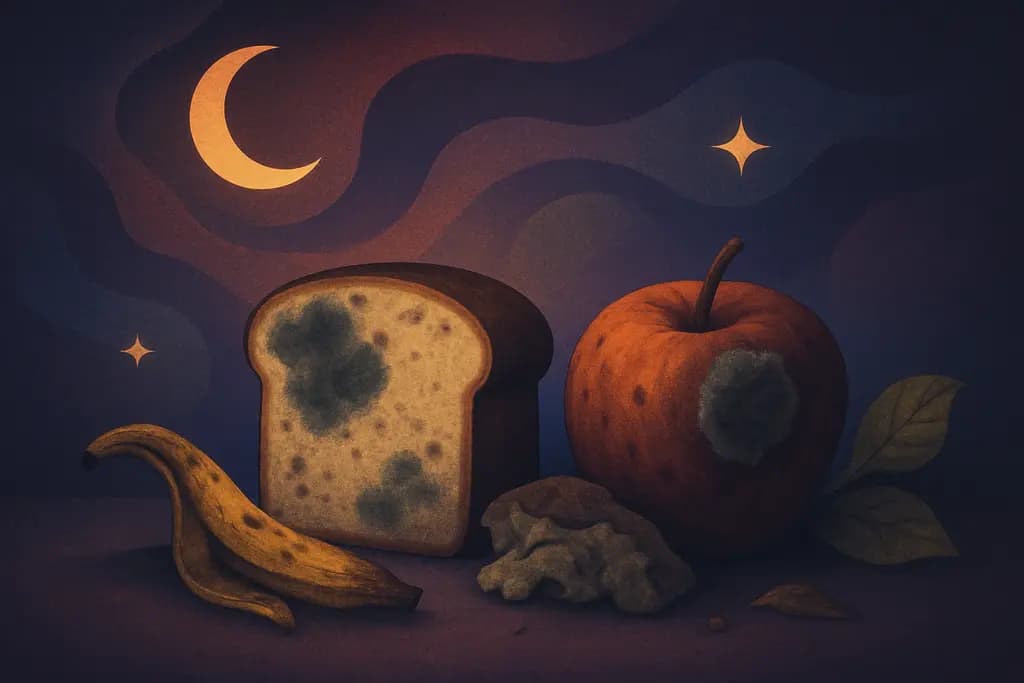
Category: Objects
A typical dream scenario
You open the refrigerator in a cramped kitchen and find jars swollen with mold, a casserole dish leaking sour liquid and a smell that makes your throat close. You feel a mix of disgust and sudden urgency—an overdue task, an ignored relationship, or a stalled project pressing at you. The setting (a pantry, a picnic blanket, or a workplace break room) and your action—throwing things away, trying to eat, or closing the door—changes the tone and suggests what part of life the dream targets.
Concrete details that tend to stand out
People commonly notice specific sensory images: buzzing flies around a dark pantry, a picnic blanket stained with blackened fruit, jars with bulging lids, the sound of a fridge door slamming, or a wave of nausea and a racing heart. These concrete details — a child's plate, a crowded table, or a lone grocery bag — often point to who or what the dream concerns.
What this dream usually means
In many cases, rotten or spoiled food in a dream signals areas of life that have been overlooked and now demand attention: relationships, responsibilities, or routines that have been allowed to decay. The dream often uses visceral disgust to highlight what you've been avoiding—whether practical clutter like unpaid bills or emotional matters like unresolved resentment. Pay attention to what you tried to do in the scene—clean, hide, discard, or eat—to see whether the suggested action is repair, release, or boundary-setting.
How this dream may connect to daily life
Neglected responsibilities. If the spoiled food appears in a kitchen, a workplace breakroom, or among unpaid bills, it may reflect practical tasks you've ignored—unfinished taxes, cluttered living spaces, or projects behind schedule. The impulse to clean or throw things out in the dream often points to a real-world nudge: make a list, delegate, or set a small deadline to stop the pile-up.
Emotional decay and relationship strain. When the scene includes family dinners, shared plates, or a partner refusing to eat, the dream often mirrors unresolved emotional issues: resentment, stale patterns, or conversations you keep postponing. Disgust can mean boundary violations or unmet needs; choosing to discard or compost in the dream can indicate you’re ready to let go or renegotiate the relationship.
Self-care and habit breakdown. Spoiled food may point to routines that have lapsed—poor sleep, skipped meals, substance overuse, or neglect of medical check-ups—without making a clinical claim. If you feel weak or nauseous in the dream, it often signals low energy from lifestyle neglect. Small corrective steps—reintroducing basic habits, scheduling rest, or simplifying your days—are commonly useful responses.
What this dream usually does not mean
This dream is rarely a literal prediction that food or a person will go bad. It does not usually mean physical poisoning or that someone will betray you tomorrow. Instead, it metaphorically flags neglect, stagnant choices, or small problems allowed to grow. An emotional nuance: sometimes the feeling is relief rather than alarm, suggesting acceptance or readiness to clear space rather than panic.
Personal reflection prompts
- Where in my life have I been postponing maintenance—bills, appointments, conversations, or chores—and which one feels most urgent?
- Who appears in the dream (family, coworkers, strangers), and what does that suggest about the relationship needing attention?
- When I woke from the dream, what was my gut reaction—relief, disgust, embarrassment, calm—and what action does that reaction point toward?
Symbolic and spiritual meaning
Symbolically, spoiled food can represent what no longer nourishes your spirit—outworn beliefs, rituals, or attachments ready to be released. Many spiritual traditions use purification metaphors: clearing a pantry mirrors inner cleansing. This is offered as a gentle invitation rather than doctrine: consider simple symbolic acts (decluttering, a small ritual of letting go, journaling) to mark a transition from stagnation toward renewal.
Common questions
Why do I feel fear in this dream?
Fear often comes from the dream’s vivid sensory cues—smell, sight, nausea—which trigger a survival response. Psychologically, fear highlights perceived loss of control or the magnitude of neglect and pushes you toward corrective action.
Is this about relationships?
Sometimes. If the spoiled food appears around shared tables or involves someone you know, it can reflect relationship issues—resentment, unmet needs, or boundaries. The dream asks whether connection is nourishing or draining.
Is this dream a warning?
Often it functions as a warning sign about neglect rather than a literal prophecy. It signals escalating small problems that would benefit from attention, not an unavoidable disaster.
What should I do after this dream?
Start small: identify one concrete action (clear the fridge, call to resolve a disagreement, schedule a check-up) and commit to it within a week. Note how taking that step changes your mood and any repeat dreams.
Related dreams to explore
Dreams about rotten or spoiled food are often connected to Food, Balloons, and Bicycles. Looking at those nearby themes can help you compare control, fear, pressure, or change across similar dream scenes. You may also want to compare it with Bikes if the same mood or conflict keeps showing up.