Dream About Retirement – Meaning
Category: Work & Money
A typical dream scenario
You wake tense, heart still beating fast from a vivid scene: you stand on a municipal stage being handed a small gold watch while a crowd of coworkers applauds; your palms are sweaty, and you can feel both relief and an odd emptiness. The office smell is still in the air, a desk with sticky notes sits nearby, and a calendar with a crossed-out deadline hangs on the wall—a clear moment of ending that feels surprisingly personal.
What this dream usually means
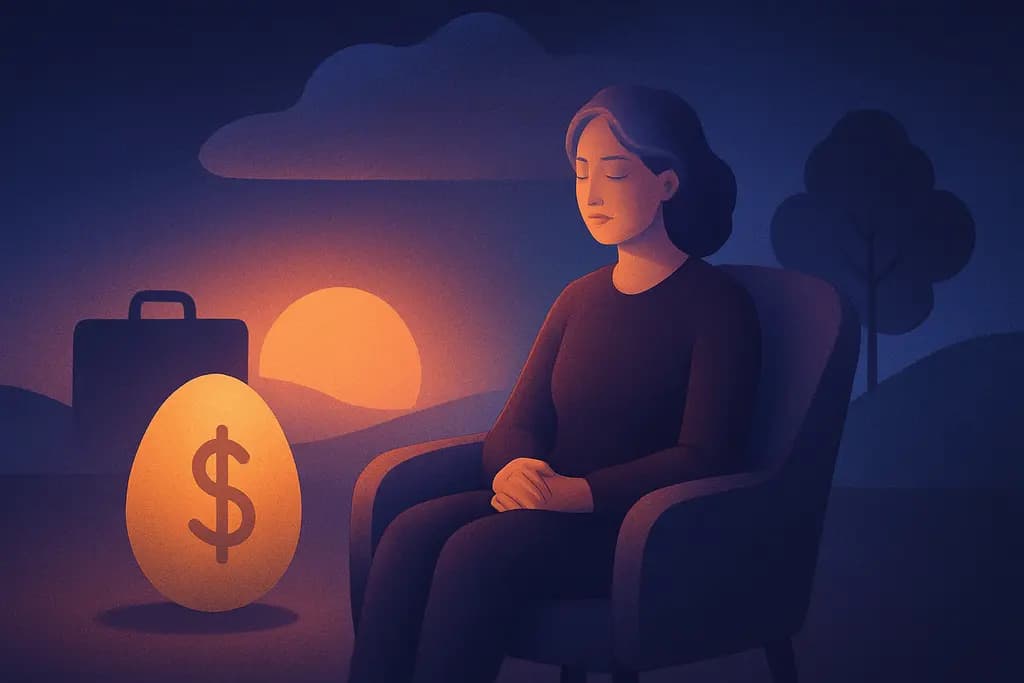
A retirement dream commonly marks a transition in how you use your time and how you identify yourself. If the dream felt peaceful, it may suggest readiness to slow down and claim private time; if it felt anxious, it can point to worries about income, daily routine, or losing a defined role. Look at the emotions and concrete details—coins, clocks, chairs, or the size of the crowd—to judge whether the dream highlights relief, fear, or a search for new purpose.
How this dream may connect to daily life
- 1. Readiness for rest and reorientation. If the dream felt calm, organized, or celebratory—flowers, handshakes, or a smooth ceremony—it may indicate real psychological readiness to stop, decompress, and reclaim time. This angle connects to a life situation where work has been intense or over-focused; the dream is signaling a desire to create space for hobbies, caregiving, travel, or projects you postponed while working.
- 2. Financial or practical anxiety. Dreams that include counting coins, finding missing pension papers, or queuing at a bank often reflect worries about money, benefits, or the logistics of leaving work. This meaning ties to concrete pressures: unexpected expenses, unclear savings, or confusion about benefits. The emotion is usually tightness or worry, pointing to practical steps you might take—budget review, talking to a planner, or clarifying paperwork.
- 3. Loss of role and identity questions. When the dream emphasizes names, titles, empty offices, or people forgetting you, it may be wrestling with identity: who you'll be without the job title and daily role. This interpretation connects to life events like caregiving transitions, planned or forced exits, or simply sensing that your social circle and self-definition are changing. It often nudges you to explore new routines or social contacts that sustain meaning.
What this dream is rarely about
This kind of dream is rarely a literal prediction of dates or a guarantee of financial collapse. It does not usually work as a timeline that says "you will retire next year." Instead, it commonly mirrors internal questions about security, routine and identity. There can be relief and loss mixed together; the emotional contrast matters more than assuming the dream forecasts real-world timing.
Specific details people often mention
People often report specific images: an empty office elevator, a row of locked filing cabinets, a blue car with a trunk full of packed boxes, sudden rain on the day of the ceremony, or the sound of a single grandfather clock ticking loudly; some notice numbness in their hands or a tight throat as they speak.
What to ask yourself
- What specific objects, sounds, or people stood out in the dream, and how do they match your current financial or social realities?
- If you imagine a week after retiring, what routines and identities would you miss, and which would you welcome?
- What practical step (budget review, a conversation, a health check) could reduce the anxiety you noticed in the dream?
Symbolic and spiritual meaning
Symbolically, retirement imagery—doors closing, benches, or a watch handed over—can be read as rites of passage: a symbolic death of one role and a potential rebirth of another. Many spiritual traditions frame these transitions as opportunities for inner work, service, or slow reflection. Treat symbolic language as a tool for meaning-making rather than literal instruction: ask what the end of the old role invites you to become, not what the dream commands you to do.
Frequently asked questions
Is it related to stress?
Is it related to stress? Yes. Retirement dreams commonly reflect stress around change—financial uncertainty, workload exhaustion, or fear of losing identity. The dream’s emotion (anxiety vs. calm) indicates whether the stress is practical or more existential.
Is this about relationships?
Is this about relationships? Sometimes. If the dream centers on family members, coworkers, or applause, it may highlight shifting social roles—who supports you, who you spend time with, or worries about being forgotten.
Is this dream a warning?
Is this dream a warning? Not usually a literal warning. It can be an alert to unresolved concerns—missing paperwork, tight savings, or emotional readiness—that are worth addressing, but it does not predict a specific event.
Related dreams to explore
If this dream keeps returning, pages about A maze of identical office cubicles, Bank vault full of money, and Bankruptcy or Losing Money can reveal the related patterns underneath it. They often overlap around insecurity, transition, or stress in everyday life. You may also want to compare it with Being audited, doing taxes or filling endless forms if the same mood or conflict keeps showing up.