Dream About Puzzles – Meaning
Category: Objects
What this dream usually means
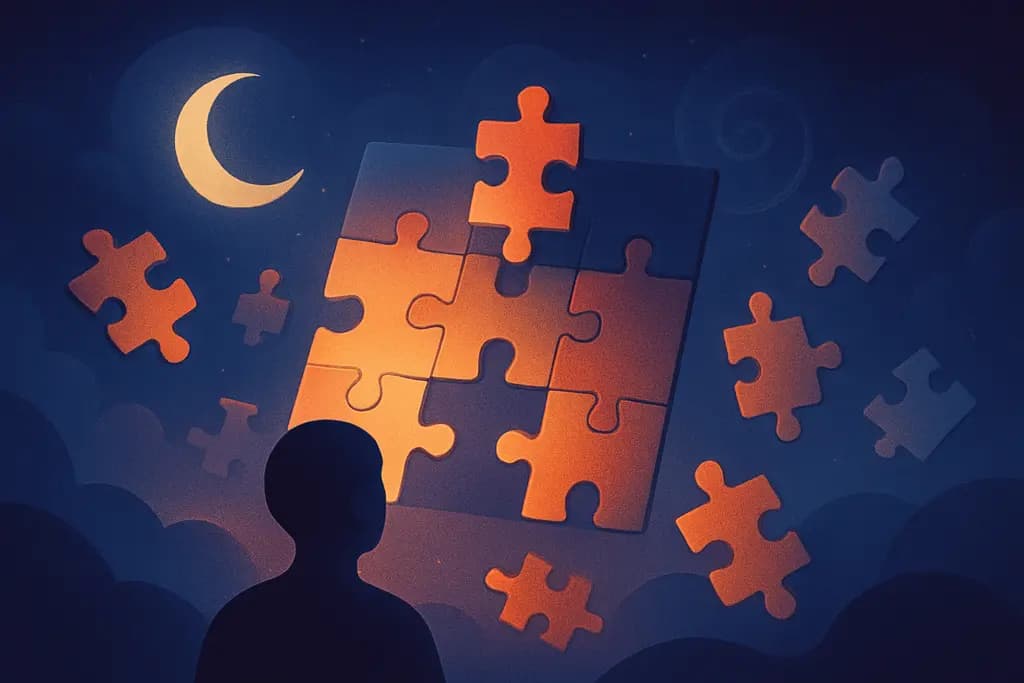
A puzzle in a dream is commonly associated with problem-solving and integration: it points to a situation where you have pieces of information, memory, or responsibility that need arranging. If the puzzle feels solvable, it may suggest you are close to clarity about a project, decision, or identity question; if pieces are missing or edges won’t fit, it often signals confusion, incomplete information, or conflicting roles. Emotion in the dream—calm, frustrated, elated—tracks how confident you feel about finding the right arrangement.
Psychological perspective
From a modern, neutral standpoint, puzzle dreams often mirror cognitive processes: pattern recognition, working memory, and decision-making under stress. The brain rehearses how to organize disparate information—emails, bills, memories—into a coherent plan. For example, someone juggling a complex project might dream of sorting pieces by color, which corresponds to prioritizing tasks. Emotions in the dream reflect confidence or uncertainty, not a clinical diagnosis; they’re signals about where attention and resources are needed.
Three common meanings
- Problem-solving and strategy. If you’re assembling a puzzle methodically, the dream often reflects active problem-solving in waking life: a work task, legal paperwork, or a complex family plan. The method you use in the dream—sorting edges first, grouping by color—mirrors the strategy you’re leaning toward. Feelings of progress indicate workable plans; repeated failed attempts suggest you need new information or a different approach.
- Fragmented identity or role pieces. When puzzle pieces represent faces, jobs, or outfits, the dream may highlight conflicting roles—parent, employee, friend—that don’t fit together smoothly. Missing pieces can point to a sense of loss or an undeveloped part of yourself. This interpretation often appears during life transitions like a career change or after a breakup, when you’re rebuilding a coherent sense of who you are.
- Relationship dynamics and hidden information. Dreaming of partners or colleagues as puzzle pieces can reflect how you see their roles in your life: essential connectors, loose ends, or parts you’re trying to control. If pieces are swapped or don’t belong, the dream may point to misunderstandings, withheld facts, or mismatched expectations in a relationship that need conversation rather than assumption.
- Timing, missed steps, and pressure. A puzzle with a ticking clock or rain of pieces emphasizes timing and deadlines. This dream commonly surfaces when you worry about missed steps—applications not filed, appointments overlooked, or sequences disrupted. The emotional tone—panic versus focused urgency—reveals whether you feel recoverable or overwhelmed by the schedule pressures.
What this dream is not literally saying
A puzzle dream rarely acts as a literal prediction about a single missing object or a concrete future event. It does not usually mean a person or item will appear or vanish in waking life. Instead, treat the image as symbolic—an emotional or cognitive map—rather than a factual forecast. That shift reduces anxiety and helps you use the dream as a prompt for practical action rather than as a prophecy.
Unusual details people report
People often report unusual specifics: a puzzle made of a photograph of an old apartment, pieces that feel sticky under the fingers, a red door in the assembled picture, a distant train whistle, or the sudden sensation of a piece sliding into place like a small relief in the chest.
When this dream deserves attention
This dream deserves attention when it repeats, appears at moments of high stress, or coincides with unresolved fear or major life transitions—job loss, moving, caregiving, or divorce. A single, calm puzzle dream after brainstorming is less urgent than one that wakes you nightly, returns after trauma, or comes with strong dread. Use recurring puzzle dreams as a cue to inventory what’s unfinished and to make a small concrete plan: list missing items, delegate one task, or schedule a meeting to close a loop.
How different traditions interpret it
Meanings vary across traditions. In many Western contexts, puzzles emphasize intellect and problem-solving; in some East Asian readings, arranging pieces may highlight restoring harmony and balance within family or community. Indigenous or folk perspectives might frame the image differently—relationally, as pieces representing kin or land. Interpretations change with local stories and symbols; no single cultural gloss covers every dreamer’s experience.
Frequently asked questions
Is this about money?
Is this about money? Unclear—money can be one type of ‘piece’ if financial decisions or bills feel fragmented. Check whether the dream shows coins, ledgers, or overdue notices; if not, it’s more likely about information, roles, or timing.
Can this dream be positive?
Can this dream be positive? Yes. A solvable puzzle or the sensation of a piece fitting often signals approaching clarity, creative insight, or growing competence; those dreams can feel satisfying and motivating.
Why do I feel fear in this dream?
Why do I feel fear in this dream? Fear usually comes from perceived missing pieces, deadlines, or the belief you lack control. The emotion highlights uncertainty or urgency, not a literal threat; it points to what you feel needs immediate attention.
Related dream meanings
People who dream about puzzles often end up exploring Balloons, Bicycles, and Bikes next, because the same pressure can show up through different symbols. Comparing them usually makes the emotional pattern clearer. You may also want to compare it with black lost objects if the same mood or conflict keeps showing up.