Dream About Prison – Meaning
Category: Places
Main interpretation
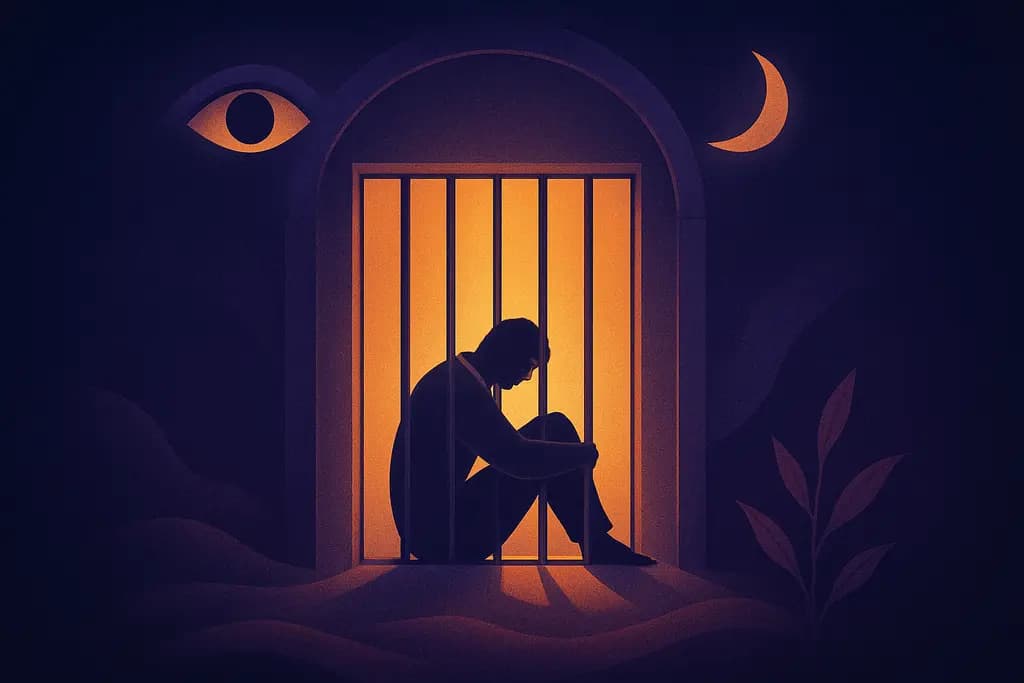
A prison in a dream commonly reflects restriction of freedom — sometimes from outside forces (a controlling job, relationship rules, legal trouble) and sometimes from inside (guilt, shame, self-discipline taken too far). The dream often asks you to notice where choice is limited and whether the confinement is protective or punitive. Pay attention to who holds the keys in the dream: that image often names the part of your life or yourself that has the power to open the door. One emotional nuance: the same dream can feel resigned or enraged, and that tone points to whether you’re ready to change.
Psychological perspective
From a neutral psychological angle, prison imagery often maps onto perceived control and coping styles. The dream highlights where your sense of agency is low—whether because of external constraint or internalized rules—and how you respond (fight, freeze, negotiate). Repeated dreams may indicate learned helplessness or a defensive strategy that once helped but now limits you. Notice cognitive patterns: do you assume obstacles are permanent? Reframing one belief about control can change how the dream lands.
Key interpretations
- External constraints and stalled agency. If you felt anger, frustration, or traced maps of exit routes in the dream, the prison most likely stands for real-life limits: a boss who micromanages, a partner who controls choices, a visa or contract that binds you. Look for a specific decision you’ve postponed — a move, a resignation, a conversation — and consider one practical step this week to expand your options, even if it’s small (research, a brief conversation, or setting a boundary).
- Internal guilt, punishment, or self-limitation. If the dream emphasized shame, a static cellmate, or you wearing a uniform, the image can point inward: you may be imposing punishment on yourself for a past mistake or shrinking to avoid criticism. This version asks whether you’re enforcing strict rules on yourself that no longer serve you. A useful pivot is to name the rule you’re obeying and test it — would a kinder standard still protect you?
What this dream is rarely about
This dream is rarely a literal prediction that you will be arrested or physically imprisoned. It does not usually forecast an actual courtroom outcome. Instead, the image of incarceration is symbolic: it points to reduced agency, internal penalties you apply to yourself, or social constraints. Treat the prison as metaphorical signage, not a courtroom transcript.
Specific details people often mention
People report very specific imagery: rusted bars with flaking paint, a fluorescent light that hums, a narrow window high up, an orange jumpsuit, a crowded exercise yard, rain leaking through a roof, or the sudden silence after a cell door slams. Even small details — a key that won’t turn, footsteps echoing, or the taste of metal — stick in memory.
Why recurring versions matter
Recurring prison dreams or dreams that appear during major life change deserve attention: they often surface when stress, unresolved fear, or a moral dilemma accumulates. If the image repeats after a breakup, job change, or move, it’s signaling that an unresolved constraint persists. Keeping a brief log of what precedes the dream (arguments, deadlines, memories) helps identify triggers. When the dream shifts tone — from resigned to active escape, for example — that change often mirrors your psychological readiness to act.
Symbolic meaning across traditions
Meanings vary across cultures. In many Western narratives, prison imagery ties to guilt, justice, and social punishment. In some Eastern perspectives the cell can represent maya—an illusion keeping you from clarity. Indigenous traditions may frame confinement in terms of exile and reintegration within community norms. Contemporary social-justice readings point to structural imprisonment: economic and political factors that constrain people’s lives. Acknowledge cultural frames as different lenses rather than fixed answers.
Common questions
Is this about money?
Usually not directly. A prison dream seldom means money problems specifically, though financial dependency, debt, or job loss can create the sense of confinement that shows up as a cell.
Why do I feel fear in this dream?
Fear often comes from a felt loss of control, threat to identity, or shame. The dream activates primitive alarm systems — it dramatizes what you worry you cannot change or escape.
Is it related to stress?
Yes. Stress is a common trigger. Ongoing pressure, big transitions, or a buildup of small constraints often produce prison imagery as your mind signals a need to address what’s restricting you.
Dream meanings connected to this one
Dreams about prison are often connected to Bad Weather, Ballrooms, and black waterfalls. Looking at those nearby themes can help you compare control, fear, pressure, or change across similar dream scenes. You may also want to compare it with Cave if the same mood or conflict keeps showing up.