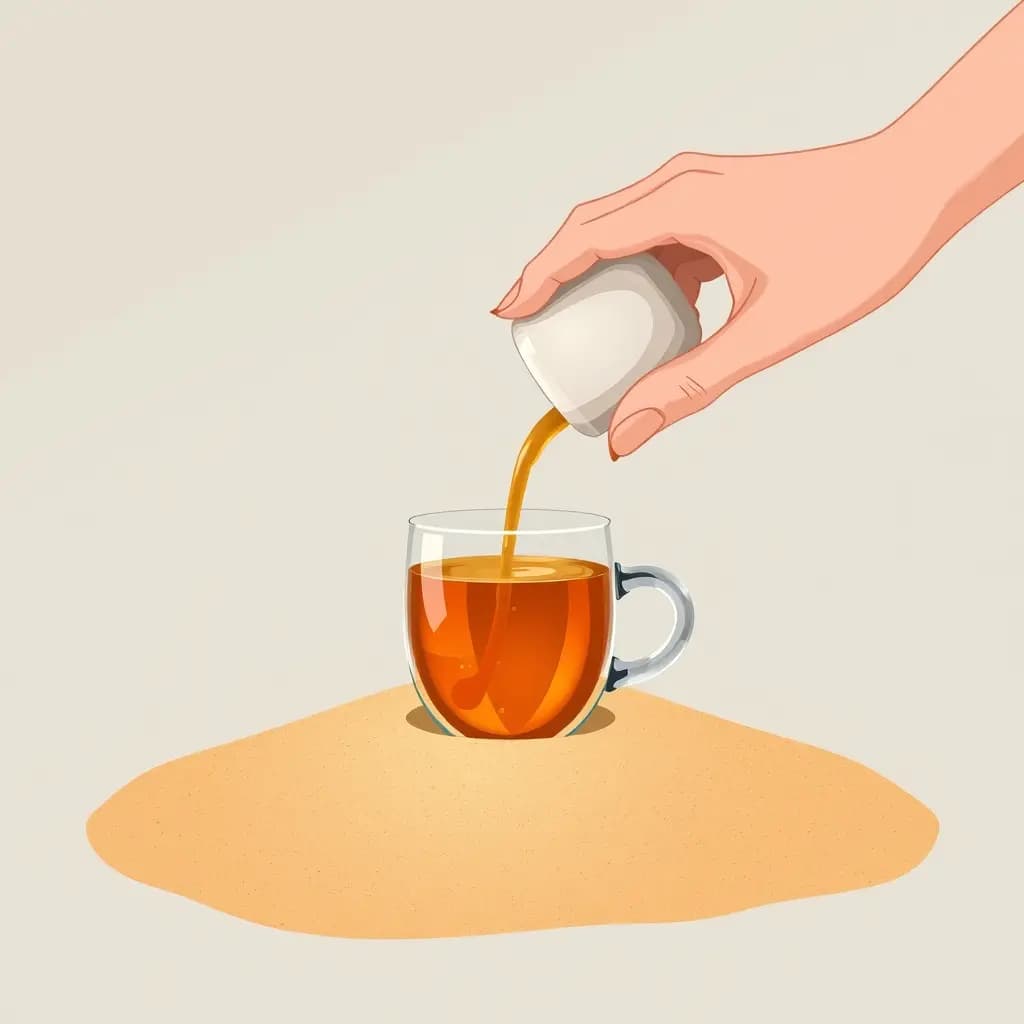
Dream About Pouring tea into sand – Meaning
Category: Food & Drink
Quick interpretation
A dream of pouring tea into sand most often signals feelings that familiar comforts or routines are failing to help — small, deliberate acts (like pouring tea) meeting an unresponsive, shifting ground (sand). It commonly reflects frustration with wasted effort, a ceremonial habit that feels out of place, or an attempt to transform grief or anxiety into something manageable. Pay attention to whether you were calm, hurried, or embarrassed in the dream; that emotion usually points to whether this is about resignation, experimentation, or unresolved care.
What this dream often looks like
You stand on a low dune outside a simple house, cup warm in hand, pouring an aromatic cup of tea onto fine, grainy sand. The sound is a soft hiss rather than a clink; a breeze scatters wet granules. You might feel confused or oddly deliberate — like performing a ritual that no one asked for. Perhaps a door behind you is half-open and someone is watching, or your sleeves are damp from previous attempts. The scene feels ordinary and absurd at once.
The emotional and symbolic message
Wasted effort and frustration. Pouring tea onto sand can represent energy invested in tasks that never yield results — like offering care to an unresponsive situation. The tea, a gesture of warmth or help, sinks or vanishes into an unsteady substrate, mirroring work that dissipates or people who don’t receive what you give. If you felt irritation or resignation, this angle is likely.
Rituals out of place — letting go of routines. Tea often stands for ritual, comfort, or respect. When that ritual is directed at sand, it may suggest the ritual itself no longer fits your life context. You could be experimenting with endings: performing a goodbye, emptying a habit onto neutral ground. Calm acceptance in the dream hints this is a conscious release rather than a forced loss.
Blurred boundaries and loss of control. Sand shifts and refuses to hold shape; pouring a liquid onto it highlights boundaries that won’t contain your intentions. This interpretation points to relationships, work roles, or personal limits becoming porous — responsibilities leaking away, or you feeling unable to set boundaries. Anxiety, hurried movements, or repeated pouring emphasize a struggle for control.
Creative trial or unconventional problem-solving. Less pessimistically, pouring tea into sand can indicate experimentation — trying an odd solution to an entrenched problem. The dream may capture a moment of creative risk: you’re testing whether familiar comforts can be repurposed. If you felt curious or amused, the image is more about playful exploration than loss.
What this dream is rarely about
This dream is rarely a literal prediction about losing possessions or about actual sand-related events. It does not usually mean something physical will break or be destroyed; instead, it points away from literal forecasting and toward emotional or symbolic loss. An emotional contrast is common: you may feel oddly peaceful about the action even while recognizing its futility.
Specific details people often mention
People often report small sensory specifics: a chipped teacup, wind whipping sand across a threshold, the distant hum of traffic, or a snap of cold on bare hands. Some wake with the taste of ash or the smell of steam still vivid, or with the odd physical sensation of sand between their toes.
Cultural and symbolic views
Meanings vary across traditions: in East Asian contexts tea rituals emphasize respect and presence, so misplacing tea onto sand might suggest disrupted ceremony or lost form. In desert or nomadic cultural images, sand can signify home, hardship, or passage. Western symbolism often pairs tea with domestic care. Because traditions frame objects differently, this dream’s tone—respectful, wasteful, liberating—depends on cultural associations rather than a single universal meaning.
What to ask yourself
- When in the past week did you perform a small, repetitive act that felt pointless or oddly necessary?
- Who in your life receives your care without acknowledging it, and what would change if you stopped offering it?
- If you treated one persistent problem as something to release rather than fix, what would that look like this week?
Common questions
Is it related to stress?
Often yes. This dream commonly reflects stress about wasted effort or ineffective coping — especially if you felt frustrated, hurried, or tired during the scene.
Can this dream be positive?
Yes. It can be positive when felt as release or experimentation: a deliberate unmaking that frees you from old patterns or opens space for new approaches.
Is this about relationships?
Sometimes. It often points to dynamics in giving and receiving — care that isn’t held or boundaries that are porous — but it can also concern work, habits, or personal limits rather than romantic ties.
Related dreams to explore
If this dream keeps returning, pages about Salt dissolves into light, Dining table stretches longer, and Shopping cart full of memories can reveal the related patterns underneath it. They often overlap around insecurity, transition, or stress in everyday life. You may also want to compare it with Bite tastes like reunion if the same mood or conflict keeps showing up.