Dream About Poltergeist moves furniture – Meaning
Category: Paranormal & Mysteries
A typical dream scenario
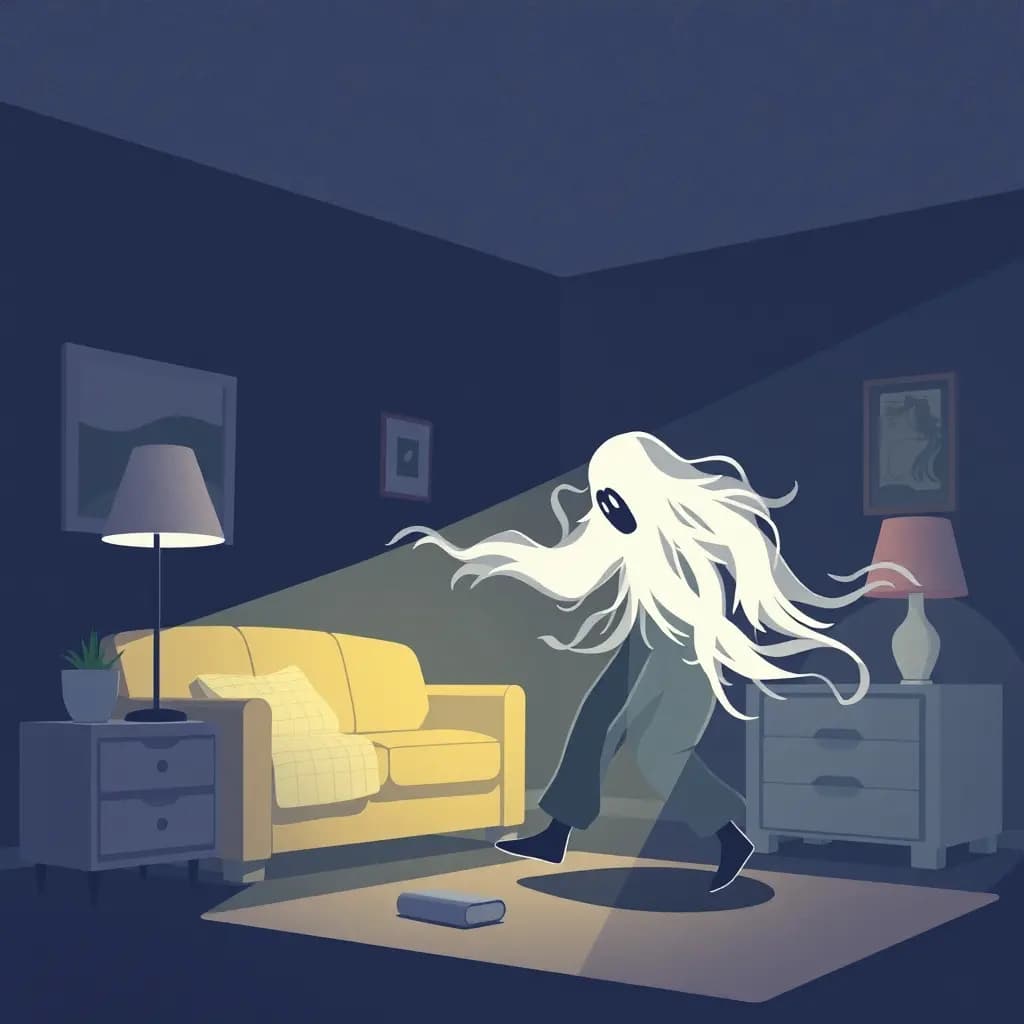
Direct answer: this dream usually signals a sense of lost control or an upheaval in your domestic life rather than an actual haunting. You might dream you wake at night to see your sofa slide across the living-room hardwood, an armchair topple into a hallway strewn with mail, and a lamp shatter under a cold, wind-blown window. The scene often lands during late-night hours, leaving you startled, heart-throbbing, and standing in slippers as rain drums on the panes—a private emergency inside a familiar room.
Specific details people often mention
People often report the hallway light swinging, closet doors banging open by themselves, the metallic smell of ozone, or the sound of distant children laughing. Some notice a neighbor’s footsteps outside, a ticking clock stopping, or the taste of copper in their mouth as the furniture shifts.
Quick interpretation
Quick interpretation: a poltergeist moving furniture commonly symbolizes internal disruption—competing obligations, sudden changes, or emotional forces rearranging your priorities. The house in the dream stands for your inner life; when objects move without your consent, it points to roles, secrets, or routines being unset or challenged. This image often appears after a breakup, a job change, an argument with family, or when long-ignored tasks finally demand attention. It’s a vivid way your subconscious maps being pushed out of balance and signals a need to reassert boundaries or accept an unavoidable shift.
How this dream can be interpreted
- Emotional upheaval. Furniture shifting by itself can represent pent-up emotions finally surfacing. A sofa sliding from the center of the room may mirror a falling-out that pushes you from your usual place—anger, grief, or resentment that has been packed away. If the dream follows a terse conversation with a partner, employer, or family member, it often signals that those feelings are now rearranging how you live day-to-day.
- Boundary breach or loss of control. The house in dreams often equals personal boundaries; objects moved without permission suggest someone or something has been crossing them. An open back door while chairs tumble could point to privacy invasions, unwanted advice, or decisions made for you. This angle is common when you feel micromanaged at work, overwhelmed by caregiving duties, or blindsided by others’ choices.
- Transition and clearing. A poltergeist-style scenario can also signal a transitional clearing—old furniture displaced to make room for new arrangements. This reading fits when you’re starting a new phase: moving cities, changing careers, or letting go of habits. The unsettling energy of objects flying may be uncomfortable but can also indicate subconscious readiness to let go and reorder priorities.
Psychological perspective
In real life, dreaming about furniture moving is an efficient way the brain rehearses change and negotiates control. During REM sleep, memory and emotion circuits replay recent stressors—arguments, deadlines, or household upheaval—and package them into striking images. The dream often reflects hypervigilance or a feeling that your normal routines are unstable. Thinking of the house as a map of self helps: which room felt threatened, which object moved, and who was present? Those details point to the psychological issue asking for attention.
What this dream is not literally saying
This dream is rarely a literal prediction of paranormal activity and does not usually function as a forecast of real-world hauntings. Instead of expecting an external ghost, look at who or what has been moving parts of your life—people, policies, or timing. Emotionally, the dream can feel frightening and decisive at once, mixing dread with the odd relief that something is finally changing.
When this dream deserves attention
This dream deserves attention if it repeats, spikes with life stress, or leaves you avoiding your home-space when awake. Recurrence suggests an unresolved problem—ongoing conflict, persistent anxiety, or an unaddressed responsibility. It’s also important during transitions (moves, births, layoffs) when your internal map is being redrawn. Practical follow-ups include journaling the dream details, listing recent changes or boundary violations, and taking small steps to restore order at home: clear clutter, set firm availability, or schedule a real conversation.
FAQ
Is it related to stress?
Is it related to stress? Yes. These dreams commonly follow high stress or sudden change and can be your brain’s way of dramatizing that pressure.
Is this about relationships?
Is this about relationships? Often. Furniture and rooms frequently symbolize roles and dynamics; the dream can point to conflict, caretaking strain, or shifting partnerships.
Is this dream a warning?
Is this dream a warning? Not usually as a literal warning. It can be an emotional alert that something needs attention—boundaries to set or conversations to have.
What should I do after this dream?
What should I do after this dream? Record the details, note recent stressors, take one small boundary-restoring action, and consider talking it through with a friend or counselor if it repeats.
Related dreams to explore
If this dream keeps returning, pages about Haunted mirror shows past, Ghost knocking on door, and Receiving notes from unknown hand can reveal the related patterns underneath it. They often overlap around insecurity, transition, or stress in everyday life. You may also want to compare it with Seeing future newspaper headline if the same mood or conflict keeps showing up.