Dream About Pilgrimage never ending – Meaning
Category: Religion & Sacred Symbols
Quick interpretation
A pilgrimage that never ends often symbolizes an ongoing search for meaning or a goal that feels perpetually out of reach. The road, the rituals, the repeated shrines commonly represent commitment, duty, or personal development that has slowed or become cyclical. If you are facing a prolonged decision, career plateau, or a spiritual quest, the dream may highlight the strain of persistence and the need to reassess direction, pace, or the purpose behind the journey rather than promising a literal destination.
What it can reflect emotionally
In many cases, this dream reflects chronic stress about progress and identity. Walking past the same shrines can mirror repetitive thought patterns—rumination about past choices or worry about future obligations. Emotionally, it blends perseverance with fatigue: there can be quiet resignation alongside stubborn hope. The pilgrimage image organizes anxiety into a narrative you can inspect—where the road, companions, and rituals map onto roles, routines, and internal standards.
What this dream is rarely about
This dream is rarely a literal prophecy about travel or being trapped on a never-ending road. It does not usually predict a physical, perpetual voyage. Instead, it seldom functions as a straightforward timetable or external warning; the more typical reading is symbolic—about internal pacing, obligations, or unresolved aims rather than an actual endless trip.
Three common meanings
- Perseverance and Goal Fatigue. The endless pilgrimage often points to persistence that has become exhausting. If you're in a long-term project, caregiving role, or trying to achieve a hard-to-reach promotion, the dream may reflect burnout: you still care about the goal but the path feels longer and intentions blur. It invites you to examine whether the effort matches the payoff and whether a different route or a strategic rest is needed.
- Spiritual or Existential Search. For some, the recurring shrine and ritual steps symbolize a spiritual quest that hasn’t resolved. You may be experimenting with beliefs, practices, or community without finding a satisfying center. The dream can suggest the need to change practices, seek a new teacher, or accept ambiguity instead of forcing closure—allowing the search to be meaningful without demanding final answers immediately.
- Life Transition and Unfinished Business. The looping road often appears during major transitions—divorce, relocation, retirement, or a career pivot—when endings and beginnings blur. The repeating landmarks can represent unfinished conversations, paperwork, or grief that stalls progress. The dream may encourage targeted action: identify one small unresolved item and complete it to shorten the perceived circuit.
Concrete details that tend to stand out
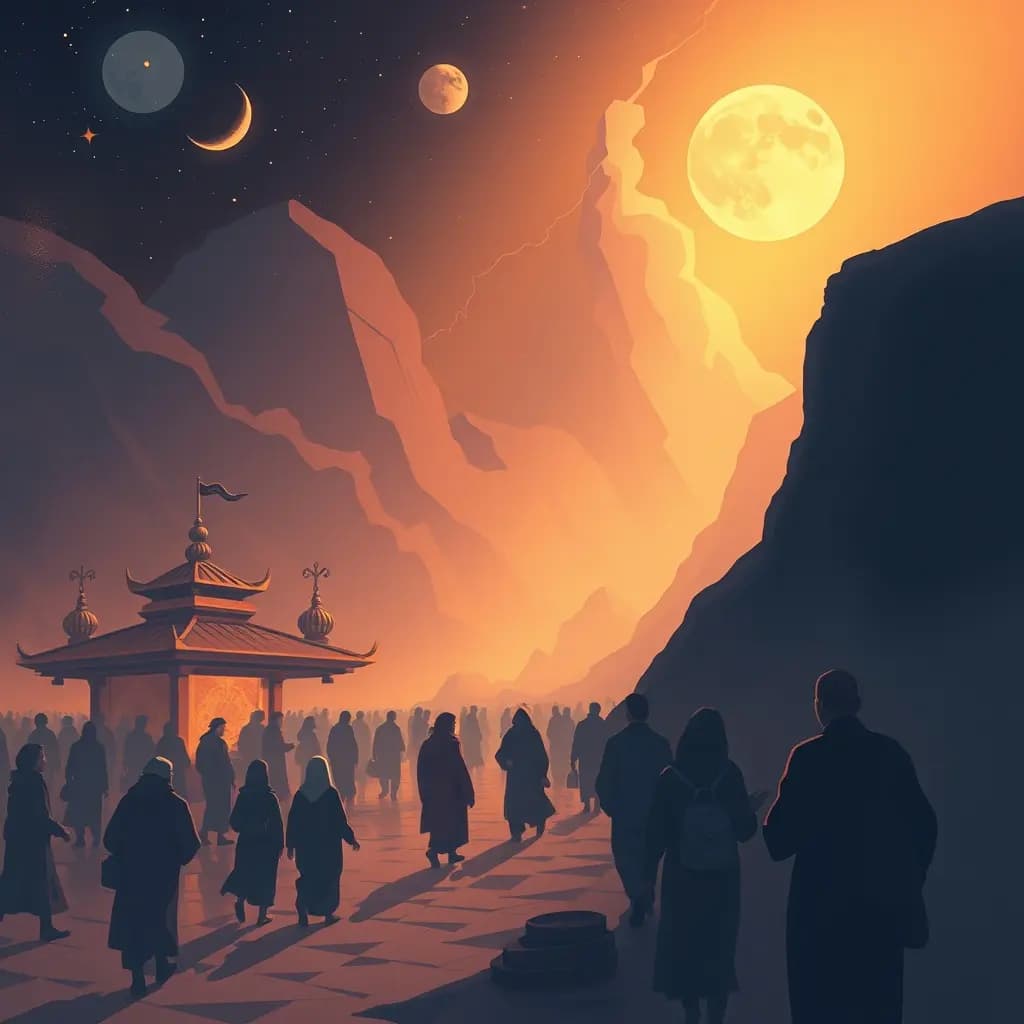
People report repetitive gate arches, lantern-lit corridors, a pebble-strewn path that keeps extending, cool mist around a distant peak, the distant toll of a bell, and the sensation of clothes becoming heavier or a backpack growing heavier as they walk.
Why recurring versions matter
When this dream recurs it tends to mark unresolved issues or chronic pressure rather than a one-off anxiety. Recurrence during a career plateau, long illness, or unresolved grief signals that the mind is insisting on attention. If it appears after big decisions or during a prolonged transition, treat it as a prompt to investigate what you’re repeating—old promises, social expectations, or tasks left incomplete—and to make a concrete plan to shift the cycle.
How different traditions interpret it
Different traditions give this image varied weight. In some religious cultures a pilgrimage symbolizes purification and accepted suffering; a prolonged journey might be read as ongoing penance or a call to deepen devotion. In secular or psychological traditions, it is more likely to be seen as symbolizing a life project or identity work. Meanings vary across communities, and asking a trusted elder or spiritual guide within your tradition can add culturally specific insights.
FAQ
Is this about relationships?
Is this about relationships? Short answer: sometimes. The pilgrimage can represent long-term relational work—ongoing care, unresolved conflicts, or an emotional commitment that feels endless—especially if partners or family members appeared in the dream.
What should I do after this dream?
What should I do after this dream? Notice one small, concrete step you can take in waking life—set a boundary, clear a task, ask for help, or schedule rest—and try it within a week to see if the loop eases.
Is this about money?
Is this about money? Usually not directly. Financial strain can create the same feeling of endless effort, so if money worries are present in waking life, they may be a likely source; otherwise the dream more often points to purpose and progress rather than specific finances.
Is this dream a warning?
Is this dream a warning? Not typically. It is more of a signal flag—an invitation to reassess pace, priorities, or unfinished obligations—rather than an urgent predictive warning about immediate danger.
Related dream meanings
If this dream keeps returning, pages about Service without sound, Holy book pages blank, and Clergy with no face can reveal the related patterns underneath it. They often overlap around insecurity, transition, or stress in everyday life. You may also want to compare it with Temple doors locked if the same mood or conflict keeps showing up.