Dream About Pigeons – Meaning
Category: Animals
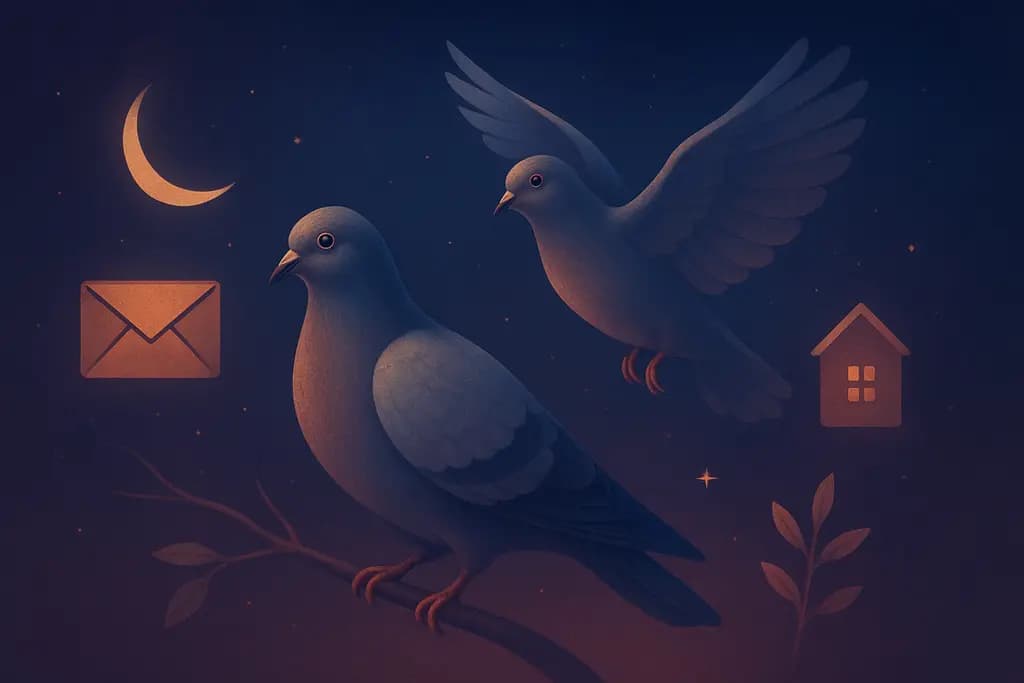
Dreaming about pigeons often brings up themes of communication, home life and simple, persistent concerns. Pigeons can feel gentle and reassuring or messy and annoying depending on what happens in the dream. The emotional tone and the dream context change the message significantly.
General meaning of dreaming about Pigeons
Pigeons in dreams commonly symbolise messages, everyday relationships and adaptability. Because pigeons are social, urban birds often associated with returning home or carrying messages, they tend to represent the small, practical threads that tie your life together: routine contacts, responsibilities and informal support networks.
At their core, pigeons suggest ordinary but important matters: communication that needs attention, ties to family or community, and the balance between dependence and independence. The exact meaning usually depends on whether the bird appears calm, injured, aggressive, numerous, or confined.
- Communication and messages: news, reminders, or conversations you need to have
- Home, family and domestic matters: reliance, routine, domestic chores or obligations
- Community and social bonds: friendships, loyalties or group dynamics
- Adaptability and persistence: coping with repeated minor challenges
Spiritual meaning of Pigeons in dreams
Spiritually, pigeons overlap with dove symbolism in many cultures: peace, spiritual messages, and gentle guidance. Some traditions view them as messengers between realms or as signs that a relationship or situation needs reconciliation.
In universal energetic terms, a pigeon can indicate a soft nudge from your intuition or from a social circle: something small but meaningful is trying to get your attention. In ceremonial or folk contexts, releasing a pigeon or seeing one fly away can be interpreted as letting go or sending a wish outward.
Psychological interpretation
Fear, stress or anxiety
If the pigeon in your dream seems distressed or is hard to catch, it may mirror low-level stressors in waking life. Pigeons often represent persistent little worries that keep returning rather than one dramatic crisis. Feeling chased by or overwhelmed with pigeons can point to sensory overload or nagging obligations.
Relationships and emotional bonds
Pigeons are often seen in pairs and are associated with loyalty and routine affection. Dreaming of pigeons can reflect your attachment patterns — comfort with familiar bonds, longing for domestic security, or frustration with codependency. A tame pigeon may signal affectionate ties; a fleeing pigeon can suggest emotional distance.
Control, power or vulnerability
Because pigeons are generally non-predatory and sometimes vulnerable, they can symbolise feelings of powerlessness or being taken advantage of. Conversely, releasing or feeding a pigeon in a dream may indicate reclaiming agency through small nurturing acts. The way you interact with the bird often mirrors how you negotiate control in relationships.
Positive meaning
- Messages arriving: important but manageable news or clarity
- Reconciliation and peace: opportunities to heal or mend ties
- Support network: reminders of friends or community who have your back
- Adaptability and resilience: ability to cope with repeated small challenges
- New responsibilities that foster growth: caregiving, projects, or steady routines
Negative meaning and warnings
- May suggest neglect of small but mounting responsibilities that can cause stress
- Can indicate codependency or overreliance on others for basic needs
- Might point to gossip, minor betrayals, or social friction that should not be ignored
- Can indicate vulnerability to being taken advantage of if boundaries are weak
- May warn of complacency: routine that prevents meaningful change
Common variations of dreams about Pigeons
- Flying pigeons: Often represents freedom, messages being delivered, or opportunities taking off. If they fly confidently, it signals positive movement; if they fly away from you, it can mean a missed connection.
- White pigeon or dove-like pigeon: Frequently read as a symbol of peace, spiritual reassurance, or hope. It can be a sign that reconciliation is possible or that you need to choose a calmer approach.
- Injured or trapped pigeon: Suggests wounded emotions, neglected responsibilities, or a part of yourself that feels vulnerable and needs care.
- Feeding pigeons: Can point to nurturing behavior, either healthy care or enabling someone who depends on you. It asks you to consider balance in giving.
- Carrier pigeon bringing a message: Indicates incoming news or an important communication you should pay attention to—sometimes unexpected or from a distant source.
- Many pigeons gathering or roosting: May reflect social pressure, crowd dynamics or feeling overwhelmed by small tasks and interactions. It can also show the comfort of community when the tone is calm.
- Pigeon inside your home: Often signals domestic issues, intimacy concerns or boundaries being crossed. A pigeon in the house asks you to look at private life and personal space.
- Baby pigeons or nestlings: Point to new responsibilities, dependents or nascent projects that require patience and steady care.
What to do after such a dream
- Reflect on the emotions you felt during the dream and note any people or places that stood out.
- Journal details: location, number of birds, whether they were calm or agitated, and any messages or sounds.
- Compare the dream to your waking life: are there small repeated tasks, communications, or relationships needing attention?
- If the dream highlights dependency or boundary issues, consider small steps to set limits or redistribute responsibility.
- Use the dream as a prompt for conversation: check in with friends, family, or colleagues about outstanding matters.
- Practice symbolic rituals that help you process the message, such as writing and releasing a note or creating a calming bedtime routine to reduce repeated anxiety.
- If the dream recurs with intense emotional charge, keep a dream log to spot patterns and triggers, then respond with practical changes in daily routines.