Dream About Paycheck delayed – Meaning
Category: Work & Money
What this dream often looks like
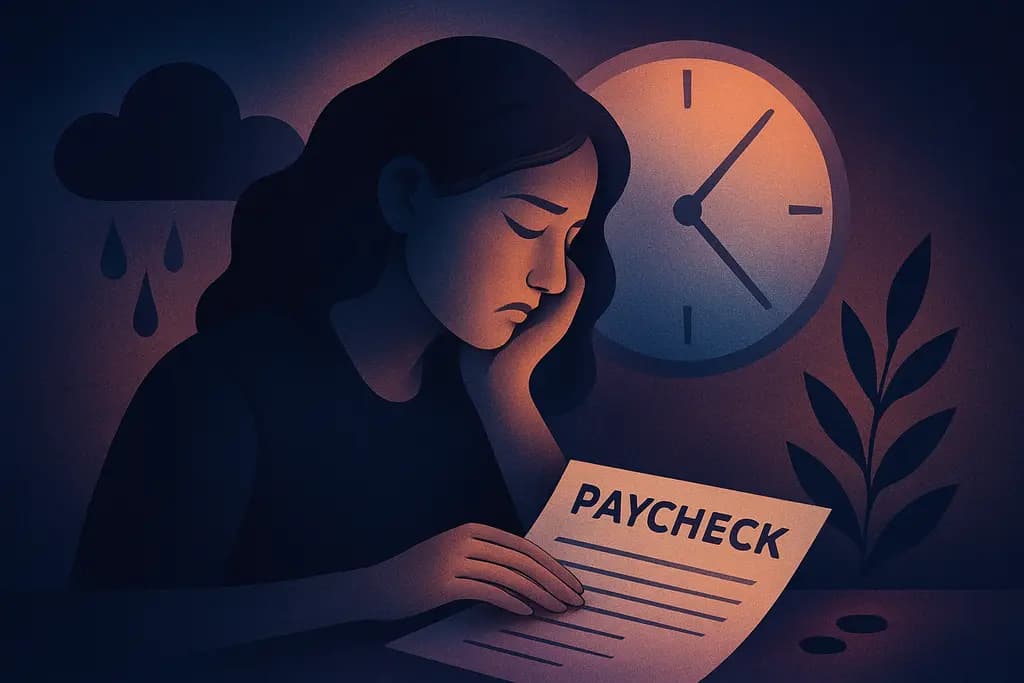
You’re at your kitchen table with a stack of bills and last month’s pay stub missing from the envelope. The clock on the wall ticks loudly while your phone shows an unread message from payroll. You feel a tightening in your chest, reach for a calculator, and picture a locked mailbox or a printer that won’t spit out your pay slip. The scene is ordinary and urgent: household light, a damp rain tapping the window, and the steady dread of a due date approaching.
What this dream usually means
A paycheck delayed in a dream is commonly associated with concerns about timing, security and recognition — either literal money worries or a symbolic delay in reward. It can reflect anxiety about cash flow, a sense that your work or effort isn’t being acknowledged, or frustration with a system that feels slow or unreliable. Notice whether the dream highlights concrete finances (bills, rent) or workplace relationships (boss, HR): those details point you toward whether action should be practical or boundary-focused.
Key interpretations
- Financial insecurity and timing. If the dream focuses on bills, due dates or an empty wallet, it often points to practical money stress: cash flow worries, late invoices, or a tight budget. The emotional tone—panic versus resigned planning—shows urgency. Use the dream as a prompt to check account balances, move deadlines, or contact creditors; a concrete action reduces the recurring anxiety.
- Delayed recognition or reward. When the dream centers on a boss, paycheck withheld by a manager, or a missing signature, it commonly symbolizes feeling undervalued at work. It may reflect a promotion stalled, credit taken by others, or slow acknowledgment of your efforts. Consider whether you need to document accomplishments, ask for feedback, or set clearer expectations about timelines.
- Loss of control and boundary stress. A delayed paycheck can represent broader control issues: someone else dictating your schedule, blurred lines between work and home, or fear of being dependent. The dream may urge firmer boundaries—declaring your hours, automating savings, or talking to HR. Practical steps restore autonomy and reduce the helpless feeling the dream dramatizes.
What this dream usually does not mean
This dream is rarely a literal prediction that your employer will miss a payment. It does not usually function as a straight forecast of bank statements. Instead, it more often maps your feelings about timing, trust and worth; treating it as a literal economic prophecy can distract from useful steps like reviewing budgets or addressing workplace communication. Emotion in the dream is the clue, not a literal financial timeline.
Concrete details that tend to stand out
A few specific images people report: a printer jamming with pay stubs, a closed office door with a nameplate you can’t read, coins clinking in an empty jar, or rain-slick streets outside as you search for a mailbox. Interestingly, some dreamers wake with the sound of a nearby clock in their ears or with the physical sensation of an empty pocket.
What your mind may be processing
From a modern, non-medical viewpoint, this dream often arises when uncertainty about resources or recognition occupies working memory and emotion. It’s your mind rehearsing threat scenarios and problem-solving: checking who’s responsible, imagining timelines, and testing reactions. Stress hormones and recent conversations about money or performance increase the dream’s vividness. Consider keeping a short note of what triggered the dream—an email, a late bill, a tense meeting—to map waking triggers to dream content.
Why recurring versions matter
Paycheck-delay dreams become important when they recur, appear during sustained stress, follow real financial setbacks, or arise amid life transitions (job change, relocation, new family responsibilities). Recurrence often signals unresolved fear or an unaddressed practical gap. If you wake repeatedly from this dream, track real-world triggers, prioritize immediate financial safeguards, and consider conversations at work or with a financial adviser; recurring dreams are your mind’s insistence that something needs attention.
FAQ
Is it related to stress?
Yes—this dream is often linked to stress about money or job security. High-pressure deadlines, late invoices, or recent payroll conversations commonly provoke it and increase emotional intensity.
Why does this dream repeat?
It repeats when the underlying issue remains unresolved: persistent financial strain, unspoken workplace grievances, or ongoing uncertainty about timing. Repetition flags the need for a concrete change or conversation.
Can this dream be positive?
Yes. It can be positive if it motivates planning, clearer boundaries or practical safeguards. The dream’s push to prepare or communicate can improve your situation and reduce future anxiety.
Related dream meanings
If this dream keeps returning, pages about Receiving a Paycheck or Wage, A maze of identical office cubicles, and Bank vault full of money can reveal the related patterns underneath it. They often overlap around insecurity, transition, or stress in everyday life. You may also want to compare it with Bankruptcy or Losing Money if the same mood or conflict keeps showing up.