Dream About Ouija Board – Meaning
Category: Paranormal & Mysteries
What this dream often looks like
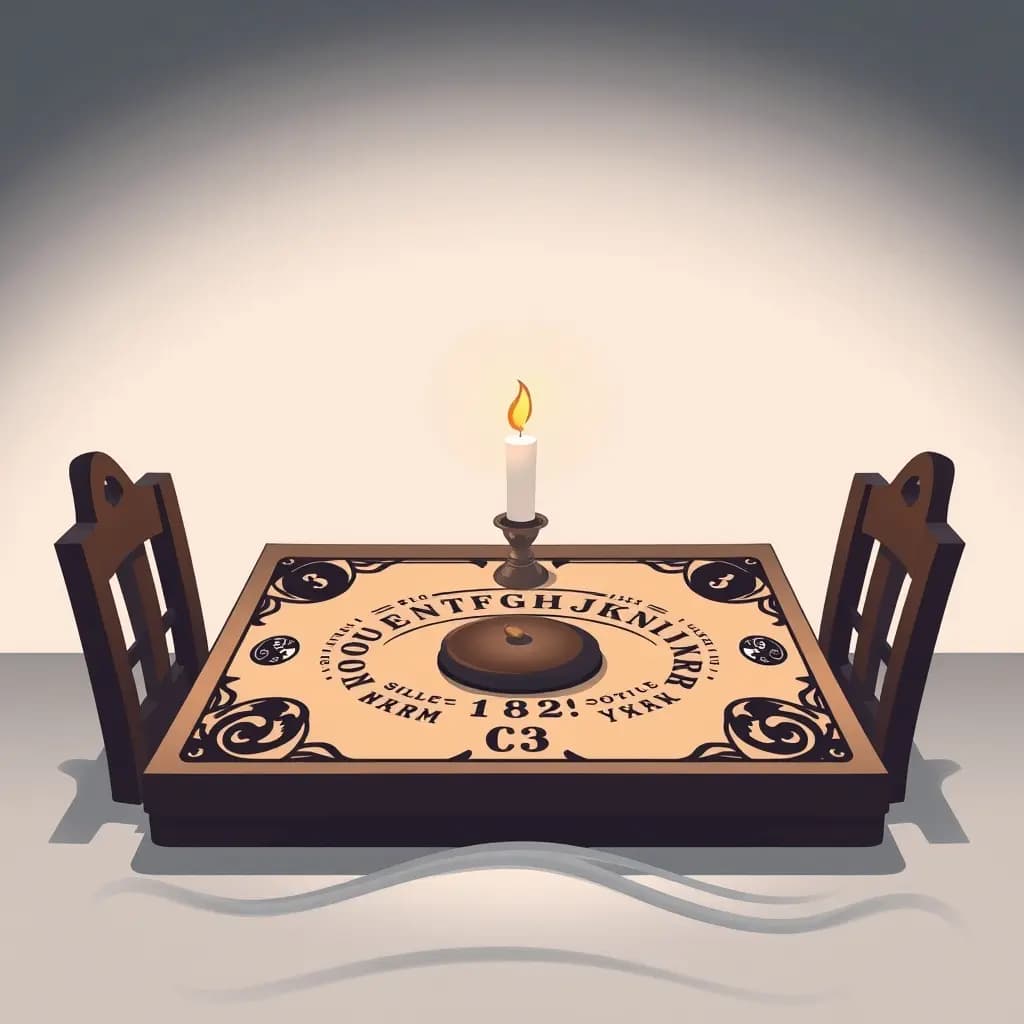
You are at a cramped kitchen table under a single swinging bulb, a cardboard Ouija board spread between you and two people you used to trust. Your fingertip brushes the wooden planchette; it slides to letters that spell a name you recognize. Rain ticks on the window and your stomach tightens — part dread, part guilty curiosity. The scene feels hyperreal: the house smells like wet paper and old coffee, and you wake with your heart still racing.
Key interpretations
- Boundary crossing and loss of control. The board acts as a bridge in the dream: it often represents personal boundaries being blurred. If you feel the planchette sliding without consent, the dream may be registering situations where others are making choices for you, pressing you to reveal private information, or forcing emotional contact. This interpretation points toward reclaiming agency — noticing who speaks for you and how to set limits.
- Unprocessed grief or unfinished conversation. When the letters spell a familiar name, the board can symbolize someone you miss or a conversation left unfinished. Instead of a literal return, the dream may stage a chance to say what wasn’t said or to imagine closure. The mix of relief and guilt in the scene often signals unresolved mourning, regret, or a wish to reconnect safely with a memory.
- Social influence, suggestion, and internal conflict. Playing Ouija is often a group act; dreams can reflect peer pressure, collective belief, or the way an idea spreads through a circle. If multiple dream-players insist the message is real, the dream may be showing how your choices are shaped by others or by conflicting internal voices. It’s a portrait of persuasion: which voice do you follow?
What this dream is rarely about
This dream is rarely a literal prediction or a direct channel to the future; it does not usually work as a straightforward message from the dead. More often it mirrors internal dilemmas, social dynamics, or symbolic boundary crossing. Emotionally, the dream can feel prophetic even while its content is symbolic rather than factual.
Specific details people often mention
Reportable specifics include an attic with peeling wallpaper, a draft that makes the candle flame bend, soft choir music far away, the planchette squeaking on the board, a clock that’s stopped at 3:17, or a sudden metallic taste in your mouth. Some people feel a tingling in the fingertips or see the planchette move without anyone touching it.
Spiritual and symbolic perspective
Symbolically, some traditions treat the board as a threshold where inner and outer messages meet; other spiritual frameworks see it as a mirror for intuition or ancestral memory. Holding a non-dogmatic stance, you can read the dream as an invitation to listen — to your deeper self, to unresolved relationships, or to a moral question — without assuming literal contact. Rituals such as mindful journaling, setting clear intentions before sleep, or simple grounding practices can help you engage the dream’s symbolic content safely.
Psychological perspective
From a neutral, psychological angle, the Ouija board functions as a symbol for liminal states — moments when you are between choices, identities, or emotional stages. The planchette’s motion can model agency being ceded or reclaimed, and the table setting can point to group dynamics or a private negotiation with grief. Notably, recurring elements (a certain name, the same room) can signal themes your mind wants you to examine. Practical steps include noting when the dream appears and what woke emotion it leaves you with.
What to ask yourself
- Who at the table in the dream represents a person or voice in my waking life, and what are they asking me to do?
- What name or message did the planchette spell, and what emotions or memories does that name bring up?
- Where have I recently felt my boundaries tested or given away, and what small step can I take to reclaim control?
Frequently asked questions
Why does this dream repeat?
Why does this dream repeat? Repetition often signals an unresolved issue the mind is drawing attention to — a boundary, grief, or persistent social pressure you haven’t fully addressed. Noticing the repeated element helps pinpoint what needs attention.
Why do I feel fear in this dream?
Why do I feel fear in this dream? Fear typically comes from the loss of control or the unknown: the board visualizes something crossing into your private life, or it may echo cultural warnings you absorbed about such rituals. The feeling is meaningful even if the content is symbolic.
Can this dream be positive?
Can this dream be positive? Yes. The board can also mark an opportunity for closure, honest conversation, or reclaiming agency; curiosity and fear often coexist, and the dream’s appearance can motivate constructive action like journaling or boundary-setting.
Related dreams to explore
If this dream keeps returning, pages about Unknown Presence, Secret Door, and Portal can reveal the related patterns underneath it. They often overlap around insecurity, transition, or stress in everyday life. You may also want to compare it with Cursed Object if the same mood or conflict keeps showing up.