Dream About Old tweet follows you – Meaning
Category: Social Media & Online Life
Main interpretation
Quick answer: this dream most commonly reflects social anxiety about past words or actions coming back to affect your current life. The old tweet stands for a remembered statement, and the act of it following you suggests that you feel tracked by that memory—afraid of being exposed at work, during a family gathering, or in a new relationship. In real life, it may push you to edit, apologize, or simply prepare for questions; emotionally it often carries shame mixed with urgency.
What your mind may be processing
From a modern psychological view, the dream often reflects rumination, social monitoring, and memory salience: your brain rehearses social threats so you can cope. Event-specific triggers—an upcoming reunion, a job with public visibility, or fresh criticism—can amplify the image. The emotion is usually a mix of embarrassment and hypervigilance; addressing the concrete situation (editing accounts, preparing responses) reduces the mental replay.
What this dream usually does not mean
This dream is rarely a literal prediction that a specific old post will suddenly go viral or that someone will publicly expose you tomorrow. It does not usually work as a direct forecast of events. Instead, it represents psychological pressure — fear, embarrassment, or unresolved social issues — rather than a literal digital prophecy.
How this dream can be interpreted
Reputation anxiety. The most straightforward reading is worry about reputation: the old tweet symbolizes a past remark you think could damage how others see you. If you’re preparing for a job interview, public talk, or reconnecting with someone you once offended, the dream often mirrors that anticipatory fear and the urge to control how you’ll be judged.
Unfinished regret or apology. Sometimes the dream points to an unresolved interaction: a tweet that needed an apology or clarification. The following motion suggests it keeps reappearing in your mind because you haven’t addressed it. This can prompt concrete action — drafting a message, making amends, or clarifying your perspective in a conversation.
Identity change and mismatch. An old public statement following you can stand for who you used to be versus who you are now. If you’ve changed jobs, come out differently, or shifted values, the dream may highlight tension between past words and current identity. It often invites integration: acknowledge growth rather than erase the past, and decide what you want to carry forward.
Feeling observed or controlled. This angle focuses on surveillance and external pressure: algorithms, a watchful boss, or an attentive community. The tweet that follows acts like an audience you can’t turn off. It can signal the need to set boundaries, reduce exposure to social feeds, or take practical steps to manage your online presence and who can see your content.
Unusual details people report
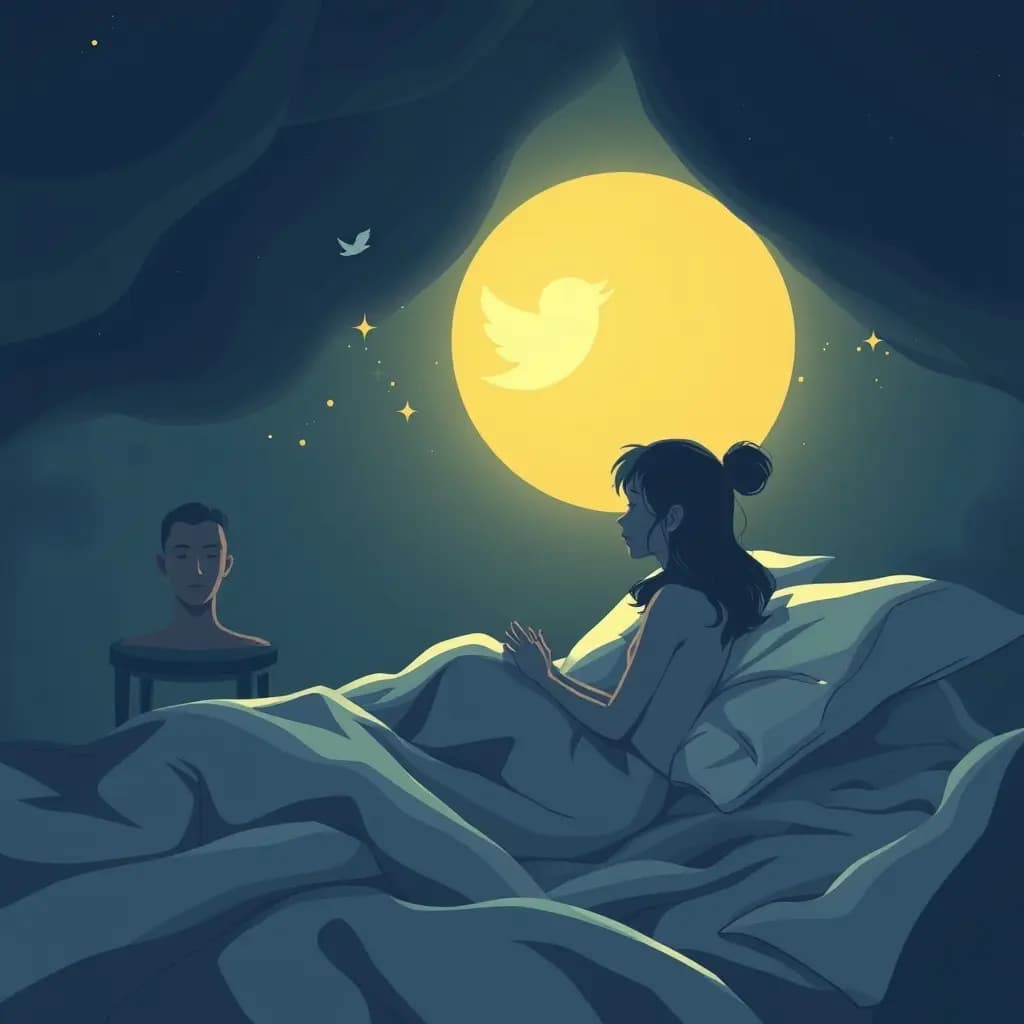
People report details like a dimly lit bedroom where a phone keeps buzzing, a rain-soaked street with a single notification ping, crowds that suddenly stop to read the tweet, or a throat-tightening sound when you try to speak. Some dream the tweet on an old laptop, a creaky keyboard under their fingers, or a notification that won’t stop flashing.
Why recurring versions matter
When this dream recurs, it signals unresolved fear or ongoing stress about how you’re seen. Recurrence often follows sustained online exposure, a recent public mistake, or a life transition like changing careers or relationships. If the dream appears during high-stress periods it can indicate avoidance: you may need to address the source directly, set clearer boundaries online, or seek real-world reconciliation to stop the nightly replay.
How different traditions interpret it
Meanings vary across traditions. In secular Western contexts the focus is social reputation and personal branding; Jungian approaches might call the tweet a projection of the shadow self; some communal cultures emphasize collective honor and repair over individual embarrassment. Different communities may recommend public amends, private reconciliation, or ritual cleansing — there’s no single cultural answer, and local norms shape the response.
FAQ
Is it related to stress?
Is it related to stress? Often yes. These dreams commonly appear when you’re under social stress—job interviews, criticism, or relationship tension—and your mind rehearses possible social consequences.
Is this about money?
Is this about money? Usually not. Unless the old tweet directly concerned finances or your work reputation, the dream more commonly reflects social or identity concerns than financial issues.
Can this dream be positive?
Can this dream be positive? Yes. It can be an opportunity to tidy your online presence, acknowledge growth, or take actions that free you from past guilt. The sting of embarrassment can motivate constructive change.
Is this dream a warning?
Is this dream a warning? Not typically. It’s rarely a literal warning about a future event; however, it can prompt prudent action—prepare an explanation, make amends, or secure your accounts if you feel exposed.
Related dreams to explore
If this dream keeps returning, pages about Old post resurrects, DM from unknown celebrity, and Followers drop suddenly can reveal the related patterns underneath it. They often overlap around insecurity, transition, or stress in everyday life. You may also want to compare it with You lose admin rights if the same mood or conflict keeps showing up.