Dream About Octopus – Meaning
Category: Animals
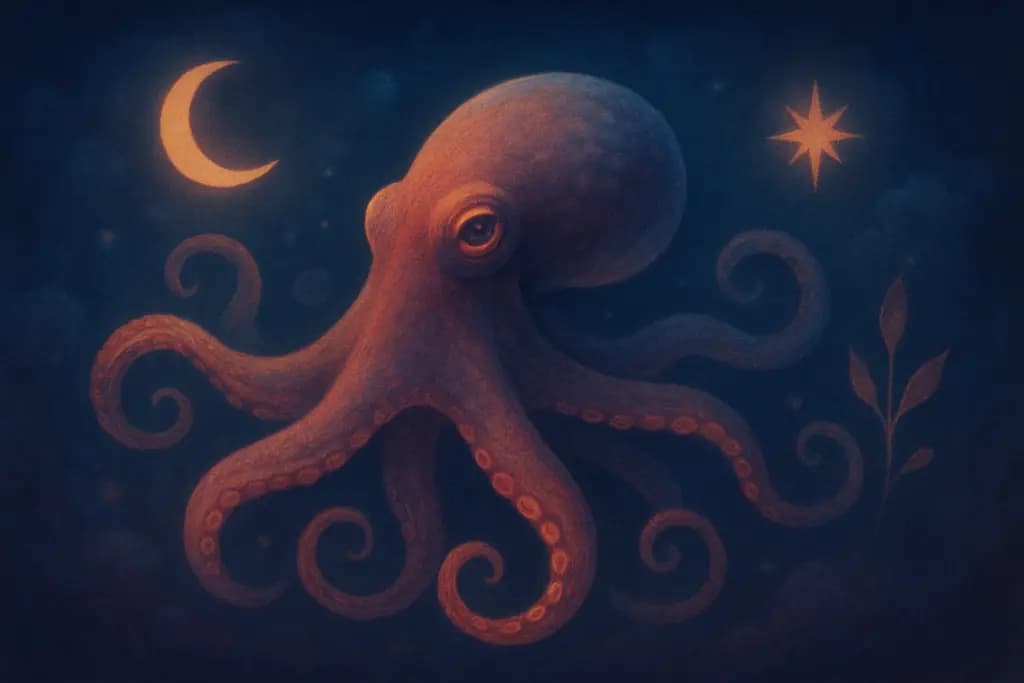
Dreaming of an octopus can feel mysterious and intense — the creature’s many arms, fluid movement and deep-sea presence often leave a strong impression. Such dreams point to complex, layered issues in your life; their meaning changes depending on your emotions during the dream and the situation around the octopus.
General meaning of dreaming about Octopus
The octopus is a symbol of adaptability, intelligence and hidden depths. Because it navigates dark, shifting waters and uses multiple arms to interact with its environment, dreaming of an octopus often represents multifaceted situations, resourcefulness, or parts of yourself that reach in many directions at once.
Octopus dreams commonly suggest complex emotional or practical entanglements — issues that require flexibility, clever solutions, or the willingness to let go of control. They can also point to secrets, intuition, and talents you haven’t fully recognized.
- Adaptability and resourcefulness: handling several tasks or roles at once
- Hidden emotions or secrets: things beneath the surface that influence behavior
- Emotional reach: multiple relationships or obligations tugging at you
- Intelligence and strategy: the need for creative problem-solving
Spiritual meaning of Octopus in dreams
Spiritually, the octopus is often linked to the unconscious, psychic insight, and the ability to move between different emotional states. In many traditions the sea represents the soul; an octopus within that sea can symbolize a guide for exploring inner depths and untapped spiritual gifts.
Different cultures emphasize different facets — some see the octopus as a shape-shifter that teaches flexibility, others as a guardian of hidden knowledge. Universally, it points to cycles of transformation and the invitation to trust intuition when charting uncertain emotional waters.
Psychological interpretation
Fear, stress or anxiety
An octopus appearing with a threatening posture or wrapping its arms around you may reflect anxiety or overwhelm. The multiple limbs can feel suffocating in the dream, mirroring situations where demands or worries feel inescapable.
This dream can surface when you’re juggling too many responsibilities or when stressors multiply and feel entangling.
Relationships and emotional bonds
When an octopus is interacting gently — holding, exploring or resting nearby — it can represent emotional attachment and complex bonds. The many arms suggest relationships with multiple people, or a single relationship that has many layers (emotional, practical, sexual, familial).
If you feel comforted, it may indicate supportive connections; if you feel smothered, it may point to codependency or boundaries that need redefining.
Control, power or vulnerability
An octopus can symbolize power that is subtle rather than overt: intelligence, influence, or manipulative tendencies. Feeling controlled by an octopus might mirror experiences of powerlessness or being influenced by someone with quiet strength.
Alternatively, noticing the octopus’s vulnerability (for example, if it’s injured or trapped) can reflect your own fears of exposure, loss of control, or the need to protect a fragile aspect of yourself.
Positive meaning
- Flexibility and adaptability: you can respond creatively to changing circumstances.
- Hidden talents revealed: previously unnoticed skills or ideas coming to light.
- Emotional intelligence: improved ability to read situations and people.
- Resourcefulness: finding multiple avenues or strategies to solve a problem.
- Healing and transformation: moving through emotional depths toward growth.
Negative meaning and warnings
- May suggest overwhelm: multiple obligations or stresses pulling you in different directions.
- Can indicate entanglement: relationships or situations that feel sticky or controlling.
- May point to secrecy or deception: hidden motives either from you or others.
- Can indicate avoidance: retreating into isolation or not addressing deeper emotions.
Use cautious language in interpreting these signs — they can indicate potential issues to reflect on, not inevitable outcomes.
Common variations of dreams about Octopus
- Octopus attacking you — May indicate feelings of being overwhelmed or that a situation is constricting your autonomy. It can also reflect sudden stressors that demand urgent attention.
- Octopus wrapping its arms around someone else — Suggests concern for that person or your perception that they are entangled in difficulties; you may feel responsible or helpless.
- Giant octopus in open water — Often symbolizes a large, looming problem or an overwhelming emotional state that seems hard to contain.
- Octopus in an aquarium or tank — Points to feeling observed, constrained, or that a private part of you is on display; could also mean you’re keeping strong emotions contained.
- Baby or small octopus — Can represent emerging talents, new relationships, or nascent feelings that need gentle care.
- Octopus releasing ink cloud — May reflect confusion, a desire to hide, or deliberate obscuring of truth; could also signal a defensive reaction to protect yourself.
- Octopus camouflaging or hiding — Suggests secrets, avoidance, or the need to look more closely at what’s beneath the surface before acting.
- Catching or holding an octopus — May imply taking control of complex issues or successfully managing many responsibilities, but also the risk of overreaching.
What to do after such a dream
- Reflect on your emotions: note how you felt during the dream and which moments stood out — fear, curiosity, relief, suffocation.
- Map the parallels: consider current life areas where you juggle many roles, feel entangled, or are avoiding a deeper issue.
- Check relationships and boundaries: ask whether any bond requires clearer limits or more honest communication.
- Use the imagery as action cues: adaptability suggests trying flexible solutions; ink or hiding may mean it’s time to bring hidden facts into light.
- Journal or talk it through: writing the dream down or discussing it with a trusted friend can clarify patterns and next steps.
Take these steps as reflective tools to better understand what your inner world is signaling, not as strict prescriptions.