Dream About Night terror with an unknown figure – Meaning
Category: Fears & Nightmares
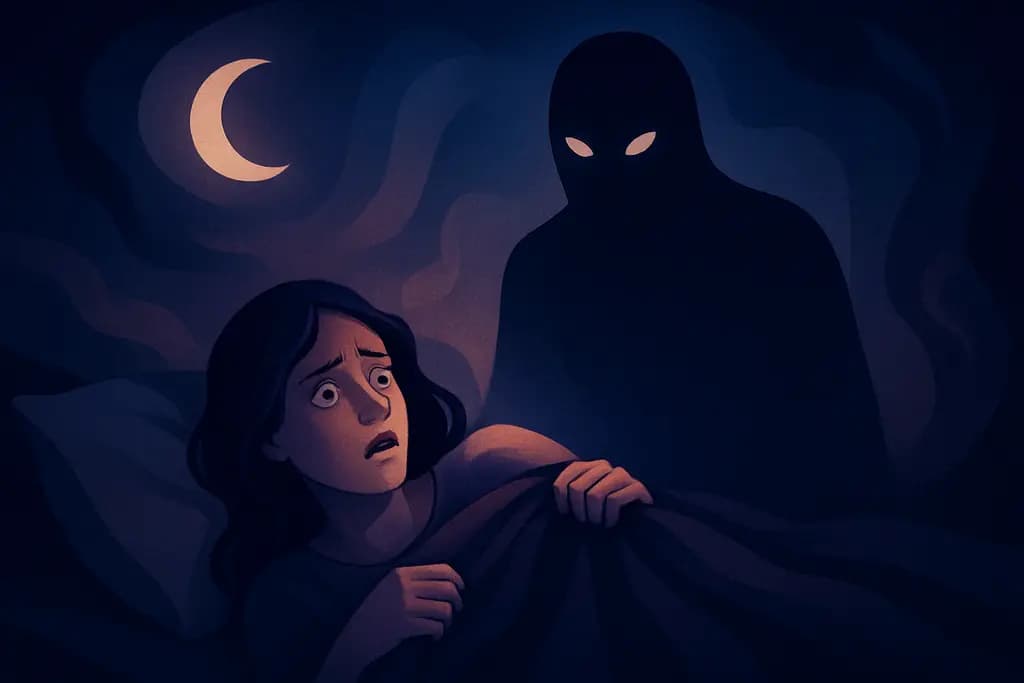
Dreaming of a night terror with an unknown figure often feels like waking into another threat rather than a simple bad dream. This symbol usually points to something unresolved — a hidden fear, boundary violation, or sudden sense of being overwhelmed. The precise meaning depends heavily on your emotions during the dream and the real-life context around it.
General meaning of dreaming about Night terror with an unknown figure
A night terror with an unknown figure tends to center on vulnerability and confrontation with the unknown. Because night terrors are intense and often non-narrative, the unknown figure becomes a stand-in for what feels uncontrollable or threatening in waking life. That figure may not represent a specific person; instead it symbolizes an emotion, an unacknowledged situation, or a looming decision.
Many dreamers report a sense of powerlessness, violation of personal space, or sudden alarm. Interpreting this dream requires attention to details: Was the figure menacing, neutral, or simply present? Did you feel frozen, defensive, or angry? Those feelings change the core message.
- Hidden fears or anxieties about a situation you don’t yet understand
- Boundary issues — someone or something encroaching on your emotional or physical space
- Unprocessed trauma or memory fragments resurfacing in intense, non-rational form
- A warning signal from your psyche that you need to attend to stressors
Spiritual meaning of Night terror with an unknown figure in dreams
Spiritually, an unknown figure in a night terror can symbolize unintegrated parts of the self or a calling to inner work. In many traditions, confronting an unknown presence is interpreted as a prompt to examine shadow material — traits or memories we push away. For some, the figure may represent a spirit, archetype, or transitional force guiding change; for others it’s a sign that energetic boundaries need strengthening.
Across cultures the emphasis is similar: the unknown figure invites inner inquiry rather than literal fear. The dream’s intensity often tells you that this is a part of your inner life demanding attention now.
Psychological interpretation
Fear, stress or anxiety
Night terrors are strongly linked to high arousal states in the brain. Psychologically, an unknown figure can be the mind’s way of dramatizing diffuse anxiety: a single, terrifying image that concentrates scattered worries. If you are under chronic stress, the figure may represent the cumulative weight of sleepless nights, deadlines, or unresolved conflict.
Relationships and emotional bonds
An unknown figure may point to relationship dynamics — someone in your life who feels unpredictable, distant, or invasive. It can also signify attachment fears: the dread of abandonment, betrayal, or being misunderstood. The dream asks you to look at who or what is crossing your boundaries and how you respond.
Control, power or vulnerability
This dream frequently surfaces when you feel powerless or stripped of control. The unknown figure embodies threats to autonomy — either external (a boss, stranger, system) or internal (self-doubt, shame). Working through the dream’s feeling of vulnerability can reveal where you need to reclaim agency or set firmer limits.
Positive meaning
- Signal for personal growth: the terror draws attention to issues that, once addressed, can lead to healing.
- Opportunity to strengthen boundaries and self-protection strategies.
- Catalyst for therapy or self-reflection that improves emotional resilience.
- Prompt to integrate shadow aspects, leading to greater self-awareness and maturity.
- Motivation to change a stressful situation—leaving a harmful relationship or shifting work patterns.
Negative meaning and warnings
- May suggest unresolved trauma is resurfacing and needs gentle attention.
- Can indicate escalating anxiety or burnout if the dream repeats frequently.
- Might point to boundary violations in waking life that could lead to harm if ignored.
- Can indicate avoidance: the dream warns you are pushing difficult emotions out of conscious view.
- May suggest interpersonal dynamics that could worsen without communication or limits.
Common variations of dreams about Night terror with an unknown figure
- Faceless or featureless figure: Often represents something ambiguous in your life—an issue you can’t yet define. The lack of features makes it hard to confront because you don’t have a clear target.
- Masked or hooded stranger: Suggests deception or hidden motives in a relationship or situation; you sense danger but can’t see the truth clearly.
- Silhouette in the doorway: May signal feeling blocked or trapped by an obstacle at a threshold—career, relationship, or life change you’re hesitating to cross.
- Figure standing at the foot of the bed: Points to violations of personal safety or privacy; could relate to literal safety concerns or emotional boundaries being breached.
- Whispering or silent figure: If the figure communicates without clarity, it can symbolize vague worries, suppressed memories, or intuition trying to get your attention.
- Childhood stranger or figure from the past: Often linked to early-life fears or unresolved childhood experiences resurfacing now.
- Looming presence outside a window: Suggests worry about external forces you can’t control—social scrutiny, family pressure, or systemic stressors.
- Figure that disappears when seen clearly: May indicate avoidance: when you try to examine the fear it recedes, showing you need steadier attention or compassionate exploration.
What to do after such a dream
- Reflect on the emotions you felt: fear, helplessness, anger, or something else. Note specifics in a dream journal.
- Map those emotions onto your current life: relationships, work stress, health, or recent changes.
- Strengthen boundaries: identify where you feel exposed and plan small, practical steps to protect your space.
- Share the experience with a trusted person or therapist to unpack repeating themes and reduce isolation.
- Use grounding practices (breathwork, sensory exercises) before bed to lower nighttime hyperarousal and reduce night terror intensity.
- Consider practical safety checks if the dream heightens real-world concern—adjust locks, review living arrangements, or improve sleep hygiene.
- Revisit recurring dreams: patterns or repeated details often reveal the most urgent issues to address.