Dream About Monochrome World – Meaning
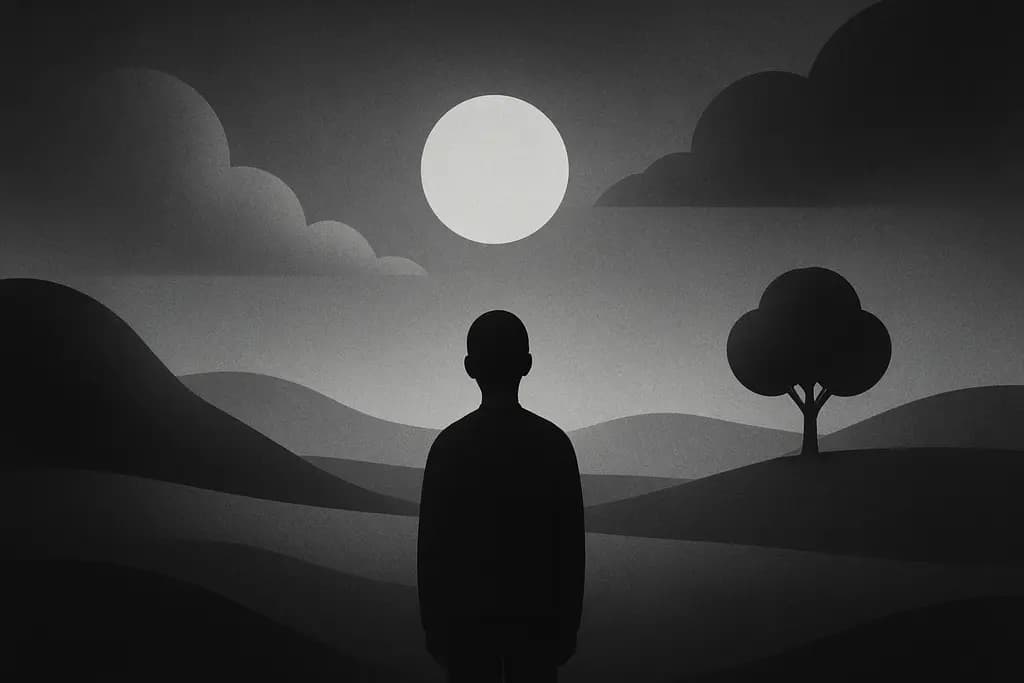
Category: Colors
A common version of this dream
You find yourself walking through a city emptied of color: storefronts, crosswalks, and the faces of strangers are all shades of gray. Rain hisses on the pavement and a bus moves by like a charcoal sketch; you run your hand over a cold metal railing and feel oddly calm but detached. Maybe you’re coming from a long day at work, packing boxes for a move, or carrying the weight of recent loss — the scene feels precise, unnervingly simple, and intimate.
Specific details people often mention
Dreamers often mention very specific visuals: an empty movie theater with black velvet seats, a single wooden door painted white, a crowd wearing identical coats, a cracked vinyl umbrella, the distant clack of a train, or a sudden tightening in the chest when a familiar face lacks color.
Quick interpretation
In many cases, a Monochrome World dream signals a narrowing of emotional palette — not absence, but a deliberate or enforced reduction of intensity. It commonly reflects either a conscious simplification (you’re pruning choices, routines, or distractions) or an emotional flattening (fatigue, grief, or decision overload). How you felt in the scene — peaceful, numb, anxious, curious — steers whether it’s a restful reset or a warning to re-engage with what you’ve dimmed.
Life-context meanings
- Emotional Flattening or Grief. A monochrome landscape can indicate emotional numbing after loss, burnout, or ongoing stress. If you felt muted, heavy, or unable to cry in the dream, it may be a signal that your affect is temporarily dulled. This interpretation points to the need for small, concrete steps to feel more present again: talk to a friend, allow minor pleasures, or schedule restorative rest.
- Deliberate Simplification or Decluttering. Seeing the world stripped of color can also reflect an intentional effort to simplify: reducing choices, clearing physical clutter, or focusing on essentials. If you walked calmly, examined objects, or felt relief, the dream may be endorsing a conscious pruning process — a creative or practical reset that helps you concentrate on what matters most.
- Creative Reset or Artistic Recalibration. Artists and creative thinkers often report monochrome dreams during creative transitions. The lack of color can mean you’re recalibrating your aesthetic vocabulary or seeking a new perspective. If the scene felt like reviewing old photographs or flipping through a sketchbook, the dream may encourage experimentation: try limiting your palette, working in black and white, or turning off distractions to reignite imagination.
- Avoidance or Emotional Distance. When the dream carries anxiety or a sense of being cut off, monochrome may signal avoidance — intentionally shutting out emotional detail to cope with uncertainty or conflict. If you found yourself passing closed doors or observing from afar, it suggests a pattern of disconnect that deserves attention: gentle confrontation with what's been avoided can restore color over time.
What this dream is rarely about
This dream is rarely a literal prophecy: it does not usually predict an actual colorless future or external catastrophe. Nor is it simply about visual preference. Instead, it commonly maps internal shifts — your priorities, energy, and attention. An emotional nuance: the same greyscale can feel freeing for someone simplifying their life and stifling for someone numbed by stress.
What to ask yourself
- What tasks, relationships, or inputs have I intentionally or unconsciously minimized in the past month?
- When in the dream did I feel most at ease or most unsettled, and what real-life situation matches that feeling?
- What one small sensory or creative pleasure could I reintroduce this week to test whether I want color back?
Spiritual meaning
Viewed symbolically, monochrome can act as a spiritual liminal space — a cleansing of excess that exposes core values and essentials. Many traditions interpret a stripping away of color as an invitation to see beneath surface distractions or to practice discernment. This framing is non-dogmatic: it suggests the dream may be encouraging quiet attention, inner clarity, or a period of minimalism in spiritual practice rather than prescribing any specific belief or rite.
Common questions
Why do I feel fear in this dream?
Fear often appears because color loss in a dream mimics loss of information or emotional connection; the brain registers uncertainty. Check whether you’re facing ambiguous choices, unresolved grief, or enforced simplification in waking life.
What should I do after this dream?
After this dream, note how you felt on waking and journal specifics: locations, people, and emotions. Try one practical step—declutter, reconnect, or book a restorative pause—and observe whether it changes your mood.
Is this about relationships?
Sometimes. If people in the dream were drained of color or distant, it can reflect relational withdrawal or unspoken conflict. But it more commonly points to your own emotional bandwidth than to a direct message about someone else.
Can this dream be positive?
Yes. If the dream left you calm, focused, or relieved, it can be a positive signal of needed simplification or creative clarity. The same imagery can be negative if it came with numbness or anxiety.
Related dream meanings
Dreams about monochrome world are often connected to A blank gray sky that never changes, A bright rainbow appearing, and A moon that changes color. Looking at those nearby themes can help you compare control, fear, pressure, or change across similar dream scenes. You may also want to compare it with A neon pink sky at noon if the same mood or conflict keeps showing up.