Dream About Missing a paycheck – Meaning
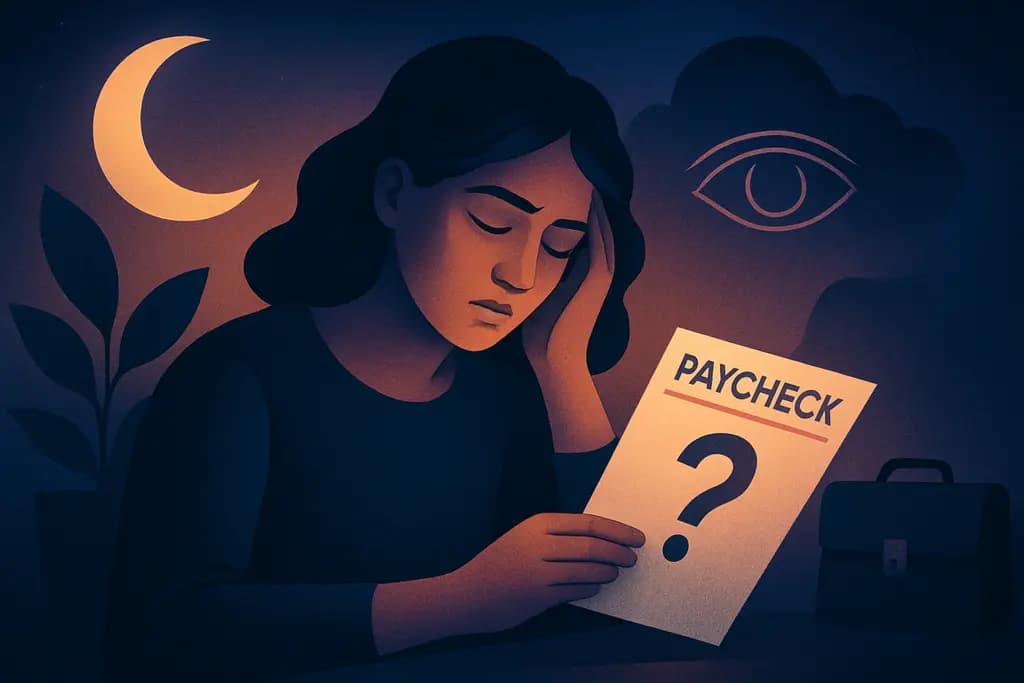
Category: Work & Money
Dreaming that you are missing a paycheck often brings up immediate associations with money, job security, and self-worth. Such a dream usually reflects concerns about financial stability, but its precise meaning depends heavily on your feelings in the dream and the real-life context surrounding your work and income. Pay attention to whether you felt panic, relief, anger, or curiosity — those emotions change the interpretation.
General meaning of dreaming about Missing a paycheck
At its core, a dream about a missing paycheck symbolizes perceived lack — not only of money, but also of recognition, reward, or fairness. Because paychecks are a direct measure of exchange (time and effort for compensation), losing or missing one in a dream often speaks to anxieties about whether your efforts are noticed, fairly rewarded, or secure.
Typical interpretations emphasize practical and symbolic layers: practical concerns about bills and employment, and symbolic worries about self-value and trust in systems or people who control resources.
- Financial anxiety or short-term money worries
- Fear of job loss, late payment, or reduced income
- Feeling undervalued at work or in a relationship where emotional “payoff” is missing
- Concerns about fairness, contracts, or administrative errors
Spiritual meaning of Missing a paycheck in dreams
Spiritually, a missing paycheck can point to an imbalance in the energetic exchange between you and the world. Many traditions view money as a form of energy; a dream where payment is missing may signal a pause or block in the flow of giving and receiving.
In universal spiritual terms, this dream can invite you to examine where you feel depleted, where you are over-giving, or where you need to restore personal boundaries. In some practices, it may be read as a nudge to realign values rather than chase external validation.
Psychological interpretation
Fear, stress or anxiety
Dreams about a missing paycheck commonly mirror underlying financial stress or general anxiety. If you are worried about bills, debt, or job stability, the dream amplifies these fears. Even if your finances are stable, the paycheck image can stand in for broader anxieties — fear of not having enough, or fear that your efforts won’t yield the expected results.
Relationships and emotional bonds
Because paychecks also symbolize exchange, the dream can reflect emotional transactions in relationships: feeling that you give more than you receive, being taken for granted, or expecting recognition that never comes. In romantic or family contexts, the missing paycheck can represent emotional neglect rather than literal money.
Control, power or vulnerability
A missing paycheck can reveal feelings of helplessness or lack of control—especially when others decide your financial fate (employers, partners, institutions). It can also highlight vulnerability about your ability to provide for yourself or others, and whether you trust systems to protect your livelihood.
Positive meaning
- A prompt to reassess priorities: the dream may encourage you to focus on meaningful work rather than only financial reward.
- Opportunity to set healthier boundaries: recognizing that you are underpaid emotionally or practically can lead to constructive change.
- Motivation to plan and prepare: anxiety in the dream can translate into real-life action, such as budgeting, upskilling, or seeking new opportunities.
- Emotional growth: facing feelings of lack can help you develop resilience and a clearer sense of self-worth independent of paychecks.
- Creative problem-solving: the discomfort in the dream may spark ideas for alternate income streams or better financial management.
Negative meaning and warnings
- May suggest imminent or possible financial trouble if accompanied by strong fear or recurring dreams about missing paychecks.
- Can indicate chronic undervaluation at work, which may lead to burnout or resentment if not addressed.
- May point to administrative or contractual issues — late payments, payroll mistakes, or unclear terms that can cause real-world problems.
- Can indicate avoidance: repeatedly dreaming of missing pay may mean you are ignoring practical steps (budgeting, asking for a raise, checking pay stubs).
Common variations of dreams about Missing a paycheck
- Missing a paycheck and panicking: Often highlights acute financial stress or a fear of sudden loss; your reaction in the dream mirrors real-life urgency.
- Paycheck sent but never received: May suggest trust issues with an employer or partner, or fear that promised rewards won’t materialize.
- Paycheck smaller than expected: Can indicate feelings of being undervalued, disappointment after effort, or a real pay cut worry.
- Paycheck lost or stolen: Often points to fear of external forces taking what you’ve earned — theft, fraud, or workplace injustice.
- Paycheck delayed or late: Reflects anxieties about stability and timing; could also be a prompt to check practical finances and payment schedules.
- Receiving a paycheck but it’s destroyed (torn/burned): Symbolizes loss of confidence in the system that supports you or fear that earned rewards won’t survive scrutiny or crisis.
- Finding a missing paycheck after panic: Suggests relief and that your fears may be resolved once you investigate — a reminder to verify facts before assuming the worst.
What to do after such a dream
- Reflect on the emotions: Note whether you felt panic, shame, anger, or calm — that feeling points to the area of life that needs attention.
- Check practical facts: Review recent pay stubs, contracts, deadlines, or bank accounts to rule out real issues (but avoid assuming catastrophe before checking).
- Examine work relationships: Consider whether you feel fairly compensated and recognized; prepare a calm conversation or documentation if a discussion is needed.
- Assess budgeting and safety nets: Even if the dream is symbolic, strengthening emergency funds and financial plans reduces anxiety.
- Address underlying fears: If the dream repeats, journal about the recurring theme, talk to a trusted friend or coach, and consider small concrete steps (skill-building, updating a CV, or discussing terms with your employer).
- Take balanced action: Use the dream as information, not verdict—combine emotional reflection with practical follow-through.