Dream About Mirror shows older self – Meaning
Category: Beauty & Appearance
Main interpretation
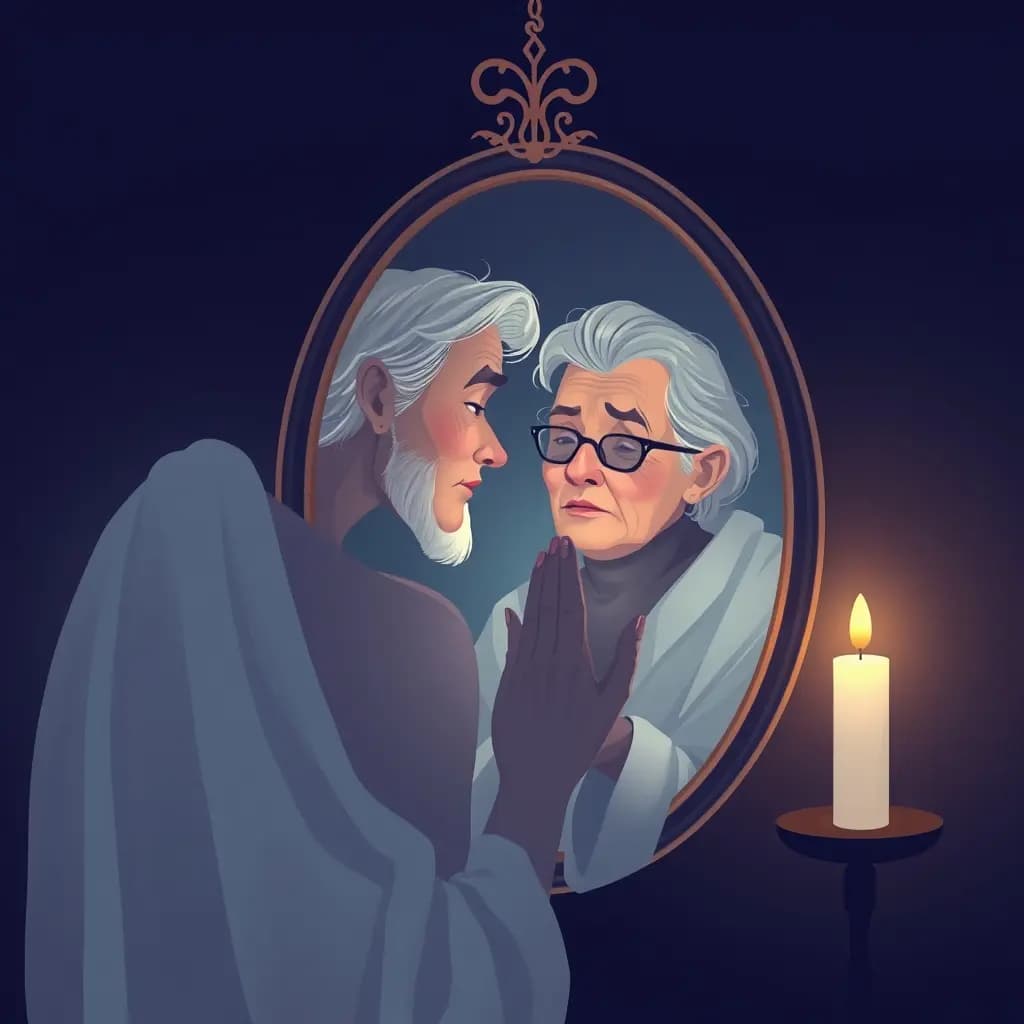
Seeing an older self in a mirror commonly points to concerns about who you will become: choices pressing on you now, responsibilities you anticipate, or the way time is changing your identity. It often combines worry about physical appearance with a deeper question of values and purpose—whether you’ll grow into someone you respect. This image can be a prompt to plan, grieve, or intentionally shape the habits that steer your future, rather than a simple prophecy about your looks.
A common version of this dream
You stand alone in a small bathroom at two in the morning, the overhead light a weak halo. Steam paints the mirror in streaks; when you wipe it away a face you recognize—but lined, quieter—stares back. Your hands tremble on the sink. A clock clicks, your phone buzzes in the other room, and the sudden stillness feels like an appointment you didn’t make. Emotions surge: shock, curiosity, a score of regrets, and a strange calm beneath the shock.
Concrete details that tend to stand out
Dreamers often notice a cracked mirror frame, a rain-smeared window behind them, an empty chair in the corner, or an older self wearing a specific item—like a coat, wedding band, or work uniform. Many report a faint voice, a scent of coffee, or a sudden muscle tightness in the jaw or throat.
What this dream may be expressing
- Transition and future self. This reading treats the older reflection as a snapshot of potential roles: parent, caregiver, retiree, or leader. The dream often appears when you face a crossroads—changing jobs, ending relationships, or moving cities—and asks: do your current choices align with that future? It can prompt practical planning (financial, health, relational) and a psychological check on whether you want to become that person or need to adjust course now.
- Self-judgment and appearance anxiety. Here the mirror highlights how you critique your body and social worth. An older face can magnify fears about losing attractiveness or social relevance, amplified by cultural pressure around youth. The dream may reveal harsh internal standards—what you think aging should look like—and invite kinder self-talk, realistic self-care actions, and a re-evaluation of values tied to appearance.
What this dream usually does not mean
This dream is rarely a literal prediction or supernatural forecast of exact years to come. It does not usually mean you will instantly age or that a specific event is fated to happen. Emotionally intense and vivid as it can be, the vision typically reflects internal attitudes and expectations rather than delivering a calendar-style warning.
How different traditions interpret it
Meanings vary across cultures: some Western views stress youth and read the dream as anxiety about appearance or productivity; East Asian interpretations may frame it as increased respectability or a prompt to fulfill familial duties; Indigenous perspectives might see an encounter with an elder-self as contact with ancestors or a responsibility to the community. Interpretations shift with cultural values about age, beauty, and social roles—so look to your own cultural background for resonance rather than a one-size answer.
Personal reflection prompts
- When have you recently encountered older people or images that stayed with you—photos, conversations, news—and how did they affect you?
- What specific changes (health, financial, social) do you secretly worry will define you later, and which are realistically in your control now?
- If the older version of you were offering one piece of advice, what practical habit or decision would you ask for to start this week?
FAQ
Is this dream a warning?
Usually not; it’s seldom a literal warning. More often the dream signals internal alerts—neglected plans, aging anxieties, or looming responsibilities—prompting attention rather than predicting a specific event.
Why do I feel fear in this dream?
Fear often comes from confronting loss of control: changes in looks, abilities, roles, or time. The stranger-in-the-mirror feel triggers survival reactions—shock, confusion, or shame—linked to identity and social value.
Is it related to stress?
Yes, stress commonly triggers this dream. Major life stressors, chronic worry about the future, or big transitions increase the likelihood, because dreaming is one way your brain processes unresolved pressures.
Is this about money?
Sometimes. If financial insecurity, retirement concerns, or job instability occupy you, they can shape the dream. But the image most often points to broader identity or health worries rather than money alone.
Related dream meanings
If this dream keeps returning, pages about Makeup won't wash off, Skin peeling off, and Trying on a wedding dress can reveal the related patterns underneath it. They often overlap around insecurity, transition, or stress in everyday life. You may also want to compare it with Nails cracking while smiling if the same mood or conflict keeps showing up.