Dream About Map – Meaning
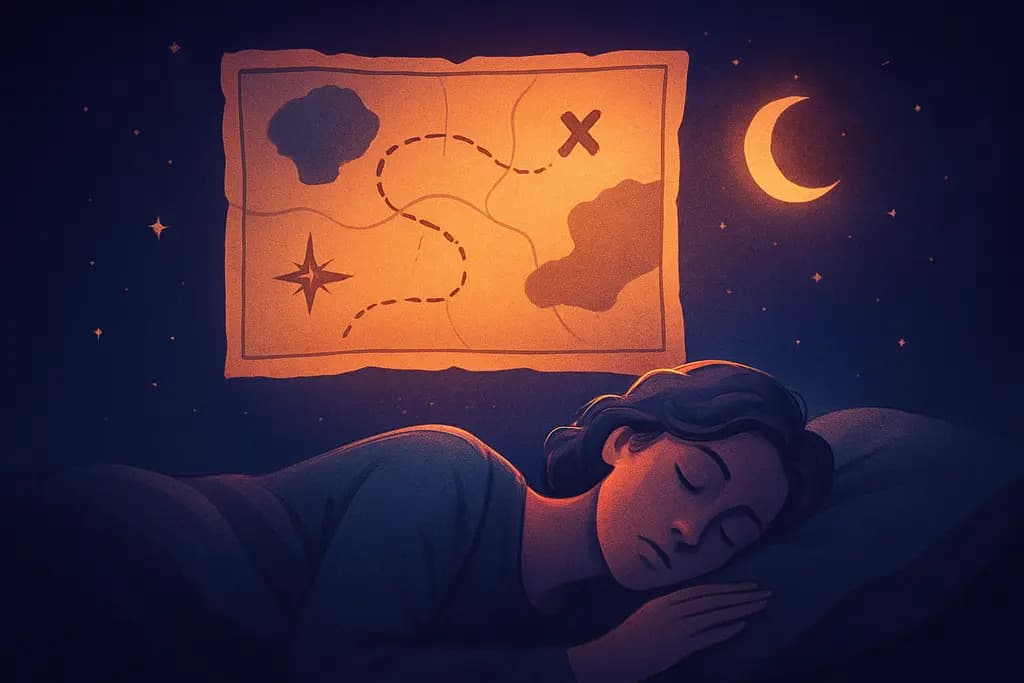
Category: Objects
What this dream usually means
When you wake anxious about a decision, a map dream usually feels like your mind handing you a tool for direction. It commonly reflects the need to make a plan or choose a route — whether that’s a career move, a relationship boundary, or the next step in a project. Pay attention to whether the map is clear, torn, or upside down: those details often mirror confidence, confusion, or reverse thinking. In real life, the dream can prompt practical planning or reveal where you feel uncertain.
A common version of this dream
You’re in a dim station under fluorescent lights, folding and refolding a paper map while the announcement for a delayed train repeats. Your palms are damp; you keep checking a watch that’s a minute slow. The map is full of routes you half-recognize: some labeled in neat handwriting, others scribbled out. You feel both urgency and a stubborn hope — like you should already know which platform to take but can’t decide yet.
Specific details people often mention
People often notice the little things: a map pinned to a corkboard with thumbtacks, a compass that spins wildly, rain blurring ink, or a map that’s tattooed on someone’s arm. Some report hearing distant traffic or a child’s laughter as they trace a route, and others dream the paper turns into a paper airplane and floats out a window.
What this dream may be expressing
- 1. Direction and Planning. A clear, well-drawn map often points to practical planning: you are sketching steps toward a goal and feel some control over the process. If you find routes labeled in businesslike script or see checkboxes beside locations, the dream may encourage scheduling, research, or breaking a big task into smaller steps. Confidence in the map usually equals confidence in the plan.
- 2. Feeling Lost or Ambivalent. A torn, upside-down, or unreadable map commonly reflects confusion, ambivalence, or feeling pulled between options. This angle highlights emotional fog rather than lack of competence — you might know your values but not how they translate into choices. The dream can spotlight fear of making the wrong turn, indecision rooted in conflicting loyalties, or recent changes that have unsettled your internal bearings.
- 3. Discovery and New Possibilities. A map revealing secret paths, hidden islands, or new landmarks tends to symbolize opportunity and exploration. This interpretation leans toward curiosity and the desire to expand your identity or goals. Finding an unexpected trail or a map that unlocks with a key can suggest a creative solution or a relationship, job, or hobby you haven’t fully considered yet.
What this dream is rarely about
This dream is rarely a literal prediction about where you will go or exactly what will happen next; it does not usually work as a literal prediction. Rather than forecasting external events, the map more commonly signals internal orientation — where you feel certain, where you hesitate, and what options you are overlooking. Emotionally, it can feel urgent without meaning fate is fixed.
Symbolic meaning across traditions
Meanings vary across traditions. In Western modern symbolism a map usually represents strategy and decision-making; in some Indigenous contexts, navigation through landscape is embedded in stories or songs that combine memory, ethics, and place. Religious or mystical systems might treat maps metaphorically as spiritual charts or testaments to lineage. Pay attention to the cultural symbols you personally carry; they shape whether the map feels like an instruction, a memory, or a story.
What to ask yourself
- What specific decision or area of life felt present in the dream, and why might it be urgent now?
- Which routes on the map felt appealing or frightening, and what real-life options do those correspond to?
- What small next step could make the map in your waking life clearer (who to ask, what to research, what deadline to set)?
Frequently asked questions
Is this dream a warning?
Is this dream a warning? — Not usually a dire warning; it more often highlights a need to pay attention to choices or a blind spot rather than predicting immediate danger.
Is this about money?
Is this about money? — Sometimes, if the map’s landmarks included workplaces, banks, or transactions; more often it symbolizes direction and strategy than specific finances.
Can this dream be positive?
Can this dream be positive? — Yes. A well-preserved or revealing map usually signals opportunity, clarity, or readiness to move toward a goal.
Is it related to stress?
Is it related to stress? — Often. Maps appear when you’re under pressure to decide or organize; the emotional tone of the dream will show whether stress is prompting action or causing paralysis.
Related dreams to explore
If this dream keeps returning, pages about Balloons, Bicycles, and Bikes can reveal the related patterns underneath it. They often overlap around insecurity, transition, or stress in everyday life. You may also want to compare it with black lost objects if the same mood or conflict keeps showing up.