Dream About many Old Friends – Meaning
Category: Relationships
Main interpretation
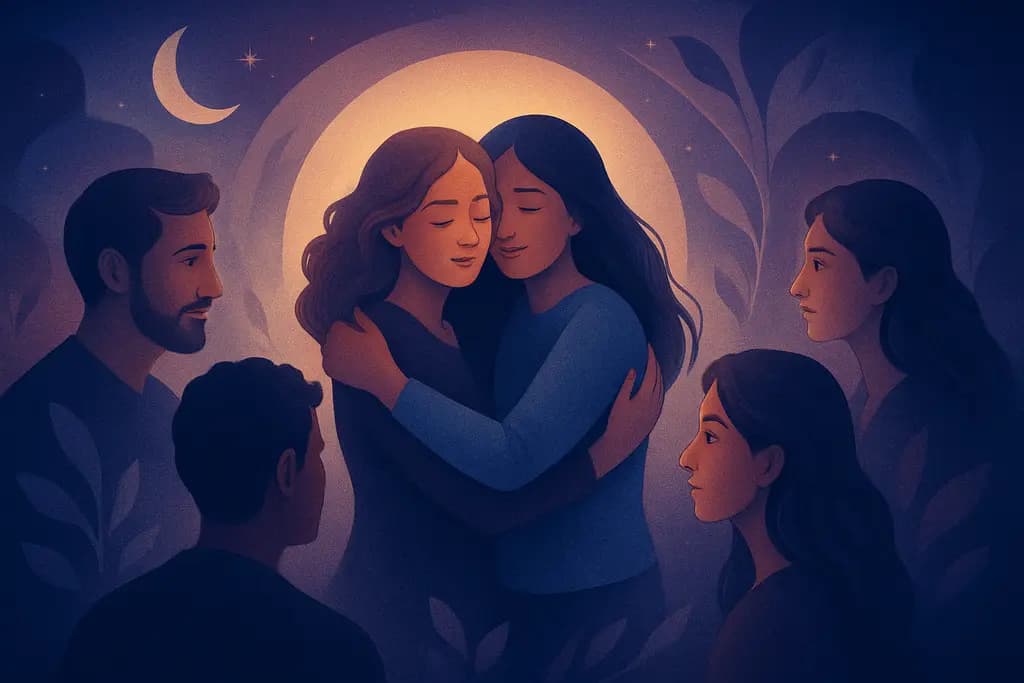
Direct answer: dreaming of many old friends most often points to the way your past social roles are influencing your present—nostalgia, unresolved conversations, or a need to re-evaluate your place in a network. If you recently changed cities, left a job, or reconnected on social media, the dream tends to amplify specific memories and emotions tied to those people: warmth for shared times, regret about things left unsaid, or curiosity about who you became since then.
Psychological perspective
From a contemporary psychological viewpoint (non-medical), these dreams often reflect active mental sorting. When life events—moving, career shifts, breakups—trigger the recall system, the brain rehearses social scenarios to process belonging and loss. Emotions in the dream (joy, shame, relief) map onto recent behavior: for example, anxious pacing might track social withdrawal, while laughter can index genuine wish for contact. Treat the dream as a prompt to notice patterns in how you reach out, withdraw, or remember, rather than as a diagnosis.
How this dream can be interpreted
- Nostalgia and identity checking. Seeing many old friends together may indicate you’re measuring who you are now against who you were. The dream often surfaces when you’re revisiting old routines—flipping through yearbooks, returning to your hometown, or going through childhood belongings—and prompts a quiet inventory of values, habits, and roles you’ve kept or discarded.
- Unprocessed conflicts or apologies. Crowds of former friends can point to unresolved interactions: an apology you never gave, a friendship that faded badly, or guilt about how you left a group. The dream may replay brief scenes—an argument at a table, a slammed door—to encourage you to acknowledge and, if possible, address those unfinished threads.
- Social change and role loss. If you’ve recently lost a social role—leaving a club, graduating, changing careers—this dream can express worry about losing status or belonging. Many faces at once compress the sense of a vanished network: there’s comfort in recognition, but also a subtle anxiety about where you fit now.
- Yearning for reconnection or selective memory. Sometimes the vision is driven by longing: a wish to rekindle particular friendships or revisit happier periods. Other times it’s selective memory—idealized scenes where awkwardness, distance, or pain are smoothed over—revealing more about what you miss than what actually existed.
What this dream usually does not mean
This dream rarely serves as a literal prediction that those friends will reappear in your life exactly as in the dream. It does not usually mean a real-life reunion is imminent or that specific conversations will happen. Instead, the imagery is symbolic of current feelings about connection, change, or regret—an emotional mirror, not a calendar.
Concrete details that tend to stand out
People commonly notice sensory details: a fluorescent-lit school gym, a broken chain-link fence, a single red coat in a crowd, a train whistle in the distance, or the smell of cafeteria food. Physical reactions—sudden tears, a racing heart, or stumbling over names—often make the scene feel unusually vivid and personal.
Why recurring versions matter
Recurring versions of this dream become important when they persist during stress, life transitions, or when the same unresolved scene repeats. If you dream the same argument, apology, or reunion multiple times, it often signals a specific unresolved emotional knot that will continue to influence waking choices—who you contact, who you avoid, or whether you accept new roles. Recurrence is the brain’s way of flagging material that benefits from attention.
Cultural and symbolic views
Meanings differ across cultures: some systems view reunions in dreams as blessings of social continuity, while others read them as messages about ancestral ties or obligations. In collectivist contexts, many familiar faces might underscore communal responsibilities; in cultures emphasizing personal autonomy, the same dream can highlight individuation. Avoid assuming any single cultural reading applies universally; local rituals, family history, and personal faith shape interpretation.
Common questions
Can this dream be positive?
Yes. This dream can be positive when it brings warmth, gratitude, or motivation to reconnect. Feelings of genuine joy or closure in the dream often reflect healthy remembrance and renewed social curiosity.
What should I do after this dream?
After this dream, note who and what stood out, write a brief list of names or scenes, and decide one practical step: send a short message, revisit a keepsake, or journal to clarify unresolved feelings.
Why does this dream repeat?
The dream repeats when the mind hasn’t settled an emotional thread—unfinished conversations, identity shifts, or lingering regret. Repetition flags material that benefits from attention or an actionable step in waking life.
Related dreams to explore
Dreams about many old friends are often connected to black Old Friends, dream about Old Friends, and Old Friends. Looking at those nearby themes can help you compare control, fear, pressure, or change across similar dream scenes. You may also want to compare it with Old Friends attacking if the same mood or conflict keeps showing up.