Dream About Lost Map of Your City – Meaning
Category: Lost & Found
What this dream usually means
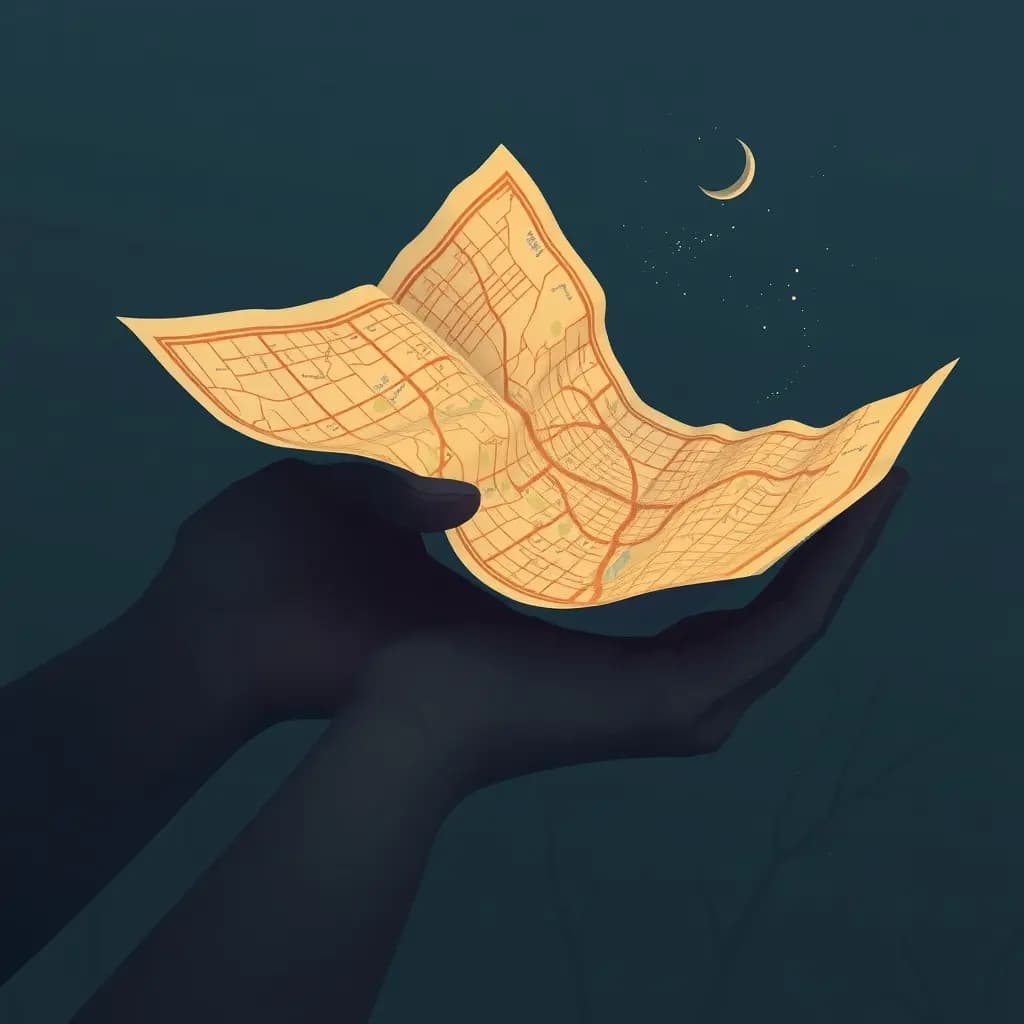
A lost city map in a dream most commonly signals disorientation about your plan or place in life. It often reflects changes—moving jobs, ending a relationship, or a routine fracture—where past directions no longer apply. The map represents your mental plan or landmarks; losing it suggests you’re negotiating new boundaries and choices. This can feel frustrating, and sometimes oddly freeing, as you weigh which routes to keep or redraw.
What your mind may be processing
From a psychological angle, the map functions like a cognitive map: a mental model you use to navigate daily life. The dream often surfaces when that model no longer matches your environment—after a move, during career change, or through grief. It can reveal attentional load, memory gaps, or executive strain: your brain rehearses reorientation. Notice concrete triggers—emails about a new project, packing boxes, or changing schedules—that coincide with the dream.
How this dream can be interpreted
- Life transition and changing landmarks. The map stands for routines and landmarks you used to rely on. Losing it can indicate a recent relocation, promotion, breakup, or promotion to a role with unfamiliar expectations. The dream often signals you must learn a new mental map: who you answer to, which places matter, and which habits no longer guide you.
- Decision paralysis and too many options. A torn or fluttering map can reflect overwhelm from choices—career paths, moving neighborhoods, or parenting options—where each path seems promising and none clearly leads home. The dream highlights the stress of selecting a route when the visual guide you trust is ambiguous or contradictory.
- Forgotten plans or neglected details. This dream may point to misplaced practicalities: missed appointments, an overlooked document, or an abandoned plan you meant to follow. The specificity of streets or addresses in the dream can clue you into which project or relationship contains the neglected detail.
- Identity and role uncertainty. If the map represents a role—parent, worker, partner—losing it can reveal uncertainty about who you are expected to be. You may be experimenting with new identities or grieving the loss of a familiar role. The dream invites examination of which parts of your identity feel reliable.
What this dream usually does not mean
This dream is rarely a literal forecast that you’ll physically get lost or lose an object. It does not usually predict specific events in the city or exact timings. Instead, it points to lost plans, shifting roles, or temporary uncertainty about direction—not a direct prediction of a future mishap.
Concrete details that tend to stand out
People often notice a coffee ring on the map, a stopped bus clock, a distant tram horn, or the smell of rain-soaked paper. Some report crowds whose faces blur, a street name that’s yours but spelled wrong, or the odd sensation of walking in someone else’s shoes.
Why recurring versions matter
Recurring dreams of a lost map deserve attention when they coincide with prolonged stress, an unresolved fear, or a life transition. If the dream returns after a major change—moving, a new job, an illness in the family—or wakes you anxious, it suggests unfinished orientation work. Track frequency, what you felt on waking, and real-life decisions you’ve delayed. Simple actions—relisting priorities, updating schedules, or asking for directions—often reduce recurrence.
How different traditions interpret it
Meanings vary widely across cultures. In Western urban dreams the map often ties to autonomy and planning; in some East Asian contexts losing a map might highlight disrupted social roles or obligations. Indigenous perspectives may view maps as tied to land memory and communal ties rather than individual plans. Always weigh your cultural background: the cityscape and map in your dream may echo local values about place and responsibility.
Common questions
Why does this dream repeat?
Why does this dream repeat? - It repeats when a practical problem or unresolved decision remains active: ongoing stress, unmade choices, or repeated reminders (emails, moves, conversations) keep the brain rehearsing orientation until you address the issue.
Why do I feel fear in this dream?
Why do I feel fear in this dream? - Fear comes from disorientation and loss of control: the map is your plan, and without it you face uncertainty about outcomes, safety, or responsibility. The body reacts as if real-world navigation is threatened.
Can this dream be positive?
Can this dream be positive? - Yes. Losing a map can prompt reassessment, creative rerouting, and new opportunities. Some people report finding a better path after facing the uncertainty the dream revealed.
Dream meanings connected to this one
Dreams about lost map of your city are often connected to Finding cash hidden inside a book, Locating a Blank Map, and Unlabelled Box in the Attic. Looking at those nearby themes can help you compare control, fear, pressure, or change across similar dream scenes. You may also want to compare it with Trail of Breadcrumbs if the same mood or conflict keeps showing up.