Dream About Lost in an unfamiliar city – Meaning
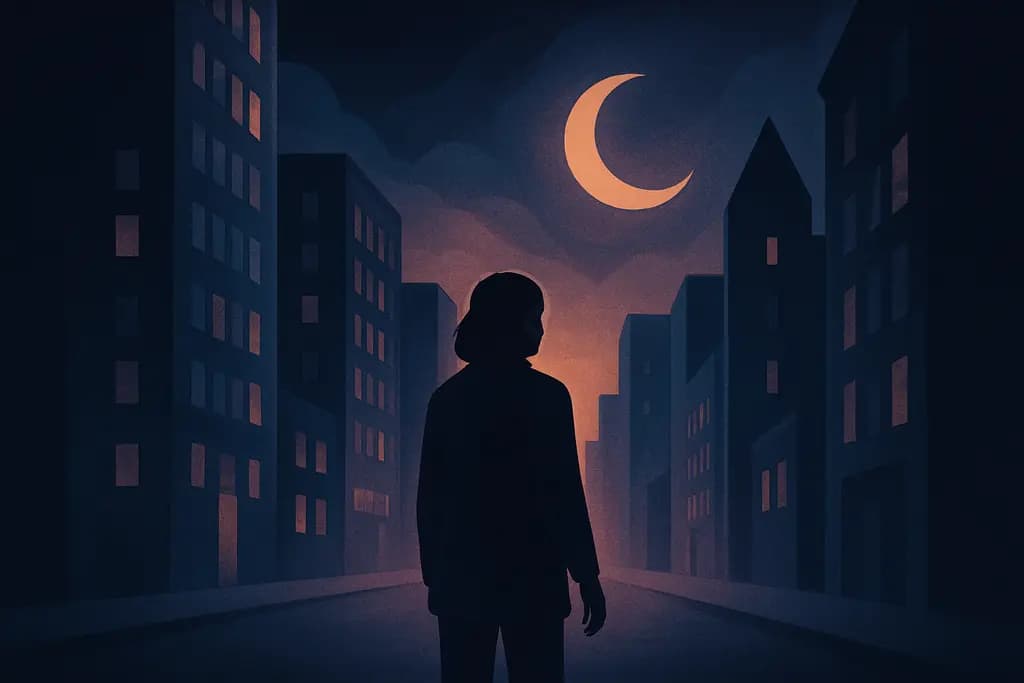
Category: Fears & Nightmares
Main interpretation
If you’ve been under pressure from a job shift, a breakup, or moving into a new role, this dream often surfaces that emotional urgency: you feel cast into a place without a map. It commonly reflects a perceived lack of direction — not a literal getting-lost event — and points to decisions or boundaries that need clearer bearings. Pay attention to whether you panic, wander curiously, or feel detached; that emotional tone narrows whether the dream is about anxiety, identity, or simply adjustment.
A typical dream scenario
You’re walking under packed neon streets, clutching a bag that feels heavier each block. Street signs blur, your phone’s map spins and won’t lock, and the crowd flows around you like a current you can’t swim against. A distant clock keeps time you don’t understand; a café you hoped for has closed. In that moment your chest tightens — irritation or panic — and the city feels both endless and impossibly small, as if every alley is a choice you didn’t ask for.
The emotional and symbolic message
- Direction and Decision. This version highlights crossroads: the city’s streets represent options and consequences. If you dream you’re scanning maps and turning down wrong alleys, it may indicate you’re weighing competing choices—career move, relationship choice, or a relocation. The dream may prompt a step-by-step check: which option aligns with practical needs and which with long-term values.
- Identity and Belonging. When the unfamiliar city feels socially cold or you notice mismatched clothing and languages, the dream tends to point to belonging and self-definition. It can surface impostor feelings after entering a new community or role. The city becomes a stage where you test who you are; noticing who accepts or ignores you is useful information about how you want to be seen.
- Overwhelm and Boundaries. If the dream emphasizes noise, bright lights, accelerating crowds, or a sense of being followed, it often maps onto overstimulation and depleted boundaries. This reading suggests the immediate need for rest, clearer priorities, and asking for help. The city’s sensory overload mirrors how external demands are crowding out your capacity to choose calmly.
What this dream is not literally saying
This dream is rarely a literal prediction that you will physically get lost. It does not usually mean you are incompetent or doomed. Instead, treat it as a symbolic signal about orientation in life—decision-making, identity, or stress levels—rather than a prophecy. Literal interpretations often miss the emotional map the dream is drawing for you.
Concrete details that tend to stand out
People often report small, specific images: an escalator that only goes sideways, a tram with no conductor, closed doors that won’t open, rain that smells of oil, or hearing a language you once studied but can’t speak. Physical reactions—nails digging into palms or a throat tightening—also stand out as anchors to the dream’s meaning.
How different traditions interpret it
Meanings vary across traditions and should not be treated as universal truth. In Western therapeutic traditions the dream commonly links to anxiety and identity; Jungian readings emphasize the city as a collective or shadow part of the self. Some Indigenous viewpoints might interpret being disoriented as a spiritual imbalance or an ancestor’s message to restore relationships. Eastern perspectives sometimes view it as karmic confusion or a test of mindfulness. Consider which cultural lens fits your background and personal beliefs.
Personal reflection prompts
- What real-life choice, role, or relationship feels like an ‘unfamiliar street’ right now?
- Which single detail in the dream (a building, sound, person, or object) stirred your strongest emotion, and what might it symbolize in your life?
- What concrete step this week would help you feel more oriented—making a list, asking someone for advice, or scheduling downtime?
FAQ
What should I do after this dream?
Write down the dream details and your waking concerns. Identify one practical action (call a friend, map pros/cons, schedule rest) and try it; tracking changes will show if the dream’s signal subsides.
Is this about money?
Usually not directly. Financial stress can trigger this dream, but more often it reflects choices, identity, or overwhelm. Check whether money worries were present in the dream or your waking life.
Why does this dream repeat?
Repeating dreams commonly signal an unresolved issue or a pattern you keep avoiding. Address the underlying decision or stress, try small experiments, or discuss it with a counselor to break the cycle.
Dream meanings connected to this one
People who dream about lost in an unfamiliar city often end up exploring Lost, Abandonment, and Aging next, because the same pressure can show up through different symbols. Comparing them usually makes the emotional pattern clearer. You may also want to compare it with Being Chased if the same mood or conflict keeps showing up.