Dream About Lost in a town you once visited – Meaning
Category: Time & Memory
What this dream usually means
You likely dreamed of being lost in a once-visited town because your past and present are in tension: familiar details trigger memories while changes remind you life moved on. This image often signals unfinished emotional business—decisions you postponed, a relationship left ambiguous, or a former version of yourself you’re comparing against your current life. Look for which landmark or person felt most important in the dream; that clue usually points to what needs attention now.
What this dream often looks like
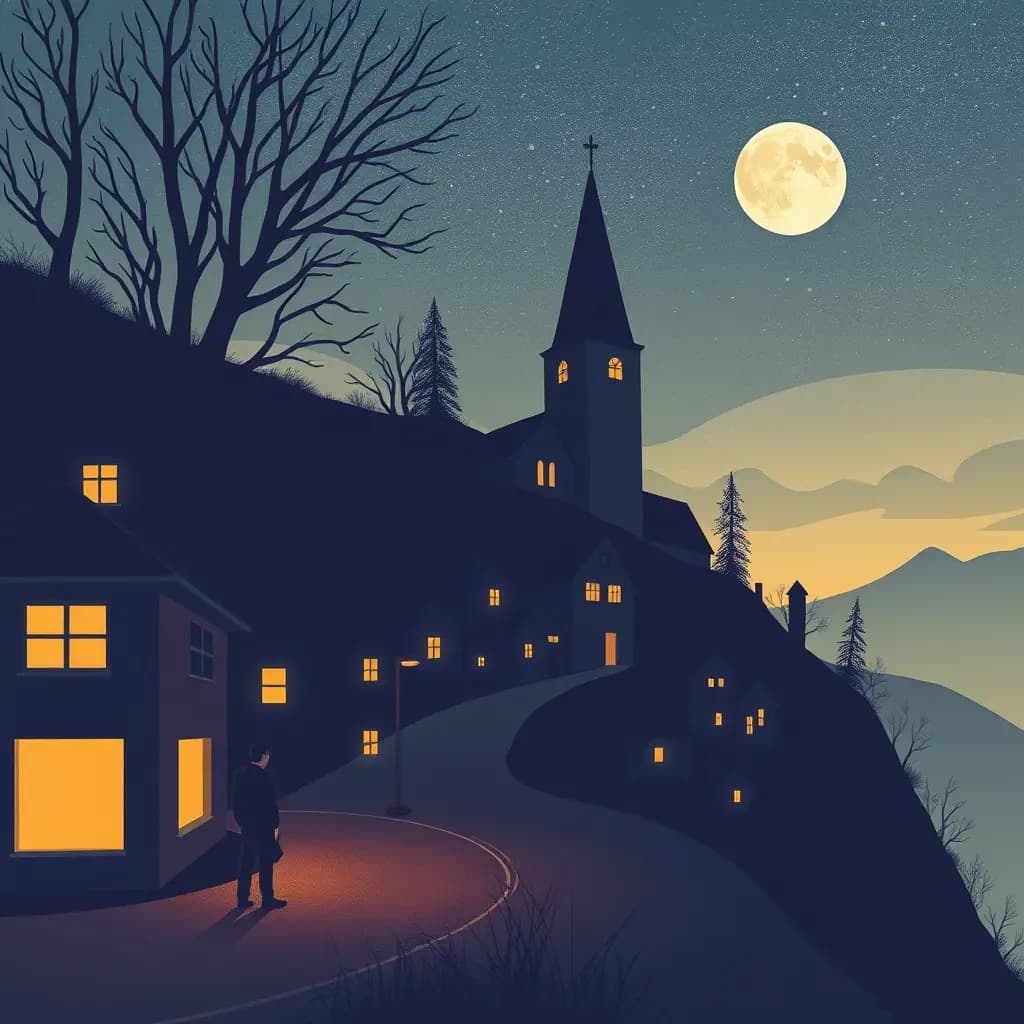
A rain-slick alley you remember as comforting looks narrow and unfamiliar: the bakery’s cracked sign leans to one side, the old bench is gone, and you find yourself standing with a folded map you don’t know how to read. Your chest tightens as you walk past a shuttered café where you once laughed with someone now distant; the sensation is more like trying to fit into clothes that no longer belong to you.
Unusual details people report
People report locked blue doors, a train whistle off in the distance, a bakery with the same recipe but a different owner, crowds passing in scarves, a dripping fountain, or the fizzy taste of an old soda. Some notice an inexplicable echo, or a rapid pulse and cold hands when a familiar face fades.
The emotional and symbolic message
- Unfinished emotional business. The town stands for relationships or commitments you left unresolved: an apology not made, a friendship that faded, or a career detour. The sensation of being lost points to steps you avoided—revisiting a conversation, setting boundaries, or closing a chapter. If a particular building or person kept appearing, that’s likely the specific relationship or choice asking for attention.
- Shifted identity and memory. You may be comparing who you used to be with who you are now. Streets that feel familiar but wrong often reflect internal change—values, priorities, or roles no longer fitting. This dream commonly appears around life transitions (moving, new job, ending a partnership) and invites you to reconcile nostalgia with present needs rather than trying to resurrect an earlier self.
What this dream usually does not mean
This dream rarely predicts literal events or guarantees you will return physically to that place. It does not usually mean a specific person will contact you or that your future is fixed. Instead, it maps emotional geography: comfort versus loss, certainty versus confusion. There can be relief after naming what the town stands for; that emotional looseness matters more than prophecy.
How different traditions interpret it
Meanings vary across cultures. In some Western frameworks the town is personal history and inner conflict; in place-based Indigenous perspectives, dream places may connect to land-based memories and community obligations; in parts of East Asia, dreams of return can be read in relation to ancestors or filial duty. Each tradition highlights different values—closure, responsibility, or lineage—so treat cultural readings as lenses, not certainties.
Questions to reflect on
- Which single landmark, face, or smell stayed with you when you woke, and what does it connect to in your current life?
- What decision or conversation from that visit did you leave incomplete, and what small step could you take this week toward resolution?
- Are you trying to return to an old role or relationship because of longing, habit, or fear of the unknown?
FAQ
Is this about money?
Usually not. The dream more often reflects emotional value—what you invested in people or choices—rather than literal finances. If the dream includes explicit money images (wallets, bills, a cashier), then financial concerns may be part of the message.
What should I do after this dream?
Write down details immediately, identify the strongest emotion, and relate it to any recent life changes. Choose one small, practical step—send a brief message, set a boundary, or schedule time to reflect—and note how that action shifts your feelings.
Is it related to stress?
Often yes. Stress, transitions, and sleep disruption commonly trigger memories and spatial simulations in dreams. If you’re under pressure, consider stress-reduction steps (short walks, deep breathing, consistent sleep) and track whether the dream repeats as stress eases.
Why do I feel fear in this dream?
Fear usually comes from disorientation: the mind recognizes the place but can’t place you in it anymore. That mismatch—between expectation and reality—creates anxiety. Ground by naming sensations, breathe, and ask what change the fear might be pushing you to address.
Related dreams to explore
If this dream keeps returning, pages about Dream of repairing a clock, Memory of an unsent letter, and Finding an old voicemail can reveal the related patterns underneath it. They often overlap around insecurity, transition, or stress in everyday life. You may also want to compare it with Repeating the same conversation if the same mood or conflict keeps showing up.