Dream About Lost in a labyrinth – Meaning
Category: Fears & Nightmares
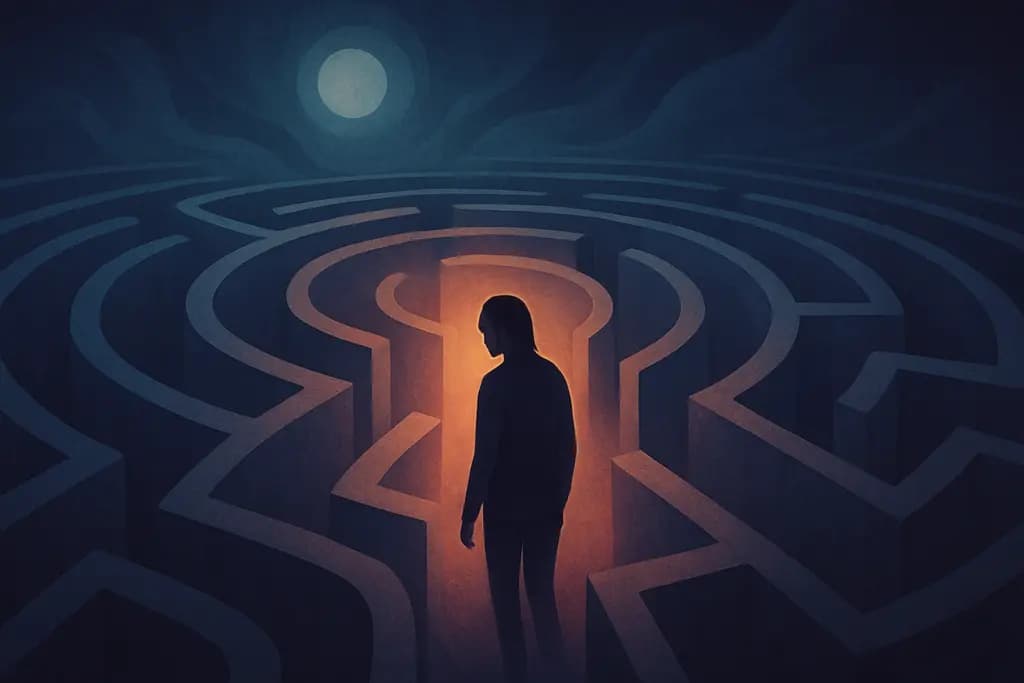
Dreaming of being lost in a labyrinth often points to feelings of confusion, overwhelm or a search for direction. The image brings together complexity, hidden choices and the sense of being turned around by life’s problems. The precise meaning depends heavily on how you felt in the dream and the real-life context surrounding it.
General meaning of dreaming about Lost in a labyrinth
A labyrinth in dreams commonly symbolizes a complicated situation, inner conflict or a transition that feels bewildering. Unlike a simple maze meant to trick, labyrinths are also linked to journeys: they can represent the path you must take to reach understanding, even if it feels long and disorienting. Being lost emphasizes the emotional experience of uncertainty and not seeing the way forward.
Typical interpretations point to stalled decisions, hidden fears and a need to slow down and navigate carefully. The dream usually focuses attention on process rather than an immediate solution — it’s about negotiating twists, retracing steps and testing patience.
- Feeling stuck or unable to find direction
- Facing a complex decision or problem
- Inner conflict or competing desires
- Initiation, trial or testing period in life
- A call to slow down, reflect and choose intentionally
Spiritual meaning of Lost in a labyrinth in dreams
Spiritually, labyrinths appear across cultures as symbols of the soul’s journey, initiation rites and pilgrimage. Dreaming of being lost can indicate a phase of spiritual searching or transformation: you may be in an in-between stage where old patterns are dissolving but new clarity hasn’t arrived yet. Traditions from ancient Greek myth to medieval cathedral labyrinths treat the path as a contemplative or purifying process rather than a trap.
In universal energetic terms, the dream may signal a need to turn inward, surrender control and trust gradual unfolding. It can also point to karmic lessons or an invitation to explore deeper meaning beneath surface anxieties.
Psychological interpretation
Fear, stress or anxiety
When stress or anxiety is high, the labyrinth dream mirrors the mind’s sense of overload. Feeling lost highlights cognitive confusion, racing thoughts and a perceived lack of options. The emotional tone — panic versus calm curiosity — changes whether the dream signals acute anxiety or a manageable challenge.
Relationships and emotional bonds
Labyrinth dreams tied to relationships can reflect tangled feelings or unclear boundaries. You may feel unsure about where a partnership leads, unable to find honest communication, or repeating patterns that keep you from intimacy. Being lost may point to needing clearer expectations or a pause to reassess connections.
Control, power or vulnerability
Being unable to find an exit can reveal issues around control and vulnerability. It may indicate fear of losing autonomy, difficulty asserting needs, or feeling manipulated. Conversely, surrendering to the path can represent healthy vulnerability and an acceptance of uncertainty as part of growth.
Positive meaning
- Opportunity for self-discovery and deeper insight
- A rite of passage that leads to maturation or new identity
- Practice in patience, problem-solving and resilience
- Chance to slow down and reassess priorities
- Potential breakthrough once a new route or perspective is found
Negative meaning and warnings
- May suggest avoidance of a decision that requires confronting difficult truths
- Can indicate mounting stress or burnout if the dream is frequent and distressing
- Might point to confusing or controlling relationships that drain energy
- Can indicate a tendency to repeat unhelpful patterns instead of changing course
- May warn about feeling isolated while navigating important life transitions
Common variations of dreams about Lost in a labyrinth
- Lost in a familiar labyrinth (childhood home transformed) — May reflect unresolved issues from the past or old memories that complicate present choices.
- Trying to find the center of the labyrinth — Often suggests a search for purpose, core truth or a spiritual insight you feel close to but can’t quite reach.
- Going in circles and finding the same corridors — Points to repetitive life patterns, indecision or rumination without new action.
- Dead ends and locked paths — Can indicate obstacles, blocked plans or feelings that options are being deliberately closed off.
- Finding a companion in the labyrinth — Implies support, guidance or a part of yourself (intuition, wisdom) coming forward to help navigate confusion.
- Emerging from the labyrinth into light — Symbolizes resolution, clarity and a successful transition after a period of struggle.
- Being watched or followed inside the labyrinth — May reflect social anxiety, fear of judgment, or an internal critic making choices feel riskier.
What to do after such a dream
- Note the emotions you felt in the dream: panic, curiosity, calm or frustration — feelings change the meaning.
- Journal details: routes, symbols, whether you found help or an exit, and any real-life issues that mirror the dream.
- Map the parts of your life that feel confusing: decisions, relationships, work or health routines, then list small first steps to test new directions.
- Practice grounding and simple problem-solving: break big problems into one-step actions and try one change at a time.
- Talk about the dream with a trusted friend, mentor or a dreamworker to gain perspective and practical suggestions.
- If the dream recurs and deeply disturbs your sleep or functioning, consider seeking professional support to explore underlying stressors and coping strategies.