Dream About Losing your passport or ID – Meaning
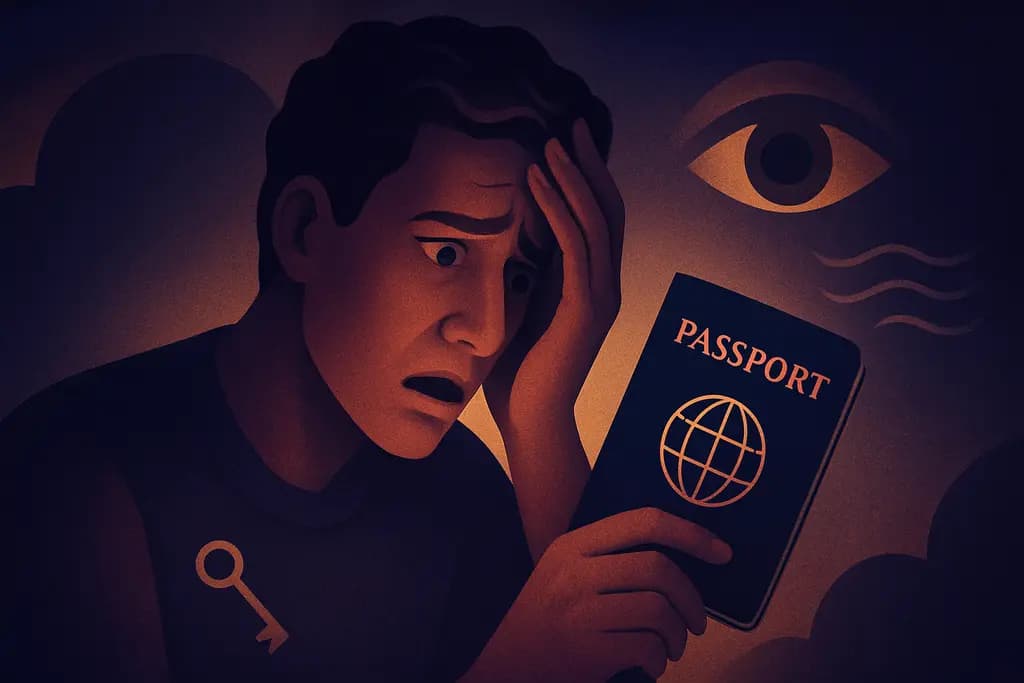
Category: Objects
Dreaming that you lose your passport or ID often points to concerns about identity, belonging and access. Such dreams can feel urgent — a rush of panic about being stranded, exposed, or unable to prove who you are. The exact meaning depends heavily on the emotions you felt in the dream and the waking-life context around travel, status, or personal change.
General meaning of dreaming about Losing your passport or ID
Losing a passport or ID in a dream commonly symbolizes a perceived loss of identity or the fear of losing access to something important in your life — whether that's a relationship, a job, a status, or the ability to move forward. Because passports and IDs are official proofs of who we are and where we belong, the dream taps into anxieties around belonging, legitimacy and transition.
The setting matters: misplacing a passport at home can feel like an internal confusion about identity, whereas losing it abroad or at an airport often highlights fears about exposure, logistics, or being unprepared for change.
Key meanings often include:
- Identity concerns: feeling unsure about who you are or how you present yourself.
- Access and permission: anxiety about losing entry to opportunities, communities or roles.
- Transition and thresholds: stress around major life changes, travel, or new phases.
- Vulnerability and exposure: worries about being exposed, judged or rejected.
Spiritual meaning of Losing your passport or ID in dreams
Spiritually, losing a passport or ID can be read as a sign of shedding external labels and moving toward a truer self. In many systems that examine symbols, an ID represents the social mask or assigned role; losing it may signal a necessary release of those constraints to grow spiritually.
Different traditions notice similar themes: Jungian thought would point to an identity archetype being challenged; shamanic or rite-of-passage perspectives might see it as a threshold moment before transformation. Universally, this dream can invite reflection on whether you are ready to step into a new spiritual or life chapter without relying on old credentials.
Psychological interpretation
Fear, stress or anxiety
This dream often mirrors acute stress — especially about practical matters like travel, deadlines or legal paperwork. The panic of not being able to prove who you are is a metaphor for a deeper worry: will you be accepted, allowed to proceed, or judged unfit? Frequent repetition of the dream may indicate unresolved anxiety that needs conscious attention.
Relationships and emotional bonds
In relationships, a lost ID can point to questions about authenticity and trust. You might wonder whether your partner sees the “real” you, or feel that a relationship has caused you to lose a sense of self. It can also reflect fear of rejection if personal history or flaws were revealed.
Control, power or vulnerability
Because identification documents confer authority (to travel, to vote, to prove eligibility), losing them in a dream can denote feelings of disempowerment or loss of control. Conversely, it can highlight an ambivalence about power — either an unconscious desire to escape responsibilities or a fear of being rendered powerless by changing circumstances.
Positive meaning
- Opportunity for reinvention: losing an ID can symbolize the chance to redefine who you are without old labels.
- Freedom from roles: release from social expectations that no longer fit you.
- Increased self-awareness: the dream can prompt deeper introspection and personal growth.
- Preparation for change: a nudge to let go of attachments so you can step into new opportunities.
- Resilience-building: confronting the fear in the dream can strengthen your ability to handle real-life uncertainty.
Negative meaning and warnings
- May suggest an identity crisis: repeated dreams can indicate a deeper, unresolved confusion about your role or values.
- Can indicate practical vulnerability: you may be at risk of losing important documents or facing administrative problems if careless.
- May point to emotional exposure: a fear that personal information or secrets could be revealed.
- Can indicate avoidance: the dream may warn you that you are avoiding necessary decisions or responsibilities.
Common variations of dreams about Losing your passport or ID
- Losing your passport right before a trip: often reflects last-minute anxiety about preparedness or fear of missing an important opportunity.
- Misplacing your ID at an airport or border: emphasizes fear of being exposed, detained, or judged in a public or official setting.
- Having your passport stolen: can indicate a sense of violation, loss of control, or feeling targeted by someone in your waking life.
- Finding your passport after panic: suggests relief and that you will likely resolve the worry; it can represent regained confidence or clarity.
- Discovering an expired passport/ID: may symbolize outdated self-concepts or credentials that no longer serve you.
- Damaged or unreadable ID: can point to worries about misunderstandings, being misrepresented, or obstacles to proving your credentials.
- Losing just the ID (not the passport): often highlights local identity concerns — how you present yourself within your community rather than in the wider world.
- Being unable to prove your identity to officials: reflects fears about legitimacy, imposter feelings, or being denied entry into a new role or group.
What to do after such a dream
- Reflect on emotions: write down how you felt in the dream — panic, relief, shame — and look for parallels in your waking life.
- Review current transitions: consider any upcoming changes (jobs, moves, relationships) where you might feel unprepared.
- Check practical details: while not legal advice, a quick, calm check that important documents are in order can ease anxiety.
- Talk it out: share the dream with a trusted friend or therapist to explore deeper meanings and recurring patterns.
- Grounding practices: breathing, mindfulness or a short walk can reduce replaying the panic and help you gain perspective.
- Take small, tangible steps: if the dream points to identity or role confusion, experiment with small changes in how you present yourself until you feel more aligned.
If the dream is frequent and distressing, consider keeping a dream journal to track triggers and themes; patterns often reveal what the subconscious is asking you to pay attention to.