Dream About Losing Roulette by One Number – Meaning
Category: Casino & Gambling
What this dream often looks like
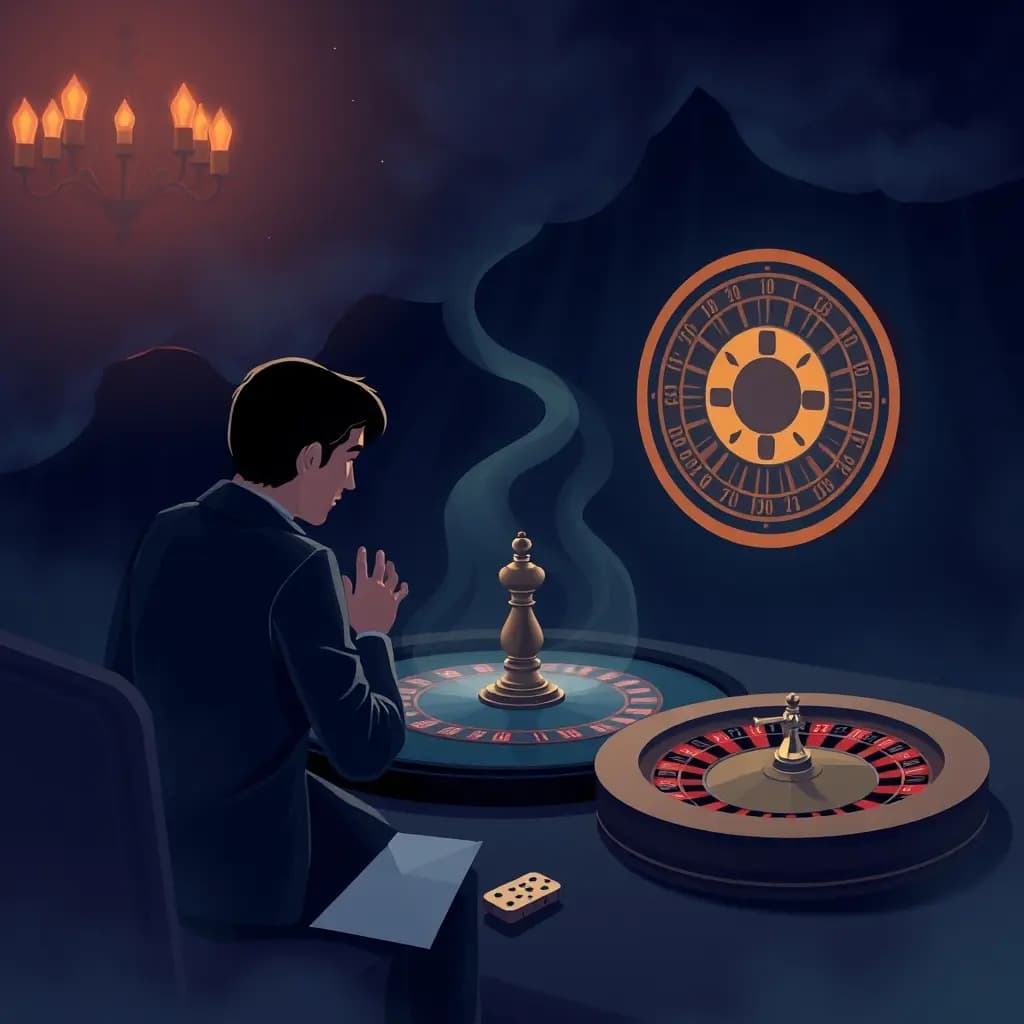
You are at a crowded gaming room under warm chandeliers, chips heavy in your palm, watching the roulette wheel slow to a stop. The ball clips the rim, bounces, and drops into the pocket next to your number; a hot, sinking feeling passes through your chest as people cheer elsewhere. You taste metal from the coin in your mouth, your hands go clammy, and for a few slow beats you replay the spin and every micro‑decision that led you to that table.
Concrete details that tend to stand out
People frequently report a few concrete images: a dealer in white gloves, a red velvet carpet underfoot, the click of the ball hitting metal, rain streaking against a distant window, or an abrupt hush after applause. Physical reactions — numb fingers, a queasy stomach, a throat tightening — often stand out and linger after waking.
Main interpretation
This dream often points to a strong emotional reaction to a near miss in waking life: a close call at work, a narrowly lost opportunity, or second‑guessing a personal choice. It may suggest frustration about timing, how small margins affect outcomes, and lingering ‘what if’ thoughts. In real life, the dream does not predict a win, loss, or specific future event; rather, it commonly reflects anxiety about nearly achieving something and the sting of coming up just short.
Three common meanings
- Near‑miss anxiety. Losing by one number commonly mirrors the emotional sting of almost succeeding. You may be replaying a job interview, promotion decision, or a relationship turn where the outcome hinged on small details. The dream highlights sensitivity to small margins and can push you to examine where perfectionism or fear of failure is draining energy.
- Regret and second‑guessing. This scenario often expresses regret about a choice you didn’t make or a chance you delayed taking. It can point to persistent rumination — rehearsing alternate moves and imagining how things would feel if the ball had landed differently. Use the image to identify specific decisions you keep revisiting and whether action or acceptance is needed.
- Control versus chance. The single‑number loss can symbolize tension between wanting control and facing randomness. If you’ve been planning tightly or micromanaging outcomes, the dream may be telling you about limits of control and the emotional cost of trying to eliminate uncertainty. It invites a realistic inventory of what you can influence and where to release effort.
- Risk, ambition, and consequences. For some, the dream speaks to ambition and the taste of risk without reward: a project that almost paid off, an investment that narrowly missed return, or a bold move that misfired. It can be a prompt to reassess risk appetite, timing, and contingency plans rather than a call to repeat the same gamble.
Psychological perspective
From a modern psychological view, this dream often echoes cognitive patterns like the near‑miss effect, loss aversion, and rumination. When something important almost goes your way, your brain rehearses the scenario to process emotions and learn from it. Dreams of razor‑thin misses can surface after stress, disappointment, or big decisions; they help consolidate emotional memory and sometimes exaggerate the significance of small details. If the dream causes ongoing distress, keeping a brief journal of triggers and feelings can clarify whether it follows a particular worry or event.
What this dream is rarely about
This dream is rarely a literal prediction of a future win, loss, or the exact outcome of a gamble. It does not usually forecast a specific event or number to play. Instead, it reflects emotional themes — frustration, missed timing, or near‑success — and should not be read as a blueprint for action or a supernatural sign to place bets.
When to take this dream seriously
Take this dream more seriously if it recurs, wakes you with anxiety, or appears during major life transitions like career change, breakup, recovery, or financial stress. Recurrence can indicate unresolved regret, unprocessed risk, or persistent fear about small margins in important areas. If it fuels compulsive behaviors or strong cravings related to gambling or risk, seek appropriate real‑world support rather than interpreting the dream as instruction. A steady pattern of the dream alongside daytime distress is a sign to reflect and, if needed, reach out for help.
Frequently asked questions
Can this dream be positive?
Yes. The dream can be positive if it motivates careful preparation, prompts better timing, or clarifies priorities. It often galvanizes action rather than celebrating luck.
What should I do after this dream?
Write down what you remember, note any waking-life near misses, and decide one small, constructive step to address the underlying issue — such as scheduling a conversation or revising a plan.
Why does this dream repeat?
Repeating often means the emotional pattern is unresolved: persistent worry, regret, or a cycle of risky behavior. It signals something you haven’t fully processed or changed.
Why do I feel fear in this dream?
Fear comes from the brain treating a near miss as a threat to goals or status. The intense emotion reflects disappointment, loss sensitivity, and anticipation of consequences rather than immediate physical danger.
Dream meanings connected to this one
If this dream keeps returning, pages about Losing on the Final Card, Losing a Bet to a Stranger, and Losing a Bet to a Friend can reveal the related patterns underneath it. They often overlap around insecurity, transition, or stress in everyday life. You may also want to compare it with Watching Your Savings Disappear at a Casino if the same mood or conflict keeps showing up.