Dream About Losing Control – Meaning
Category: Fears & Nightmares
What this dream often looks like
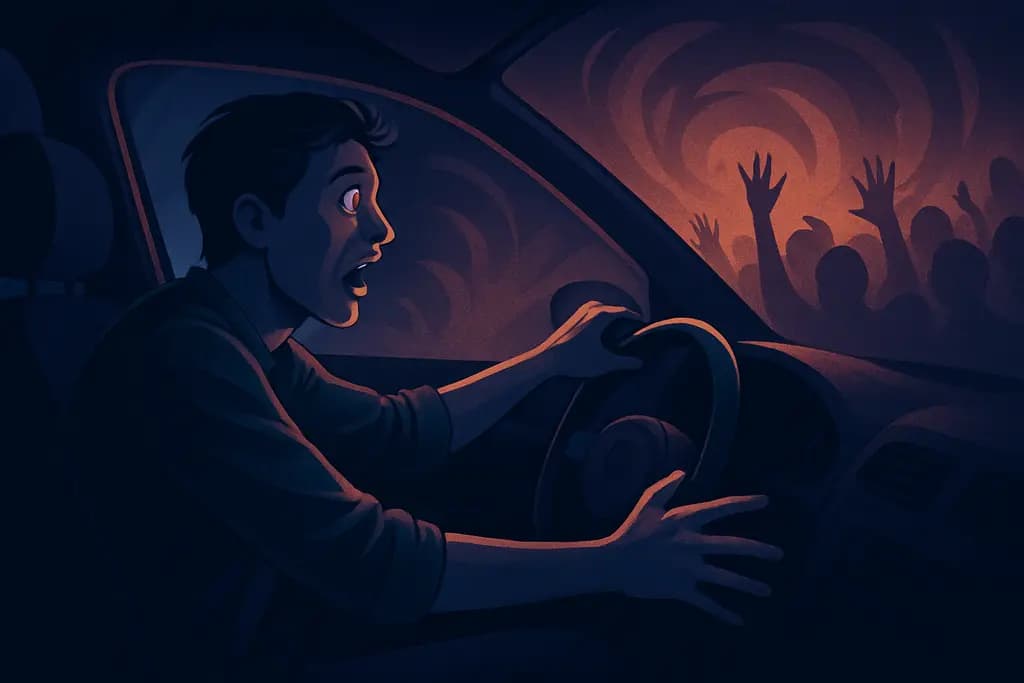
That tightening knot of panic before a deadline settles into the dream. You’re gripping the steering wheel of a car that won’t respond, or trying to hold a baby who keeps slipping, breath quickening and palms sweating. The room is fluorescent, papers fluttering like small flags; people look on but don’t help. The feeling is immediate: helplessness at a precise moment — missed exits, locked doors, or a public stage where your voice won’t come — a pressure that maps onto real-life strain.
Unusual details people report
People often report odd accent details: a locked bathroom door with a key made of feathers, rain that falls upward, a crowd in winter coats while it’s sunny, the radio looping a single childhood song, or a throat that tightens so sound can’t escape. Some feel a buzzing behind their eyes or find their hands covered in flour or grease.
Three common meanings
- 1. Overload and burnout. When the dream centers on tasks spilling out of control—piles of files, missed trains, or appliances breaking—the most direct angle is workload or caretaking overload. Your subconscious may be signaling that current demands exceed your capacity and that you need to reduce obligations, delegate, or negotiate clearer boundaries before exhaustion causes mistakes.
- 2. Fear of losing identity or autonomy. If the loss of control happens in a relationship scene—someone else steering your body or making choices for you—the dream often reflects anxiety about autonomy. It can suggest that decisions are being made for you, or that roles at home or work have shifted and you’re struggling to reclaim who you are.
- 3. Transition anxiety. Runaway vehicles, falling elevators, or disappearing doors can signal a life transition—moving cities, changing careers, becoming a parent—where old coping strategies no longer work. The dream points to uncertainty about the next stage and prompts practical planning: which supports, skills, or safety nets do you need?
- 4. Internal emotional regulation struggles. When physical reactions dominate—sweating, shaking, or bawling without control—the dream can reflect difficulty managing intense emotions like grief, anger, or panic. It may be urging you to develop clearer strategies for calming, processing feelings, and expressing them before they overwhelm daily functioning.
Spiritual meaning
From a symbolic angle, losing control can be read as an invitation to release attachment to outcome. Some spiritual frameworks view such dreams as a prompt to surrender areas where ego-driven effort is exhausted and to cultivate trust—whether in a process, community, or inner wisdom. Interpreters emphasize choice: surrender as passive defeat is different from conscious release that opens space for growth.
What it can reflect emotionally
In real life, losing-control dreams commonly reflect strain in how you handle pressures and change. They can reflect a mismatch between what’s expected of you and the resources you have—time, energy, authority. Emotionally, these dreams may reveal worry about failing roles or being judged; they often nudge you toward practical adjustments like clearer limits, time audits, or asking for help. This perspective is neutral and does not equate dreaming with clinical diagnosis.
What this dream is not literally saying
This dream is rarely a literal prediction of disaster. It does not usually mean you will literally lose control of a car or event. Instead, it is rarely about a one-off physical accident; it more commonly signals emotional dynamics, deadlines, or responsibilities that feel unmanageable, not imminent physical doom.
Questions to reflect on
- What specific situation in the past week felt out of your control, and what would a small first step toward agency look like?
- Who in your life tends to take decisions for you, and how would you describe one boundary you’d like to try setting with them?
- When you felt calmer in the last month, what actions or supports were present that you can repeat now?
Frequently asked questions
What should I do after this dream?
After this dream, note the scene and emotions, then pick one concrete action—call a colleague, set a work boundary, or schedule downtime—to test whether changing one element reduces the feeling of overwhelm.
Is it related to stress?
Yes. Loss-of-control dreams are commonly associated with stress, especially ongoing pressure from work, caregiving, or financial responsibilities, but they can also follow acute stressful events.
Is this about money?
Sometimes. If money worries are part of your waking stress—missed payments, unstable income—financial anxiety often appears as loss-of-control imagery, but it’s one of several possible triggers.
Is this about relationships?
Often. Relationship dynamics—unequal decision-making, new roles, or unresolved conflicts—frequently show up in these dreams, pointing to areas where communication or boundaries may need attention.
Dream meanings connected to this one
If this dream keeps returning, pages about Driving an Out of Control Vehicle, Abandonment, and Aging can reveal the related patterns underneath it. They often overlap around insecurity, transition, or stress in everyday life. You may also want to compare it with Being Chased if the same mood or conflict keeps showing up.