Dream About Losing a limb – Meaning
Category: Body & Health
Quick interpretation
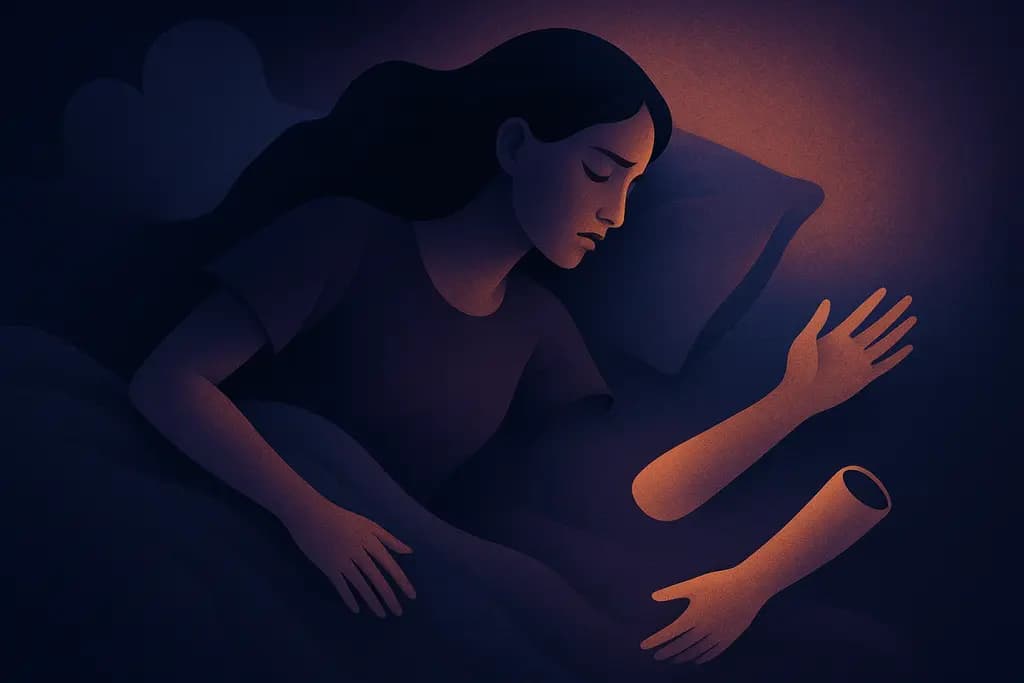
At its core, a dream of losing a limb most commonly signals a perceived loss of ability, support, or a role you depend on. If the dream shows a hand that can no longer grip, it often reflects worry about a skill or responsibility slipping away; a missing leg usually links to mobility, progress, or the ability to carry life forward. The emotion in the dream—panic, numb resignation, or relief—helps indicate whether this loss feels threatening, liberating, or unresolved.
What your mind may be processing
Viewed in neutral, modern terms, the mind appears to use the body as shorthand for agency and function: the brain’s body-image networks simulate a loss to explore threats and rehearse responses. Interestingly, dreams of disconnection or missing parts often emerge after sustained stress, role changes, or moments when control feels tenuous. The scene’s emotions—panic versus dull detachment—hint at whether the brain is signaling acute fear, chronic worry, or a preparatory process for change.
Three common meanings
- Perceived loss of practical ability. A hand that can't grasp or a leg that won't carry you often stands for a concrete skill or task you fear losing—typing, driving, supervising a project, or caregiving. The dream surfaces when responsibilities shift or when you doubt your competence. Notice what the limb was doing: that action often names the ability you worry is gone.
- Fear of dependency or vulnerability. Losing a limb can dramatize the prospect of needing help. If the dream leaves you helpless or relying on others, it may reflect anxiety about becoming dependent due to illness, ageing, or a breakup. The emotional tone—shame, anger, relief—shows whether dependency feels like a threat or an unexpected relief.
- Transition, sacrifice, or intentional letting go. Sometimes the limb is something you choose to remove or cut away to move forward—quitting a job, ending a relationship, or changing identity. In these dreams the loss can feel purposeful or cleansing, signalling a necessary sacrifice to free energy for new directions.
- Identity and self-image shock. A missing limb can threaten self-image: an athlete losing a leg, a parent losing a hand, or a worker unable to perform. The dream can mirror worries about how others will see you and whether you still fit your role. Pay attention to mirrors, clothing, or people’s reactions in the dream—those details point to identity concerns.
What this dream is not literally saying
This dream is rarely a literal prediction of physical amputation or injury. It does not usually forecast specific medical events; rather, it functions as an emotional signal about capability, role, or security. Instead of predicting bodily harm, it typically highlights anxiety about losing something practical or symbolic in waking life. There may be grief or relief layered into the reaction, so note that emotional nuance.
Unusual details people report
People report startling specifics: a hospital room with an old wooden chair, rain streaking the windows, the sound of scissors slicing fabric where flesh should be, clothing soaked with mud as you try to stand. Some mention a crowd watching silently, or a loss accompanied by a ringing in the ears and a tingling where the limb once was.
When to take this dream seriously
Take this dream seriously when it repeats, leaves you waking with strong fear or persistent images, or appears during big life transitions such as job loss, a move, or caregiving strain. If the dream follows a specific trigger—surgery scheduled, a breakup, or months of overwork—it often marks a threshold worth addressing. Recurrence suggests unresolved practical or emotional issues; one-off dreams can still point to acute anxiety but are less urgent.
How different traditions interpret it
Meanings vary across cultures. In some Western folk readings a missing limb signals vulnerability or scandal; in East Asian contexts it may be tied to balance and blocked energy; certain Indigenous interpretations might link the limb to a social role or kinship duty. Different communities emphasize duty, shame, or transformation. These interpretations diverge, so weigh them against your cultural background and personal story rather than assuming a single universal meaning.
FAQ
Is it related to stress?
Yes. These dreams are commonly linked to stress—especially prolonged pressure over competence, caregiving, or major role changes. Sudden spikes in anxiety make this imagery more likely.
What should I do after this dream?
Write down the dream details, note what limb and action stand out, and map those to current pressures. Talk it over with a friend or therapist if it recurs or causes distress. Practical steps—rest, reduce workload, clarify responsibilities—often reduce recurrence.
Is this dream a warning?
Not usually. The dream rarely warns of literal physical loss; instead it flags emotional or functional shifts you may need to address. If the dream accompanies specific safety concerns, take practical precautions, but don’t treat it as a direct prophecy.
Dream meanings connected to this one
Dreams about losing a limb are often connected to Amputated Limb, Losing Hair Suddenly or Going Bald, and Losing Your Voice. Looking at those nearby themes can help you compare control, fear, pressure, or change across similar dream scenes. You may also want to compare it with Missing a Limb if the same mood or conflict keeps showing up.