Dream About Locked attic or cellar – Meaning
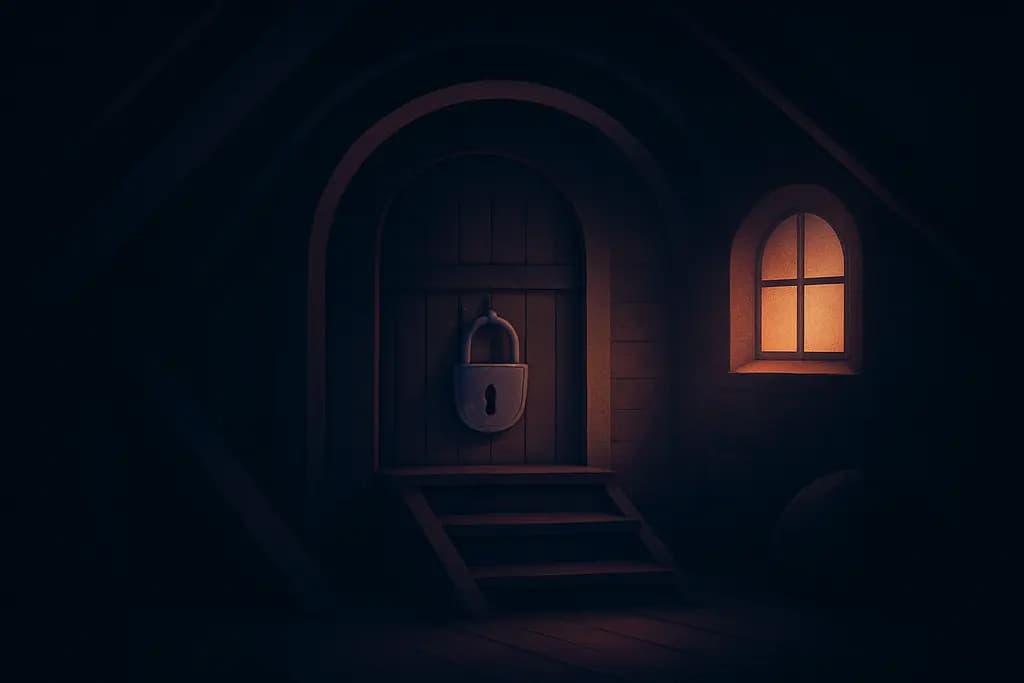
Category: Places
Dreaming of a locked attic or cellar often points to parts of yourself that feel hidden, restricted, or forgotten. These spaces in dreams act as containers for memories, talents, secrets, or fears — and the exact meaning depends on how you felt and the dream's context. Whether you felt relief, panic, curiosity or frustration will change the interpretation significantly.
General meaning of dreaming about Locked attic or cellar
A locked attic or cellar typically symbolizes something stored away in your inner world: past experiences, repressed emotions, untapped creative resources, or responsibilities you’ve put aside. Attics commonly represent memories, ideas, or higher thoughts that are out of sight but still part of you; cellars often carry associations with deeper emotions, the unconscious, or basic needs grounded in the body.
Coresymbolism includes separation between conscious life and what’s kept out of sight. The lock itself emphasizes access — whether you feel able to retrieve, confront, or protect what’s inside. The dream generally invites a look at what you’re avoiding or what you might reclaim.
- Hidden memories or secrets
- Repressed emotions or trauma
- Untapped creativity, skills or resources
- Fear of facing the past or inner truths
- Need to protect or secure something valuable
Spiritual meaning of Locked attic or cellar in dreams
Spiritually, a locked attic or cellar can represent parts of the soul or psyche awaiting integration. In many contemplative traditions the attic can stand for higher, subtle layers of consciousness, while the cellar corresponds to grounding energies or ancestral memory. A lock suggests a threshold — a spiritual invitation to deeper self-knowledge or, conversely, a barrier created by fear or unresolved karma.
Different traditions may emphasize slightly different angles: Jungian symbolism highlights shadow work and individuation, while some shamanic views read a closed space as a place where spirit helpers or ancestral messages are kept until you are ready. Universally, the symbol asks whether you are prepared to open what has been intentionally or unintentionally closed.
Psychological interpretation
Fear, stress or anxiety
If the dream provokes fear or panic, the locked attic or cellar can reflect anxiety about confronting difficult memories or responsibilities. You may be avoiding decisions or worrying that opening that part of your life will unleash emotional overload. The lock feels like a barrier you don’t trust yourself to cross right now.
Relationships and emotional bonds
When feelings in the dream center on someone else having the key or keeping the space locked, this often relates to control dynamics or withheld intimacy in relationships. The locked room can represent emotions you don’t share, memories you keep private, or a partner’s guardedness that affects your bond.
Control, power or vulnerability
Dreaming of lock and access raises themes of control: who holds power over what’s hidden? If you cannot open the space, it may signal feelings of helplessness or lack of agency. If you hold the key, the dream may reflect responsibility, boundary-setting, or the choice to conceal versus reveal parts of yourself.
Positive meaning
- Reclamation: Opening the locked space may signal reclaiming lost skills or forgotten joy.
- Preparation: A locked attic/cellar can mean you’ve safely stored something for protection until the right time.
- Healing and integration: Unlocking suggests readiness to integrate past experiences and grow.
- Resource discovery: Finding useful items in the space can represent uncovering hidden talents or solutions.
- Boundary clarity: The lock may indicate healthy boundaries you’ve set to protect yourself while you process.
Negative meaning and warnings
- May suggest avoidance: A locked space can indicate you are putting off necessary emotional work.
- Can indicate repression: The dream may point to buried feelings that, if ignored, could resurface in unhealthy ways.
- May warn of secrecy: Persistent dreams about locked storage could reflect harmful secrecy in a relationship or workplace.
- Can indicate stagnation: If the attic or cellar is decayed, the dream may signal neglected areas of life that need attention.
Common variations of dreams about Locked attic or cellar
- Locked attic that you can't enter: Often means memories or ideas you feel unprepared to face; frustration in the dream can mirror waking avoidance.
- Locked cellar full of water or damage: May suggest overwhelmed emotions or past hurts that feel hidden but are leaking into your present life.
- Finding a key to the attic/cellar: Typically a hopeful sign — gaining access to insight, healing, or a new opportunity.
- Losing the key to the locked space: Can indicate missed chances, uncertainty about how to address an issue, or fear of losing control.
- Forcing the lock or breaking in: May reflect impatience with restraint, impulsive attempts to access repressed material, or a need to confront something immediately.
- Locked attic/cellar full of boxes or heirlooms: Suggests stored family histories, inherited patterns, or talents waiting to be sorted and understood.
- Someone else holding the key: Often points to power imbalances, dependence on another person for emotional access, or a need to renegotiate trust.
What to do after such a dream
- Reflect on emotions: Note how you felt in the dream and upon waking; those feelings are central to interpretation.
- Journal specifics: Write down details — the condition of the space, presence of objects, who held the key — to identify patterns.
- Look at your life situation: Consider relationships, recent changes, or unresolved memories that might connect to the dream.
- Take small steps: If the dream points to avoidance, try gentle actions like talking to a trusted friend, organizing old belongings, or revisiting a memory with compassion.
- Seek support if needed: If the dream is recurring or causes significant distress, consider discussing it with a counselor or therapist to safely explore deeper material.