Dream About Lion roaring – Meaning
Category: Animals
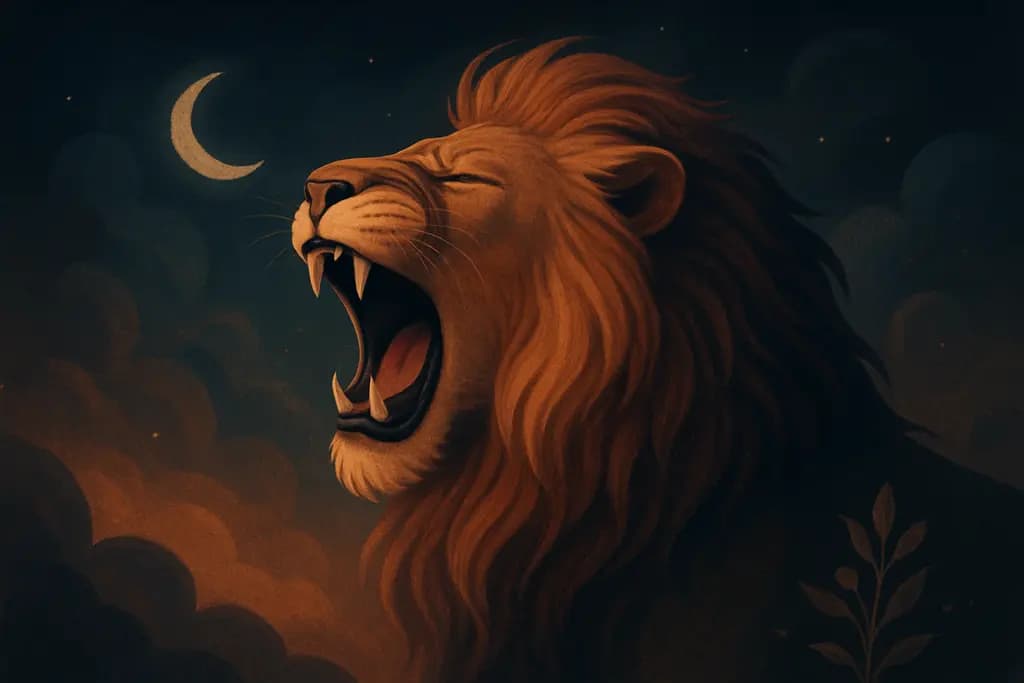
Dreaming of a lion roaring often feels immediate and elemental. The sound of the roar can signal power, alarm, protection or challenge—its exact meaning depends a lot on how you felt in the dream and the surrounding context. Note whether you felt afraid, reassured, threatened or inspired; those feelings steer interpretation.
General meaning of dreaming about Lion roaring
A roaring lion in a dream commonly represents raw power, authority and a forceful message from the unconscious. It can point to an external situation demanding attention or to an internal resource you need to access. The roar is both a warning signal and an assertion of presence: it announces something that cannot be ignored.
Typical interpretations emphasize instinct, authority and communication. In many cases the roar is a call to act, set boundaries or acknowledge feelings that have been suppressed. Depending on the dreamer, the lion can stand for personal strength, a dominant person in waking life, or a collective energy such as family or cultural expectations.
- Personal power and confidence
- A warning or urgent message
- Assertiveness, leadership or territoriality
- Protection of loved ones or territory
- Repressed anger, fear or raw emotion
Spiritual meaning of Lion roaring in dreams
Spiritually, a lion's roar often symbolizes awakening of inner authority and courage. Many traditions use the lion as a symbol of divine strength, guardianship and the soul's capacity to command respect. In universal terms, the roar can represent a spiritual push to claim your path or an energetic clearing that breaks through stagnation.
In Indigenous and African mythologies the lion can be a guardian spirit; in other systems it may connect to the solar or heart center, suggesting confidence and clarity. Across traditions the core message is similar: a call to step into fuller vitality and leadership.
Psychological interpretation
Fear, stress or anxiety
A roaring lion can be an alarm triggered by real stressors. If you felt panic or dread, the dream may mirror anxiety about an upcoming event, a workplace threat, or a sense of being overwhelmed. The roar functions like the mind's emergency signal, urging you to address pressure rather than ignore it.
Relationships and emotional bonds
When the roar centers on family or friends—such as a lion protecting cubs or roaring at an intruder—it may reflect protective instincts or territorial feelings in relationships. It can indicate conflict over boundaries, a need to defend loved ones, or feelings of jealousy and rivalry.
Control, power or vulnerability
If the lion's roar left you feeling small, the dream can highlight power imbalances or feelings of vulnerability before a dominant person or situation. If you felt emboldened, it may signal reclaimed power and assertiveness. The roar often dramatizes the push-pull between control and exposure in your waking life.
Positive meaning
- Reclaiming your voice and speaking up with confidence
- New leadership opportunities or recognition
- Inner courage and resilience becoming available
- Protection and readiness to defend what matters
- Personal growth, transformation and a surge of creative or sexual energy
- An awakening that motivates bold decisions and action
Negative meaning and warnings
- May suggest an approaching conflict or confrontation that requires caution
- Can indicate suppressed anger or unresolved emotional wounds surfacing
- May point to an overbearing person or situation draining your autonomy
- Could signal impulsive behavior or pride that risks missteps
- Can indicate fear that, if unaddressed, might escalate into anxiety or avoidance
Common variations of dreams about Lion roaring
- Lion roaring at you: Often feels personal; may indicate someone in waking life challenging your authority or an inner test of confidence.
- Distant lion roar you hear but do not see: May suggest an unclear warning or anxiety about something not yet visible; listen for subtle signs in your life.
- Roaring lion protecting cubs: Suggests protective instincts or concern for dependents; can also reflect nurturing leadership and responsibility.
- Lion roaring then attacking: Can indicate fear of confrontation or a perceived threat turning into action; may urge preparation and boundary-setting.
- Caged or zoo lion roaring: Points to suppressed power or ambition; you may feel constrained and ready to break free in a safe, controlled way.
- A pride of lions roaring together: Relates to group dynamics, family power, or collective pressure; can signify unity or overwhelming social force.
- You roaring back at the lion: Represents reclaiming voice and facing fears; a sign of assertiveness and inner strength awakening.
What to do after such a dream
- Reflect on the emotions you felt during and after the dream; note where similar feelings appear in waking life.
- Journal the scene and details: who was present, where the roar came from, and what changed after the roar.
- Consider current stressors, relationships and decisions that might connect to the dream's message.
- Practice grounding techniques—breathwork, walking, or simple body awareness—to process intense emotion that the dream stirred.
- If the dream nudges you toward change, plan small, concrete steps: set one boundary, speak one truth, or prepare for a difficult conversation.
- Share the dream with a trusted friend or counselor for perspective if it feels persistent or particularly unsettling.