Dream About Late for work – Meaning
Category: Work & Money
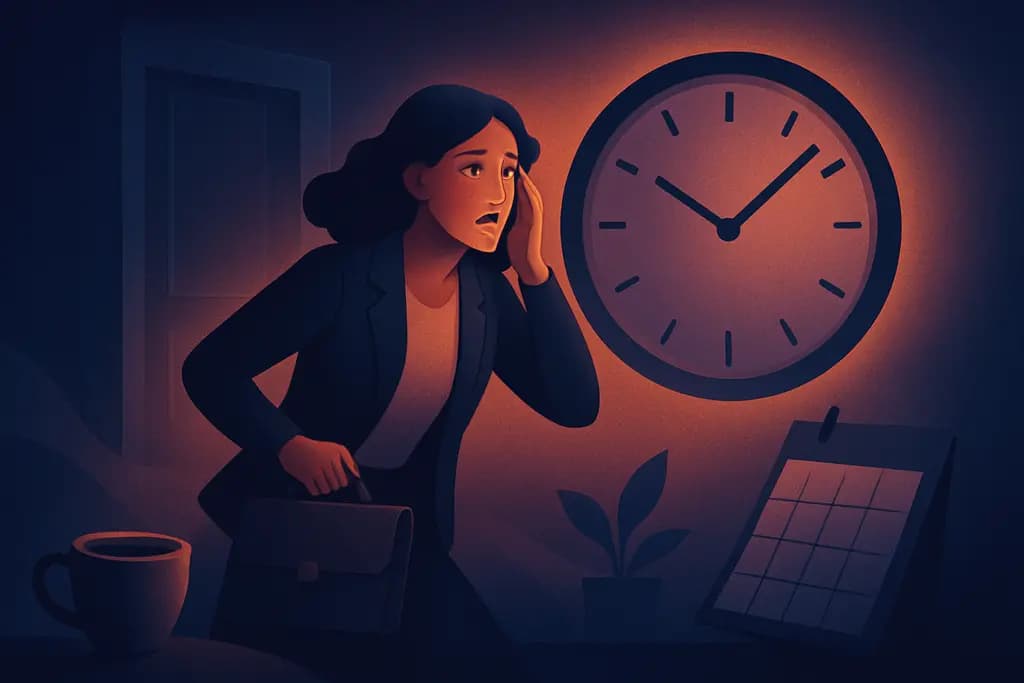
Dreaming that you're late for work often signals stress around responsibility, expectations, or a fear of missing important opportunities. The meaning shifts depending on how you felt in the dream—panic, embarrassment, relief, or even indifference all point to different inner messages.
General meaning of dreaming about Late for work
At its core, a late-for-work dream usually symbolizes time pressure, accountability, and the relationship you have with your professional role. It frequently appears when waking life contains tight deadlines, a looming decision, or an internal sense that you're not meeting external or personal standards.
These dreams can also be broader metaphors for life roles: being late may point to feeling out of step with goals, anxious about reputational risks, or worried you won't measure up. Context—who is present, whether you get to work, and what you lose or gain—shapes the interpretation.
- Fear of missed opportunities or deadlines
- Performance anxiety or imposter feelings
- Loss of control over time, routine, or priorities
- Conflicts between work demands and personal life
- A prompt to reassess goals, schedules, or commitments
Spiritual meaning of Late for work in dreams
Spiritually, lateness in a dream can reflect an energetic misalignment: you may be out of sync with your purpose, or avoiding a lesson or responsibility your inner self wants you to face. Some traditions read timing in dreams as symbolic of divine timing—being late can mean you are resisting a change that must unfold at its own pace.
Across many spiritual paths the emphasis is on integration: the dream invites you to examine whether your life rhythms honor your values. In collective or karmic interpretations, repetitive lateness dreams can indicate a pattern you are meant to transform.
Psychological interpretation
Fear, stress or anxiety
These dreams often mirror acute stress: anxiety about deadlines, boss expectations, or losing income. The rush, heart-pounding feelings, or shame in the dream usually map directly onto waking fears about competence and consequences.
Relationships and emotional bonds
Being late can also reflect relational dynamics. If coworkers, a boss, or family members are judgmental in the dream, it may show you fear disappointing people who matter—or that you feel undervalued and emotionally unsupported in both work and personal relationships.
Control, power or vulnerability
Lateness dreams highlight control issues. Feeling powerless in traffic or unable to find your ID in the dream points to real-life feelings of vulnerability—perhaps from shifting workplace power, unclear boundaries, or transitions that erode your usual competence.
Positive meaning
- A wake-up call to reprioritize: the dream may push you to realign daily routines with what matters most.
- Opportunity to set boundaries: feeling rushed can motivate clearer limits between work and personal life.
- Growth through awareness: recognizing stress patterns can lead to healthier coping strategies and better time management.
- Creative problem-solving: the urgency in the dream can spark practical changes—delegating, scheduling, or negotiating workload.
- Renewal of purpose: being late can jolt you into reassessing whether your current path still fits your values and goals.
Negative meaning and warnings
- May suggest chronic stress or burnout if the dream repeats often.
- Can indicate avoidance: you may be postponing decisions or responsibilities that require attention.
- Might reflect fear of failure or loss of status—this can undermine confidence if unaddressed.
- Could warn of slipping organization or deteriorating work-life balance, which may lead to mistakes or strained relationships.
Common variations of dreams about Late for work
- Running late for an interview: Often points to fear about opportunities you consider pivotal—concerns about preparation, self-worth, or first impressions.
- Missing the commute or train: Suggests external obstacles feel overwhelming; you may feel blocked by logistics or circumstances beyond your control.
- Oversleeping and waking in panic: Tends to reflect internal fatigue or burnout; your mind may be signaling the need for rest and recovery.
- Showing up late to an important meeting: Can indicate anxiety about being judged or not being heard when stakes are high.
- Being late on your first day at a new job: Often tied to insecurity about change, adaptation, or proving yourself in new roles.
- Forgetting important items (ID, laptop, keys): Highlights concerns about preparedness and the fear that small oversights will have big consequences.
- Boss scolding you for lateness: May mirror authority stress—worry about performance reviews, micromanagement, or power imbalances.
What to do after such a dream
- Reflect on the feeling: Note whether you felt panic, calm, shame, or relief—this guides whether the message is urgent stress or gentle redirection.
- Review your current workload and schedule: Look for patterns of overload, poor sleep, or unrealistic expectations you can adjust.
- Consider relationships and boundaries: Ask whether you need clearer limits with colleagues, family, or yourself.
- Take practical steps: Improve time management, prepare the night before, set alarms, or communicate deadlines to reduce pressure.
- Use it as a prompt for decisions: If the dream recurs, consider whether a job change, role adjustment, or therapy for chronic anxiety might be appropriate.
These steps help translate a stressful dream into concrete, manageable actions without assuming a single fixed meaning—your feelings and circumstances determine the message.