Dream About Kites – Meaning
Category: Objects
What this dream usually means
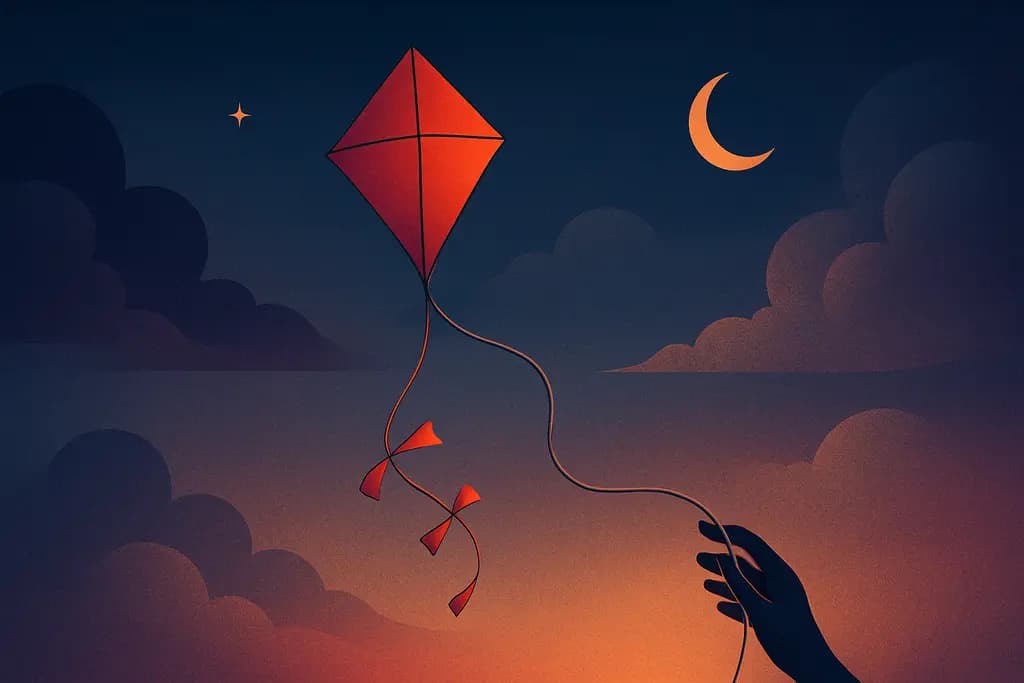
A kite dream commonly represents the push and pull between aspiration and control. The kite itself stands for hopes, creativity, or an important connection; the string is responsibility, habit, or a tie that keeps those hopes grounded. How the kite acts—soaring, snagging, snapping—reflects whether your plans are buoyant, precarious, or being pulled by outside forces. This image invites you to notice whether you are steering intentionally or reacting to gusts you didn’t anticipate.
What it can reflect emotionally
In many cases, a kite dream maps onto emotional regulation: excitement versus anxiety, approach versus avoidance. Psychologically it frames how you manage uplift (ambition, creativity) alongside restraint (duties, fear). If you’ve recently applied for a promotion, started a relationship, or launched a creative project, the kite’s behavior mirrors internal debate—do you let the wind take you or grip the line until your hands ache? That contrast can clarify whether to assert more control or practice letting go.
What this dream is not literally saying
This dream is rarely a literal prediction of future events. It does not usually mean you will literally lose or find something valuable tomorrow. Instead of forecasting outcomes, a kite dream tends to illustrate your current balance of control and freedom; think of it as a metaphor for dynamics you’re living, not a calendar of fate. An emotional nuance: that metaphor can feel urgent even when the real stakes are small.
Key interpretations
- Ambition and responsibility. A kite flying high while you keep a steady grip often signals goals that are progressing but require steady attention. The string represents obligations—meetings, deadlines, duties—that tether risk and excitement. If the kite climbs easily, you likely have the resources and support to push forward; if it falters, consider whether practical details or fear of exposure are holding your plans back.
- Play, release, and reclaiming joy. When the dream emphasizes a child, laughter, or simple play—running across a park with the kite trailing—the image leans toward permission to relax and reconnect with joy. This reading appears during times you’re tired of overcontrol or perfectionism. Letting the kite rise without micromanaging it can symbolize healing from self-criticism and a needed reprieve from adult responsibilities.
- External forces and vulnerability. A snapped string, sudden storm, or kite tangled in wires points to unpredictability: coworkers, familial expectations, or market shifts that pull your projects off course. The dream highlights fragility—what looks light and uplifting can be undone by a gust. That vulnerability may feel frightening but also identifies where you need stronger boundaries or backup plans.
Concrete details that tend to stand out
People report small, striking details: the scrape of sand under shoes, a child in a red coat running ahead, the kite caught on a church steeple, soggy string, or the metallic snap when the line breaks. You may feel your palms blister or hear distant laughter; those sensory touches are often the clearest emotional clues.
When this dream deserves attention
This dream deserves attention when it repeats, arrives during a high-stakes transition, or coincides with persistent anxiety about a relationship or project. Recurrence suggests an unresolved tension between desire and practical limits; a sudden kite-fall during a period of stress flags brittle plans. If it appears after a major life change—relocation, job shift, breakup—treat it as a prompt to inventory supports, shore up safety nets, and practice one small, concrete corrective action.
Symbolic meaning across traditions
Meanings vary across traditions. In parts of Asia, kites are associated with festivals, ancestral messages, and seasonal renewal; in some folk customs a cut kite line can mean release of illness or a rite of letting go. European childhood imagery tends to emphasize play and social bonding. Different cultures may highlight celebration or mourning, so consider which cultural stories you personally carry when interpreting your dream—there’s no single cross-cultural answer.
Frequently asked questions
Why do I feel fear in this dream?
Fear often comes from the dream’s core tension: the height of aspiration versus the risk of falling. It can reflect anxiety about visibility, losing control, or a memory of a real loss; notice what in waking life triggers the same bodily reaction.
Is this about money?
Not usually. A kite can symbolize resources or instability, but it more commonly maps to confidence, support, or risk-bearing capacity—not direct financial prediction.
What should I do after this dream?
Write down the scene, rate how afraid or excited you felt, and take one small step: clarify a deadline, call a supporter, or practice a relaxation exercise. Use details from the dream to choose the area to act on.
Is this dream a warning?
No. It is seldom a literal warning. The dream more often signals imbalance, fragile plans, or ignored limits—use it as a cue to check your situation rather than as a prophecy.
Related dreams to explore
People who dream about kites often end up exploring Balloons, Bicycles, and Bikes next, because the same pressure can show up through different symbols. Comparing them usually makes the emotional pattern clearer. You may also want to compare it with black lost objects if the same mood or conflict keeps showing up.