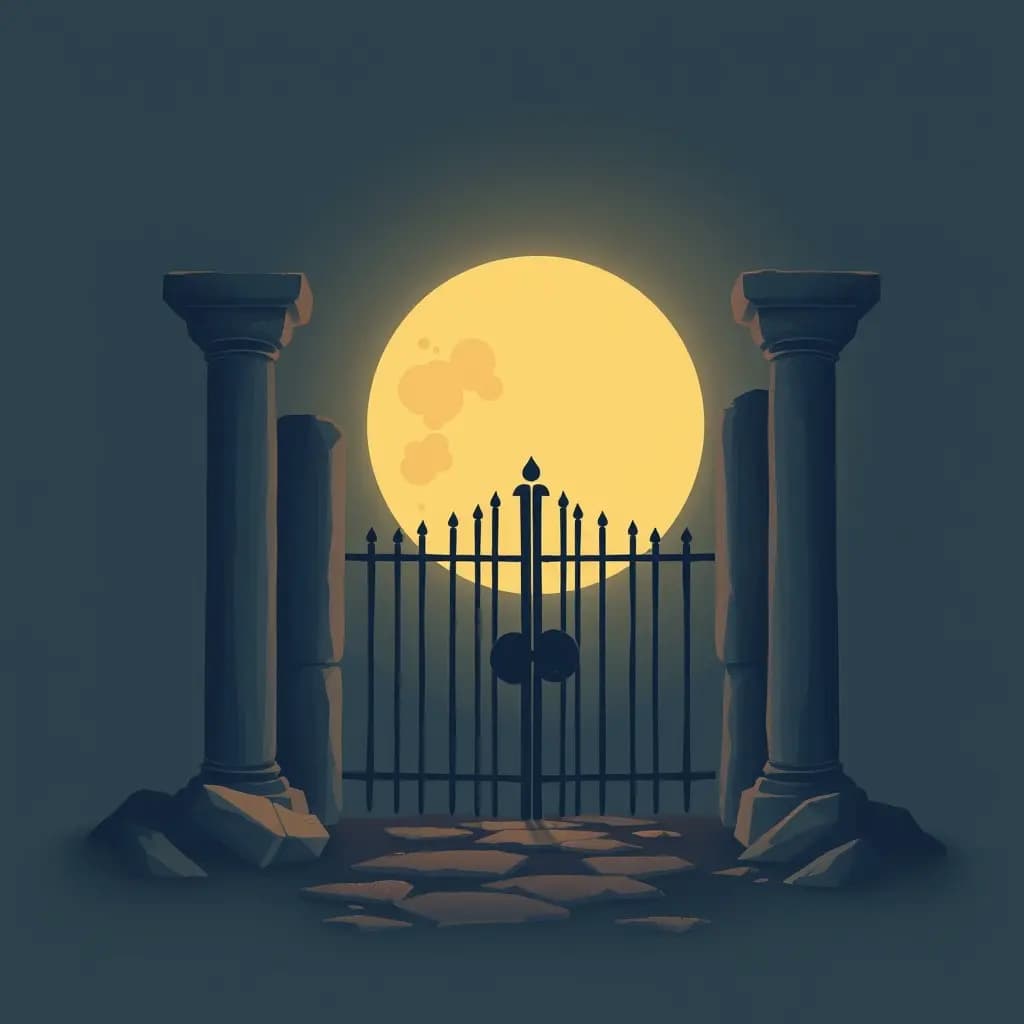
Dream About Ketu opens a closed gate – Meaning
Category: Moon & Vedic Astrology
What this dream usually means
This dream most commonly points to a sudden karmic or psychological release: something that has been blocked — a grief, a secret, a stalled project — is being given a way through. Ketu’s symbolism of detachment and past patterns suggests the opening isn’t always a comfortable invitation, but a necessary loosening of old ties. In real life, it may mark the moment you can finally act on a stalled choice or recognize a boundary that must be left behind. Expect change that feels both inevitable and a little unsettling.
What it can reflect emotionally
Viewed psychologically, this dream often surfaces when you’re juggling guilt, obligation, or a long-standing impasse. The closed gate is a boundary you learned to accept; Ketu’s opening is the unconscious compelling you to reassess. You may feel ashamed, relieved, curious, or anxious — sometimes all at once. In practical terms, notice when decisions have been postponed and what part of you resists action: fear of loss, perfectionism, or loyalty to an old identity. Emotional clarity often follows examining those resistances directly.
What this dream is not literally saying
This dream is rarely or does not usually work as a literal prediction of events like a stranger physically opening a door for you tomorrow. It does not typically forecast precise external outcomes or guarantee immediate, obvious miracles. Instead, it points to symbolic movement — inner shifts, timing of opportunities, or shifts in relationships — not a documentary-style prophecy.
Three common meanings
- Karmic release and letting go. Ketu is often associated with past-life residue and the urge to detach. The opened gate can mean a karmic knot loosening: old obligations, ancestral patterns, or repeating mistakes are finally giving way. This may feel like grief or relief because letting go creates a vacuum that asks you to reorient — a clearing more than a tidy ending.
- Unexpected opportunity or shortcut. The dream can signal an abrupt chance that bypasses usual routes — a job lead, a sudden reconciliation, a doorway into work or study you thought closed. Ketu’s energy makes the opportunity feel untidy or untimely; you may have to accept imperfect conditions to move forward, and choices made quickly can reshape practical realities.
- Confronting repressed material. An open gate may represent access to repressed emotions or memories. Seeing Ketu open it suggests those buried parts are surfacing now, often through triggers like anniversaries, a family conversation, or therapy. The imagery warns you to prepare: surfacing material may be vivid and demanding of attention rather than gentle.
- A push to cross a boundary or break a rule. Sometimes the gate is an ethical or social boundary you’ve been clinging to. Ketu’s interference can indicate a compulsion to break a rule, leave a system, or test limits — not necessarily rebellion for its own sake but a strong internal need to change context. Expect moral complexity and consequences to consider.
Specific details people often mention
People often report specific imagery: a dark temple corridor, an iron gate with a carved crescent, distant chanting, rain on the stone steps, the smell of incense, a crowd pulling back, or the sensation of your legs going numb as the latch clicks.
When this dream deserves attention
This dream deserves attention when it recurs, appears during high stress, or follows a life transition like divorce, job change, or bereavement. If it repeats, it often indicates unresolved material that won’t settle without action: a conversation to have, an account to close, or a therapy task to face. If it appears once during a transient stress, it may simply be your mind rehearsing possibilities. When the dream provokes strong physical reactions — heart pounding, shaking — treat the content as a prompt to slow down and journal about the underlying issue.
Cultural and symbolic views
Meanings vary widely across traditions. In Vedic contexts, the south node (Ketu) commonly signals karmic release and abandonment of material ties; folk traditions may treat a gate as an ancestor threshold or omen of transition. Western symbolic systems might read it as psyche integration or opportunity. Different communities assign different moral valences: some call such openings auspicious, others warn of danger. Be attentive to which cultural lens you naturally apply when you interpret the dream.
Common questions
Why does this dream repeat?
Why does this dream repeat? It repeats when unresolved material — an emotional debt, decision, or pattern — keeps demanding attention. Recurrence signals the psyche wants action or integration, not more avoidance.
Can this dream be positive?
Can this dream be positive? Yes. It can mark liberation, a new opportunity, or a needed clearing of stagnant energy. The opening may feel disruptive but ultimately create space.
Is this about money?
Is this about money? Not usually. Financial meanings can appear if a gate is explicitly tied to a workplace or money symbol, but most often it concerns attachment, decisions, or emotional release rather than literal wealth.
What should I do after this dream?
What should I do after this dream? Journal specifics, note your emotions and any real-life gates, and take one small concrete step — call one person, set a meeting, or schedule time with a counselor to explore the theme further.
Related dreams to explore
People who dream about ketu opens a closed gate often end up exploring Rahu offers you a mirror, Nakshatra writes a message, and Lunar tides pull memories next, because the same pressure can show up through different symbols. Comparing them usually makes the emotional pattern clearer. You may also want to compare it with Full moon drains your energy if the same mood or conflict keeps showing up.