Dream About Jumpscares in bed – Meaning
Category: Fears & Nightmares
A common version of this dream
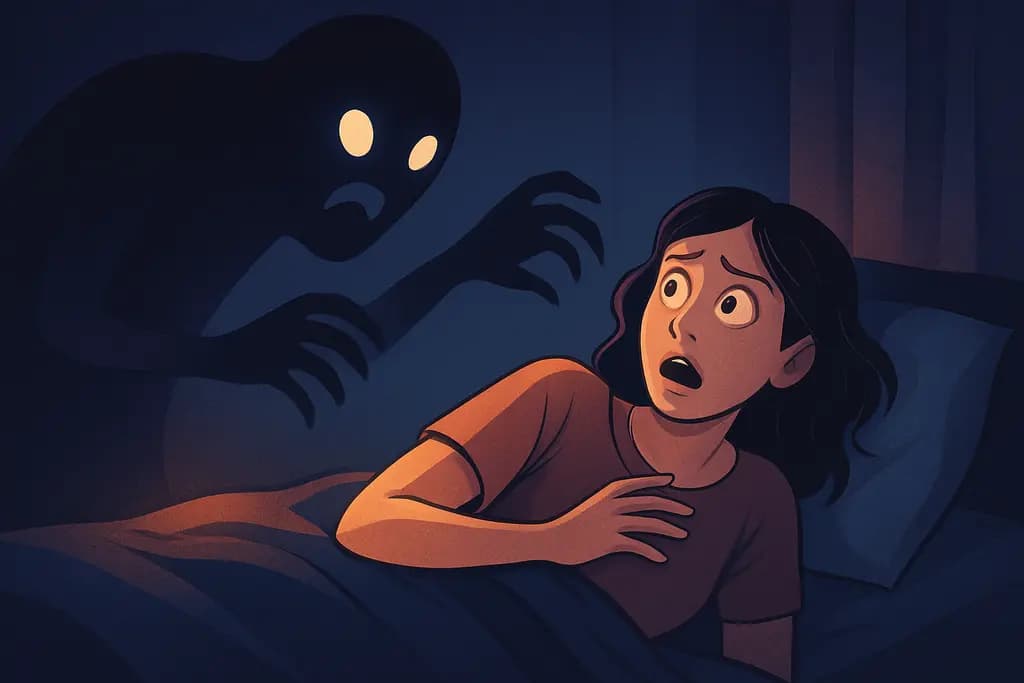
Heart racing from deadlines and the little things you’ve been pushing aside, you wake in bed after a dark, abrupt jolt: a shadow leaps from the doorway, a loud bang at the window, or a hand brushes your shoulder. You feel cold sweat, the sheets twisted around your legs, and a raw startle that leaves you staring at the ceiling, alert and exposed. The bedroom, normally your refuge, feels momentarily invaded—an ordinary night made electric by surprise and an urgent sense that something unprepared has arrived.
What this dream usually means
Interestingly, this dream most commonly points to sudden feelings of vulnerability or an unexpected emotional shock in waking life. It often reflects an internal alarm—privacy invaded, a surprise you weren’t ready to handle, or a buried worry that breaks through when your guard drops. Rather than predicting a literal break-in or attack, the dream signals that your sense of safety or boundaries has been rattled and needs attention: check what changed recently, who entered your personal space emotionally, and what you’ve been avoiding confronting.
How this dream can be interpreted
Boundary alarm: privacy or trust violated. A jumpscare in bed commonly signals a breach of personal boundaries. If you’ve recently felt overheard, betrayed, or suddenly exposed—an email read aloud, someone entering your room unannounced, or a secret revealed—the dream compresses that discomfort into a startling image. It’s your psyche’s way of telling you that privacy and emotional safety need to be reasserted, whether by setting firmer limits or addressing who has access to your private life.
Startle response to unresolved stress or sudden news. The dream can also reflect an acute stressor that landed unexpectedly: a medical scare, abrupt job news, or a tense confrontation you didn’t anticipate. In this reading, the bed represents rest and the jumpscare represents intrusion—an urgent message that unresolved worry is interrupting your capacity to relax. Practical follow-up—sorting the specific worry, checking facts, and creating a plan—reduces the dream’s frequency and intensity.
What this dream usually does not mean
This dream rarely functions as a literal prediction of a physical attack or exact future event. It does not usually foretell a specific person breaking in or a precise incident happening tomorrow. Instead, it most often speaks symbolically about startled emotions, shaken boundaries, or surprise information. Emotional nuance matters: the shock in the dream mirrors how you felt when a waking concern suddenly grabbed your attention.
Specific details people often mention
People frequently report small, vivid images: a curtain snapping open, an unlit hallway, a phone buzzing with one unknown number, wet footprints on the rug, the TV stuck on static, or the sensation of cold breath close to the ear. Often the jumpscare comes from an ordinary object—a coat on a chair, a closet door ajar, or the silhouette of a visitor in socks.
What it can reflect emotionally
From a modern psychological angle, these dreams often mirror the brain’s threat-detection systems activating during lighter sleep stages. When daytime stress or hypervigilance is high, startle responses and quick, vivid imagery rise to the surface. The dream uses familiar sleep-space symbols—bed, door, blanket—to dramatize an emotional alarm: your nervous system saying, in effect, “pay attention.” Interestingly, repeated or very intense jumpscare dreams suggest sustained arousal rather than a single trivial worry.
When to take this dream seriously
Take these dreams seriously when they recur, leave you anxious during the day, or appear alongside real-life changes—new roommates, a recent breakup, a job upheaval, or a medical scare. They also matter if you wake with sustained heart racing, avoidance of sleep, or physical tension. Use recurrence as data: journal what triggered the dream, test small boundary-setting actions, and track whether practical steps—locking doors, changing routines, talking through a worry—reduce its return. If the dreams interfere with sleep or daily functioning, consider speaking with a counselor for coping strategies.
FAQ
Can this dream be positive?
Yes. Sometimes the dream is a positive wake-up call: it jolts you into protecting yourself, addressing a problem, or ending complacency. The shock can motivate constructive action and clearer boundaries.
What should I do after this dream?
Ground yourself first: breathe, name three things you see, and write a short note about what startled you. Check your immediate sleeping environment, then identify the waking stressor and list one small step you can take tomorrow to address it.
Is this about relationships?
Often it relates to boundaries and safety rather than romance alone, but it can be about relationships—especially if someone close surprised or betrayed you. Look for clues in the dream about who invaded your space or what information felt shocking.
Related dream meanings
People who dream about jumpscares in bed often end up exploring black Jumpscares, darkness in bed, and dream about Jumpscares next, because the same pressure can show up through different symbols. Comparing them usually makes the emotional pattern clearer. You may also want to compare it with Jumpscares if the same mood or conflict keeps showing up.