Dream About Insomnia – Meaning
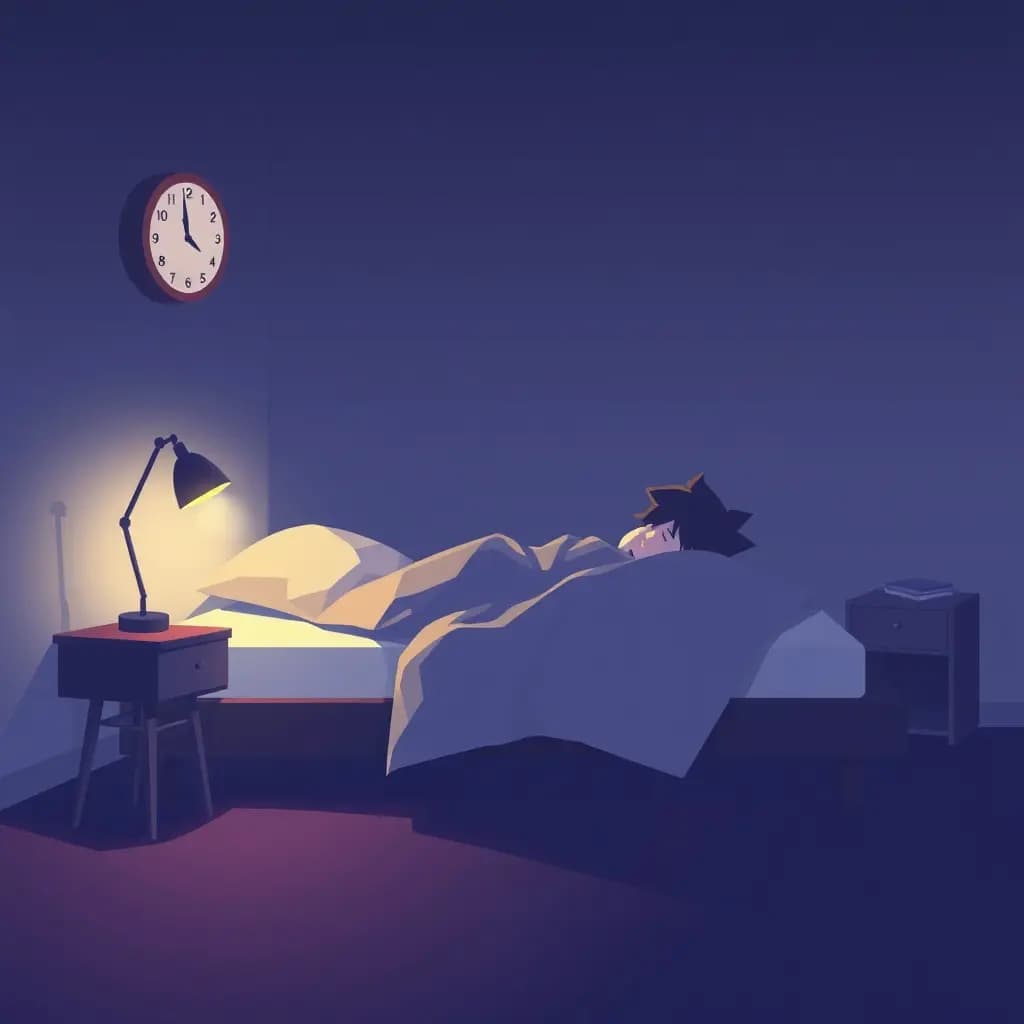
Category: Sleep & Dream States
A typical dream scenario
You’re in a dim hotel room with the curtains pulled open to a neon street. You lie on a lumpy mattress, eyes wide, listening to a clock that ticks too loud and a distant subway rumble. Your hands feel tingly, you reach for the light and it won’t turn on, and a low panic starts in your chest as minutes stretch into hours. There’s frustration layered with a quiet resignation: you can’t rest even when you know you should.
Concrete details that tend to stand out
Common specific images include a fluorescent alarm clock stuck at 3:00 a.m., a bright hallway outside your door you can’t enter, a buzzing phone that won’t stop, stale sheets that smell like ash, or the strange sensation of running on the spot while the room stays still.
Quick interpretation
Dreams of insomnia commonly point to a waking-state hyperarousal: your brain is running when your body needs rest. They often reflect anxiety about deadlines, unresolved responsibilities, or a feeling of time slipping away. Instead of predicting sleepless nights literally, these dreams are a symbolic warning that mental activity — worry, planning, guilt — is preventing restorative sleep and emotional recovery.
Three common meanings
Sleep anxiety and hyperarousal. If the dream emphasizes the mechanics of not sleeping — clocks, bright lights, physical agitation — it often reflects anxiety about sleep itself. You may be monitoring your sleep, fearing the consequences of lost rest, or checking the time frequently. This interpretation points to a feedback loop: worry about sleep increases alertness, and increased alertness feeds the dream.
Unfinished tasks, guilt, or looming deadlines. When the dream includes objects like paperwork on the bed, unread emails on a phone, or a door you can’t open to an important meeting, it commonly signals unresolved responsibilities. The sleeplessness represents cognitive arousal: your brain is rehearsing tasks and consequences late into the night. The feeling of urgency often matches a real-life deadline or a sense you haven’t completed something important.
Loss of control during life change. If the scene contains shifting rooms, a missing passport, or an out-of-control vehicle while you can’t move, the dream can reflect a transition — moving, a job change, caregiving, or a relationship ending — where you feel time and control slipping away. The insomnia element emphasizes that your internal coping resources are taxed; you’re mentally awake to potential threats or decisions even when you need rest.
Psychological perspective
From a modern psychological angle, insomnia-dreams are commonly tied to arousal, rumination, and threat-detection systems that stay active at night. They can reflect learned worry about sleep and an attentional bias toward problems you feel you must solve. In real life, they often coincide with periods when your problem-solving mind is dominant — rehearsing conversations, planning logistics, or circling worst-case scenarios — which makes it harder to disengage and recover.
What this dream usually does not mean
This dream is rarely a literal forecast that you’ll be unable to sleep every night. It does not usually mean a specific medical sleep disorder or that some external force will keep you awake. Rather than a prophecy, insomnia-dreams tend to exaggerate current worries and show how those worries are interfering with rest in symbolic form.
When to take this dream seriously
Take this dream seriously when it recurs, intensifies with stress, or appears alongside daytime fatigue and concentration problems. Recurrence suggests a persistent cognitive pattern — chronic worry, an unresolved decision, or prolonged transition — that needs attention. In real life, recurring insomnia-dreams are a cue to adjust routines: reduce late-night stimulation, address specific worries directly, and create clearer boundaries between work and rest.
FAQ
Why do I feel fear in this dream?
Fear in this dream usually comes from your brain treating a waking concern as an immediate threat. It’s the same alarm system that flags danger; here it signals urgency about time, responsibility, or potential failure.
What should I do after this dream?
After the dream, jot down the specific worry that woke you mentally and choose one small action: schedule the task, set a callback time, or write a brief plan. Then follow a short, calming routine before bed to signal it’s time to rest.
Is this about relationships?
Sometimes. If the dream centers on a partner’s absence, unread messages, or arguments echoing while you lie awake, it can reflect relationship worries. But insomnia-dreams also arise from work, health concerns, or personal expectations.
Is it related to stress?
Yes. These dreams are commonly related to stress: looming deadlines, caregiving demands, or big life changes raise nighttime arousal. Reducing daytime stressors and improving evening habits can lessen their frequency.
Dream meanings connected to this one
People who dream about insomnia often end up exploring Being Pulled Back to Sleep By an Invisible Force, Waking Up Feeling A Sense of Completion, and Dream of Hearing a Familiar Melody next, because the same pressure can show up through different symbols. Comparing them usually makes the emotional pattern clearer. You may also want to compare it with Falling Back into Sleep Instantly if the same mood or conflict keeps showing up.