Dream About Haunted House – Meaning
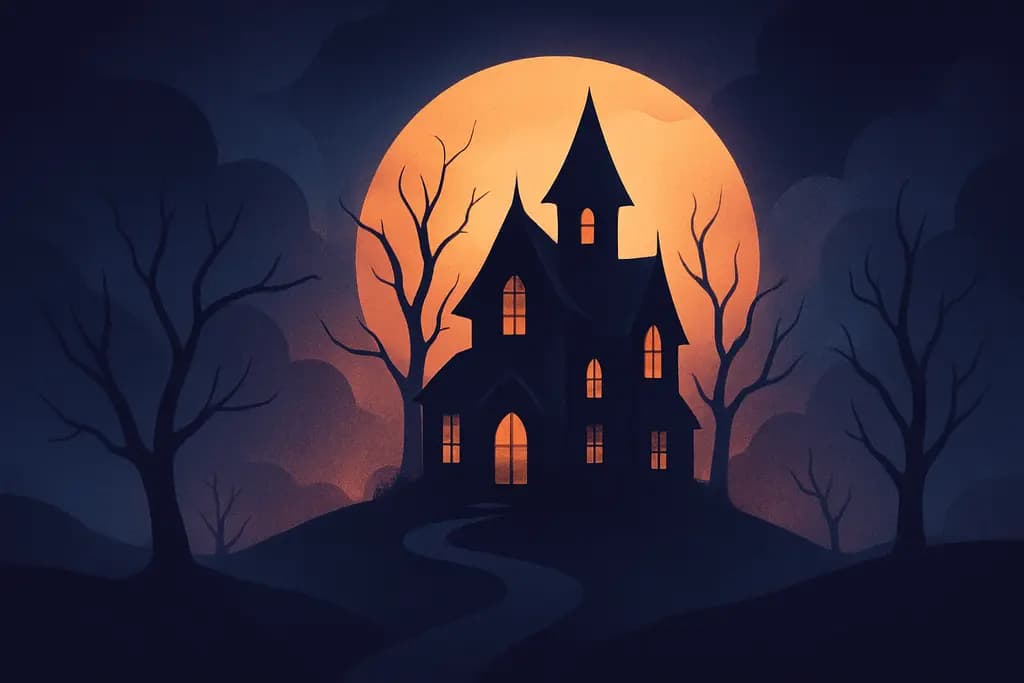
Category: Fears & Nightmares
A typical dream scenario
When you’ve been carrying a nagging family argument, job uncertainty, or grief, the pressure sometimes shows up as a house you cannot leave. You stand in a hallway with wallpaper peeling, clutching a cold banister while the light bulbs flicker; the air smells of old books and rain. Every door you open reveals a different decade of your life—a child’s toy on the stairs, a stack of unpaid envelopes on a kitchen table—and your chest tightens as if the rooms are memories pressing in.
Unusual details people report
People often notice one or two vivid, concrete details: an attic trunk with a child’s sailor suit, a locked basement door with rusted keys, the sound of a record player skipping, rain streaking down a bay window. Physical reactions—shivering despite warmth, a lump in the throat, or feeling watched—are commonly reported and add emotional texture to the scene.
Main interpretation
A haunted house in a dream most commonly signals parts of your past or inner life that feel overlooked, unsettled, or invaded. It can reflect neglected memories, secrets that return uninvited, or current pressures that make you feel exposed. The strongest clue is your emotional stance in the dream: terror and flight often point to repressed pain; curiosity or methodical searching suggests a readiness to examine and integrate what’s been hidden.
Key interpretations
- Neglected memories and unresolved inner material. The haunted house stands for parts of your personal history that were set aside—traumatic moments, family secrets, or grief locked in an attic. Seeing specific rooms, old photographs, or a childhood toy suggests particular memories resurfacing. Respond by gently revisiting those memories: write a timeline, speak with a trusted friend, or make a small ritual of acknowledgment to begin integrating what you’ve been avoiding.
- Boundary breaches and current stressors pressing inward. When the house feels invaded—open windows at night, strangers moving through rooms, doors that won’t lock—the image often reflects external pressures seeping into your private life: demanding work, overbearing relationships, or social obligations. The dream highlights where your boundaries are thin. Practical steps include naming one boundary to reinforce each week and reducing small daily intrusions until you feel steadier.
Psychological perspective
In real life, dreaming of a haunted house aligns with the mind’s way of organizing emotion-laden material during sleep. Memory consolidation and threat-detection systems can recast unresolved feelings as eerie rooms or intrusive presences. This is a neutral, functional framing: the dream signals an area of emotional salience rather than delivering a diagnosis. If the dream repeats and disrupts daily functioning, targeted reflection, journaling, or talking with a professional can help process what the imagery is pointing toward.
What this dream is rarely about
This dream is rarely a literal prediction that a house or person will harm you; it does not usually function as a prophecy. Instead, it is typically symbolic language your mind uses to point out unresolved material. That said, it can feel very real and frightening, which is an emotional contrast worth respecting rather than mistaking for factual foreshadowing.
When this dream deserves attention
This dream deserves attention when it repeats, arrives during a major life transition, or appears after a period of intense stress or loss. Recurrence often means an emotional issue hasn’t been resolved and keeps resurfacing for processing. Pay attention if the dream provokes persistent anxiety, affects sleep quality, or mirrors waking patterns (difficulty setting limits, intrusive memories). Small interventions—structured reflection, boundary-setting, or a single supportive conversation—often reduce frequency; persistent distress may benefit from professional support.
Frequently asked questions
Is this about relationships?
Sometimes. If the dream centers on family rooms, voices of known people, or being chased by someone you recognize, it often points to relationship dynamics—boundaries, secrets, or unresolved conflict. If the house imagery focuses on empty rooms, it’s less specifically about close relationships.
Is this dream a warning?
Not usually as a literal warning. It more often signals internal alarms—unprocessed memories or mounting stress—rather than predicting a concrete event. Treat it as a prompt to reflect and prepare emotionally rather than as a prophecy.
Why does this dream repeat?
Repeating dreams typically mean the mind keeps returning to unfinished emotional business—stress that hasn’t been processed, grief, or a pattern that needs changing. Consistent reflection, a focused therapeutic technique, or addressing daily stressors can break the repetition.
Is this about money?
Sometimes indirectly. A dilapidated or cluttered house in a dream can mirror financial insecurity or anxiety about resources, especially if the dream includes bills, empty safes, or eviction-like elements. If money worries are present while awake, they can shape the imagery.
Related dreams to explore
If this dream keeps returning, pages about darkness in house, Jumpscares in house, and Abandonment can reveal the related patterns underneath it. They often overlap around insecurity, transition, or stress in everyday life. You may also want to compare it with Aging if the same mood or conflict keeps showing up.