Dream About Ghost Typing – Meaning
Category: Technology & Communication
Main interpretation
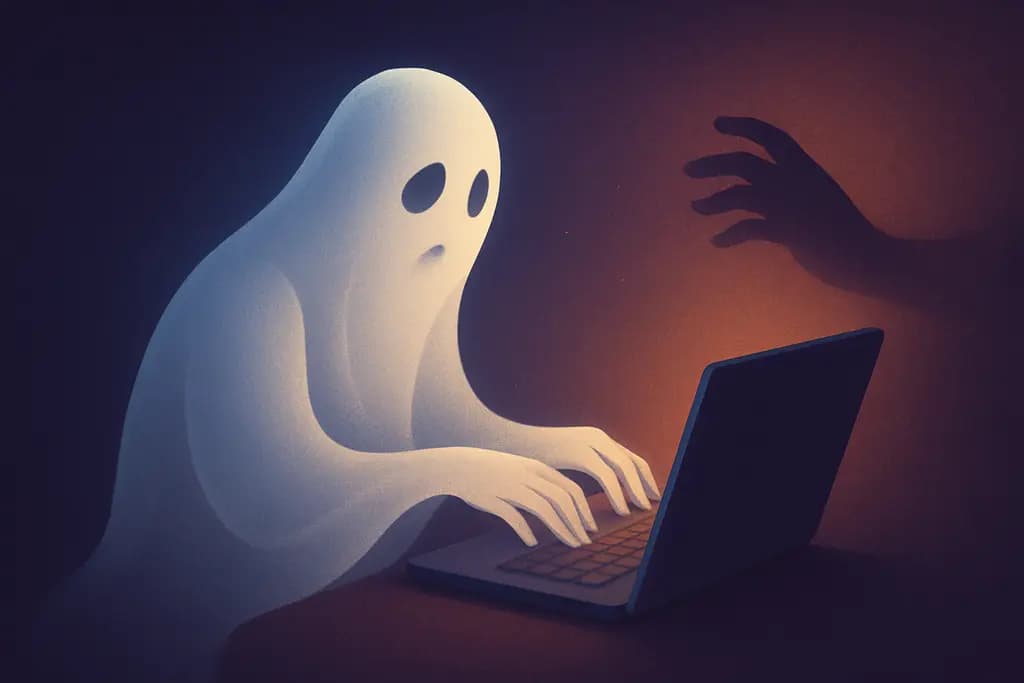
A ghost-typing dream most commonly signals communication that feels out of your control. It can reflect an unsent message, an email you’re avoiding, or pressure to speak for someone else at work or in a relationship. The phantom hands or invisible typist stand for suppressed speech, outside influence, or the mechanical side of social interaction (notifications, automation). Practically, the dream nudges you to examine who is using your voice and whether you need to reclaim or clarify your words.
Psychological perspective
From a modern psychological angle, ghost typing can be understood as your mind rehearsing unresolved social actions: composing messages, anticipating replies, or simulating consequences. The event—rapid typing in a dream—matches feelings of urgency, embarrassment, or loss of control in waking life, often tied to deadlines, digital interactions, or a recent disagreement. The image is a cognitive shortcut for intrusive thoughts or rumination about what you said, didn’t say, or wish you could edit.
How this dream can be interpreted
Unspoken Communication. The typewriter represents words you haven’t spoken: apologies unsent, a resignation letter you rehearse but don’t deliver, or feedback you’re withholding at work. The invisible typist shows your internal editor—someone composing your public self. This dream can push you to identify the precise message you’re avoiding and to decide whether to send, say, or discard it in waking life.
Guilt or Unresolved Message. If you wake embarrassed or ashamed, the typing can stand for a secret you fear will be revealed—an email sent in anger, a hidden text thread, or old words resurfacing. The dream compresses that dread into fast, unstoppable typing; it may signal the need to repair a relationship or to clear up misinformation before it spreads further.
Anxiety about Technology and Identity. When the keyboard is a laptop or phone, the dream often highlights worry about social media, automated messages, or online reputation. You may feel your identity is being managed by algorithms or other people. This reading prompts small changes: check account settings, draft messages before posting, and notice where technology amplifies voices you don’t fully mean to share.
Feeling Overridden or Silenced. If the typing continues despite your attempts to stop it, the dream can reflect being spoken for at home or work—managers, family members, or cultural pressures using your name. The phantom typist symbolizes somebody else shaping decisions. The practical takeaway is to name where you’ve ceded authority and to set a boundary before the next real-life message is decided without you.
What this dream usually does not mean
This dream rarely works as a literal prediction: it does not usually mean a ghost is actually sending messages for you or that your device is secretly hacked. More often it’s symbolic—about voice, agency, and privacy—rather than a supernatural report. The emotional charge may feel like a real invasion, but the image usually stands for interpersonal dynamics or internal conflict, not a factual event.
Specific details people often mention
People report old manual typewriters clicking in attic rooms, rain streaking a streetlamp outside, a buzzing phone on a kitchen table, or frost on windowpanes while invisible fingers type. Physical reactions often include cold fingers, a racing heart, or the jaw-clench of wanting to stop the typing.
Why recurring versions matter
Recurring ghost-typing dreams become important when they coincide with stress, unresolved fear, or life transitions—starting or leaving a job, a breakup, legal or financial uncertainty, or a public role that requires constant communication. If the dream repeats, it often marks an unresolved decision about what to say or a persistent feeling that others are making decisions for you. Take recurring dreams as prompts to act: draft difficult messages, schedule conversations, or limit technology that’s heightening anxiety.
How different traditions interpret it
Meanings vary across traditions: some cultures lean toward ancestor messages or omens when voices or hands appear without bodies, while tech-focused societies read the dream as anxiety about surveillance or online identity. Religious interpretations may see it as a moral test about honesty or confession. There is no universal verdict; instead, consider your cultural background, recent rituals, or local metaphors for speech and secrecy when weighing the dream’s significance.
FAQ
Why does this dream repeat?
Why does this dream repeat? Repetition usually reflects an unresolved decision or persistent anxiety about communication—an unsent message, an ongoing workplace role, or recurring privacy worries that haven’t been addressed.
Can this dream be positive?
Can this dream be positive? Yes. It can signal that your unconscious is rehearsing needed conversations or forcing clarity, which helps you find words and take action rather than leaving things ambiguous.
Is this dream a warning?
Is this dream a warning? Sometimes it warns you to check accounts, revise a message, or set boundaries; more often it warns about emotional or social consequences rather than literal danger.
Dream meanings connected to this one
If this dream keeps returning, pages about Voice Mail from Unknown Number, Blue Screen of Death, and seeing unsent text messages in a dream meaning can reveal the related patterns underneath it. They often overlap around insecurity, transition, or stress in everyday life. You may also want to compare it with hundreds of unsent text messages in dream if the same mood or conflict keeps showing up.