Dream About Gambling With Your Father – Meaning
Category: Casino & Gambling
What this dream often looks like
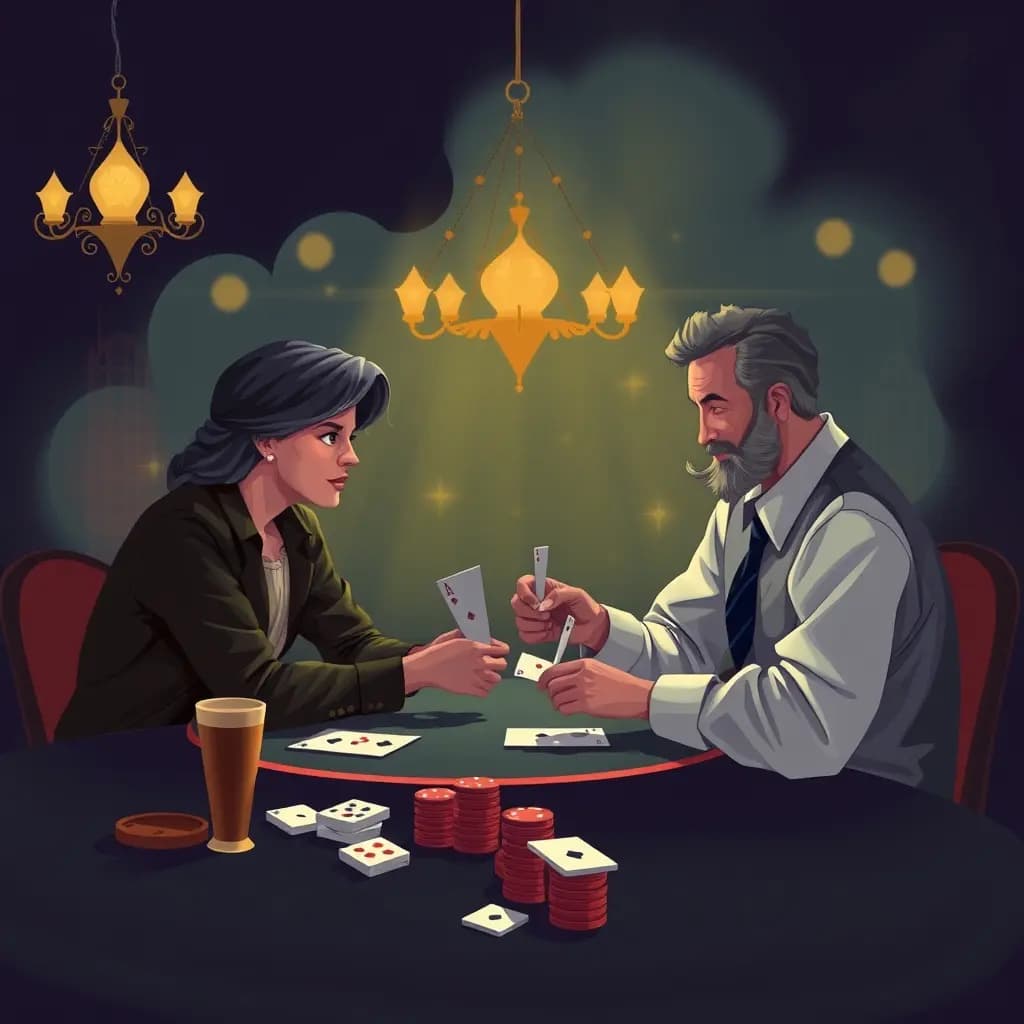
You wake with your heart still racing from a tight hand of cards at a green felt table — your father opposite you, cigarette ash falling into a pile of chips, neon light painting his jawline. The room smells like old money and stale coffee; people laugh but you feel isolated. You remember the precise wager: a family story, a job decision, or a secret you’re risking. Emotions are raw: nervousness about losing his respect, a restless thrill, and a quiet, stubborn hope for his approval.
Quick interpretation
This dream most commonly highlights the emotional stakes you associate with your father: approval, judgment, and the fear of taking risks that might change your standing in the family. The act of gambling symbolizes risk, choice, and uncertainty while your father represents authority, expectation, or an internalized voice. The scene often reflects a decision in waking life — financial, professional, or relational — where you weigh personal gain against emotional cost, not a literal forecast of money or event.
How this dream can be interpreted
Approval and performance anxiety. Gambling with your father can represent testing for approval — you’re betting your choices, character, or achievements against his standards. The table becomes a performance arena: each chip a decision you made to please, compete with, or prove yourself to him. Anxiety in the dream often mirrors real-life pressure to meet expectations, and winning may mean acceptable, while losing may awaken fears of rejection.
Risk, control, and decision-making. The act of placing bets highlights your relationship to risk and control. If you feel out of control at the table, it may mirror choices where you’ve handed decision-making to others or feel powerless. Conversely, confidently placing a wager can indicate readiness to take responsibility for a risky life step — a job change, moving, or ending a relationship — with your father’s opinion hanging in the balance.
Unresolved conflict or old wounds. A tense or silent game can point to unresolved issues from childhood: unspoken rules, past humiliations, or favors owed. Specific details — a scolding voice, a stern pause, a hand refusing to pay — often replay moments when you felt judged or unfairly treated. The dream gives you a controlled space to revisit those dynamics and notice what still affects your choices now.
Money and legacy symbolism. Money in the dream is as much symbolic as literal: chips and bets can stand for inheritance, resources, or the privileges your father represents. You may be weighing practical concerns (who will support this decision?) against moral or emotional costs. This interpretation asks you to consider what you value: security, independence, or approval — and whether you’re gambling away parts of yourself to preserve them.
What this dream is rarely about
This dream is rarely a literal prediction that you will win or lose money. It does not usually forecast a specific future event like an inheritance or a gambling outcome. Instead, it tends to stage the emotional consequences of risk and approval-seeking; the scene acts out symbolic choices, not factual prophecy. An emotional nuance: even a triumphant win in the dream can still leave you feeling hollow or uncertain.
Specific details people often mention
People report sharp sensory details: the specific chime of slot machines, a father wearing a worn leather jacket or a gold watch, rain tapping on casino windows, a torn betting slip, or the metallic taste of adrenaline in the mouth. A sudden blackout of lights or a clock that stops at an exact minute sometimes punctuates the feeling of suspended judgment.
What it can reflect emotionally
Viewed psychologically, this dream can reflect internalized authority and attachment patterns: the father figure embodies rules, expectations, and the inner critic. Gambling stages an internal negotiation between impulsive desires and cautious self-protection. If you felt shame, it may point to unresolved guilt; if excitement, to a longing for autonomy. Cultural background shapes the specifics, so consider how your family taught about risk and success. If the dream is distressing or recurring, journaling or a trusted conversation can help unpack the repeated themes.
When to take this dream seriously
Take this dream seriously when it recurs, arrives during a major life transition (career change, marriage, moving), or leaves you waking with persistent anxiety. It also matters if the dream mirrors waking behaviors: compulsive risk-taking, avoidance of a difficult conversation with your father, or a big financial decision. Use it as a prompt: if it points to unresolved fear or repeated patterns, consider setting concrete boundaries, seeking advice about the decision at hand, or opening a calm dialogue with your father or a mediator.
Common questions
Is this about money?
Is this about money? It may involve money as a symbol, but more often the chips and bets stand for risk, value, or emotional stakes in your relationship with your father. It is not a literal forecast of financial gain or loss.
What should I do after this dream?
What should I do after this dream? Note the vivid details, journal the emotions, and identify any real decisions you’re postponing. If the dream points to a strained relationship, consider a measured conversation or set small boundaries; seek supportive advice if you feel overwhelmed.
Is this dream a warning?
Is this dream a warning? It can function as a caution about risky choices or unresolved relational patterns, but it is rarely a literal warning about future events. Treat it as information about feelings and decisions rather than a prophecy.
Dream meanings connected to this one
If this dream keeps returning, pages about Gambling With Your Mother, Gambling With Your Parents, and Gambling With Your Ex can reveal the related patterns underneath it. They often overlap around insecurity, transition, or stress in everyday life. You may also want to compare it with Gambling With Your Partner if the same mood or conflict keeps showing up.